


DIFFERENT RECTAL BIOPSY TECHNIQUES FOR HIRSCHSPRUNG DISEASE | BRASIL | META-ANALYSIS | 1960 - 2019 | OPEN | PUNCH | SUCTION | 71 CASE SERIES | 17.931 PATIENTS | CONCLUSIVE RESULTS | 94% | 95% | 88% | COMPLICATIONS | 2% | 2% | 0.039% | Comes GT, et al. April, 2021 | DOI: 10.1097/MPG.0000000000003041 | JPGN Journal of Pediatric Gastroenterology and Nutrition | SCHCP SOCIEDAD CHILENA CIRUGIA PEDIATRICA | Authors: Andrés Martínez @ignacioponce_design
From
StayCurrentMD
Different Rectal Biopsy Techniques for Hirschsprung Disease
Part of
Hirschsprung Disease 19 items
Infographic · May 2021 · 1 min read
In brief
In brief
Systematic review comparing four rectal biopsy techniques for diagnosing Hirschsprung disease found suction, punch, and open methods yielded similar diagnostic accuracy (88-95%), but suction biopsy had significantly lower complication rates (0.039%) compared to punch (2%) and open techniques (2%).
- Suction, punch, and open rectal biopsy techniques all achieve ~88-95% conclusive results for Hirschsprung disease diagnosis.
- Suction biopsy has the lowest complication rate (0.039%) compared to punch and open techniques (both ~2%).
- Combining multiple histopathological analysis methods with suction biopsy increases diagnostic accuracy.
- Punch biopsy carries significantly higher complication risk than suction technique despite similar diagnostic yield.
- Rectal biopsy remains the gold standard for HD diagnosis; technique choice should balance diagnostic yield with safety profile.
Written by the GCMD Library team from the infographic.
The infographic uses a clean layout with a red header banner and three columns showing anatomical illustrations of different biopsy techniques (open, punch, and suction). A colon diagram with red arrow indicates biopsy site. Success rates are shown in large gray percentages, while complication rates appear below, with the suction technique's notably low rate highlighted in red. Study metadata and patient numbers appear on the left side.
Abstract
The diagnosis of Hirschsprung disease (HD) depends on the histopathological analysis of rectal biopsies. This review aims to define the best rectal biopsy technique. A systematic literature review and proportional meta-analysis of the available case series studies of rectal biopsies were performed in this study. All case series with more than five rectal biopsies in children younger than 18 years of age suspected of HD that described at least one type of rectal biopsy were included. The studies that did not specify the rate of conclusive results and the rate of complications of the biopsy procedures were excluded. According to the literature review, there were four different techniques of rectal biopsy: open, suction, punch, and endoscopic. In the title and abstract screening process, we assessed 496 articles, 159 fulfilled the eligibility criteria, and 71 studies reported our outcomes of interest and were included in the meta-analysis. The pooled proportion of conclusive results was 94% in open biopsies (95% CI 0.89-0.98), 95% in punch (95% CI 0.90-0.98), and 88% in suction group (95% CI 0.85-0.92). The pooled proportion of complication rates was 2% in open biopsies (95% CI 0.00031-0.04), 0.039% in suction (95% CI 0.00023-0.0006), and 2% in punch biopsies (95% CI 0.00075-0.04). Suction, punch, and open techniques presented comparable rates of conclusive results. In the suction group, the association between different methods of histopathological analysis increased conclusive results rates; however, the punch biopsy was associated with significantly higher complication rates than the suction technique.
Copyright © 2021 by European Society for Pediatric Gastroenterology, Hepatology, and Nutrition and North American Society for Pediatric Gastroenterology, Hepatology, and Nutrition.
The text in the image
Educational content from recorded physician discussions — not medical advice. Talk to your (or your child's) care team about your situation.
Podcast
The Colorectal Quiz Episode 23: Hirschsprung Disease - The Soiling Patient Part 2 -The Dentate Line and Motility
26 min · Published Dec 2021
Podcast
The Colorectal Quiz Episode 22: Hirschsprung Disease - the Soiling Patient Part 1
19 min · Published Nov 2021
Video
Hirschsprung Disease in Brief
Dr. Todd Ponsky · 10 min · Published Oct 2021
Podcast
The Colorectal Quiz Episode 20: Hirschsprung Disease Obstruction Part 2
21 min · Published Sep 2021
Podcast
Colorectal Quiz Episode 19: Hirschsprung Disease - The Obstructed Patient Part 1
24 min · Published Aug 2021
Podcast
Hirschsprung Disease Workup
10 min · Published Jul 2021
Video
Intestinal Atresia Types Explained: Grossfeld Classification for Pediatric Surgery
1 min · Published Sep 2026
Video
Derivation and validation of the Pediatric Community-Acquired Pneumonia Severity (PedCAPS) score: A prospective cohort study
50 s · Published Sep 2026
Video
FETO for Late-Diagnosed Severe Congenital Diaphragmatic Hernia (CDH) at Cincinnati Children's with Dr. Beth Rymeski
4 min · Published Sep 2026
Video
Severe Congenital Diaphragmatic Hernia (CDH) Case: FETO Management & Unexpected Findings with Dr. Beth Rymeski
3 min · Published Sep 2026
Video
Fetoscopic Endoluminal Tracheal Occlusion (FETO) Procedure: Step-by-Step Guide with Dr. Beth Rymeski
4 min · Published Sep 2026
Video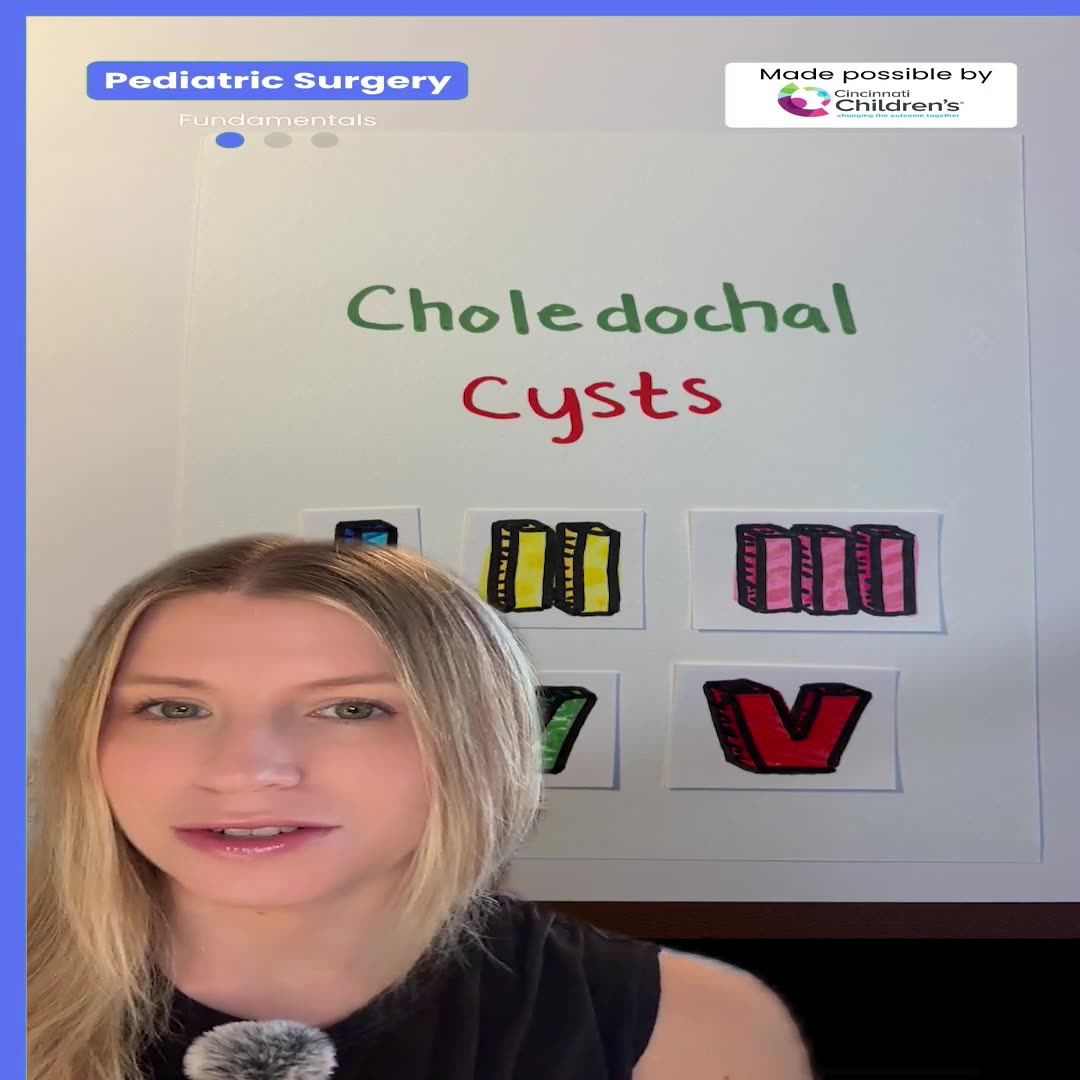
Choledochal Cyst Types Explained: Pediatric Surgery Fundamentals
1 min · Published Sep 2026