


From
StayCurrentMD
Relevance of Skull Base Surgery to Pediatric Neurosurgery: Pediatric...
With Dr. Jeffrey Greenfield
Chapter 1 of 4 · Fundamentals
Pediatric framework
Introduction and Framework: Pediatric Perspective on Endoscopic Skull Base Surgery
Expert statements on this page
No expert statements were drawn from this page.
Host summaries · secondary, not cited in answers
Educational content from recorded physician discussions — not medical advice. Talk to your (or your child's) care team about your situation.
Video
Pediatric Endoscopic Skull Base Surgery: Collaborative Approaches and Techniques
24 min · Published Feb 2018
Video
Pediatric Endonasal Skull Base Surgery: Pediatric Endoscopic Neurosurgery 2018
24 min · Published Jan 2018
Video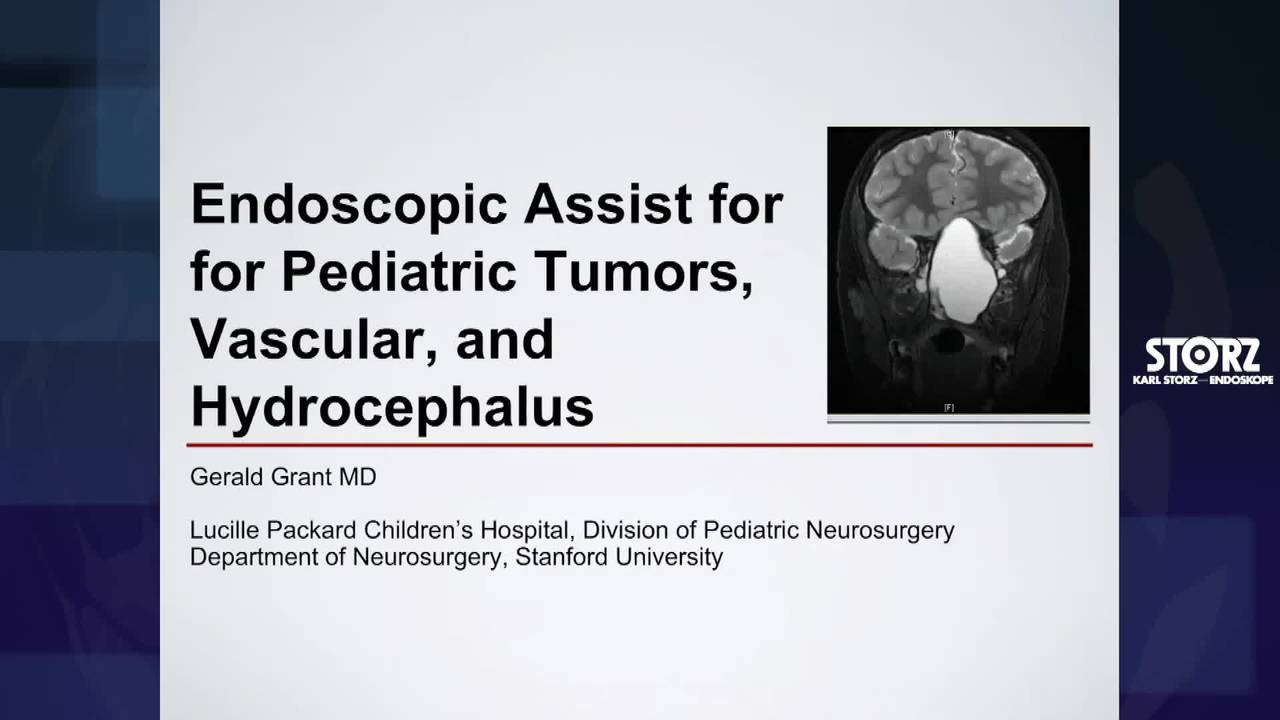
Endoscopic Assist for Pediatric Tumors, Vascular, and Hydrocephalus:...
20 min · Published Jan 2018
Video
Minimally Disruptive Subcortical Neurosurgery in Children - Concepts of the...
21 min · Published Jan 2018
Video
Oncology Tumor Board Showdown: Pediatric Oncology 5 Question Quiz
1 min · Published Oct 2026
Video
Clinical & Research Update: Renal Tumors with Drs. Ethan Smith, Lindsay Haacker, Michael Daugherty, and Meera Kotagal
71 min · Published Sep 2026
Video
Clinical & Research Update: Neuroblastoma with Drs. Katherine Somers, Cara Morin, Juan Gurria, and Meera Kotagal
67 min · Published Sep 2026
Video
Clinical & Research Update: Sarcoma w/ Drs. Roshni Dasgupta, Joseph Pressey, Arthur Meyer, Luke Pater
66 min · Published Sep 2026
Video
Update Course Rewind 2025: Nerve Monitoring in Pediatric Thyroid Surgery
6 min · Published Jul 2026
Video
Journal of Pediatric Surgery Article Review: June 2023, AAP Issue
Todd Ponsky · 13 min · Published Jul 2026
Video
Intestinal Atresia Types Explained: Grossfeld Classification for Pediatric Surgery
1 min · Published Sep 2026
Video
Derivation and validation of the Pediatric Community-Acquired Pneumonia Severity (PedCAPS) score: A prospective cohort study
50 s · Published Sep 2026
Video
FETO for Late-Diagnosed Severe Congenital Diaphragmatic Hernia (CDH) at Cincinnati Children's with Dr. Beth Rymeski
4 min · Published Sep 2026
Video
Severe Congenital Diaphragmatic Hernia (CDH) Case: FETO Management & Unexpected Findings with Dr. Beth Rymeski
3 min · Published Sep 2026
Video
Fetoscopic Endoluminal Tracheal Occlusion (FETO) Procedure: Step-by-Step Guide with Dr. Beth Rymeski
4 min · Published Sep 2026
Video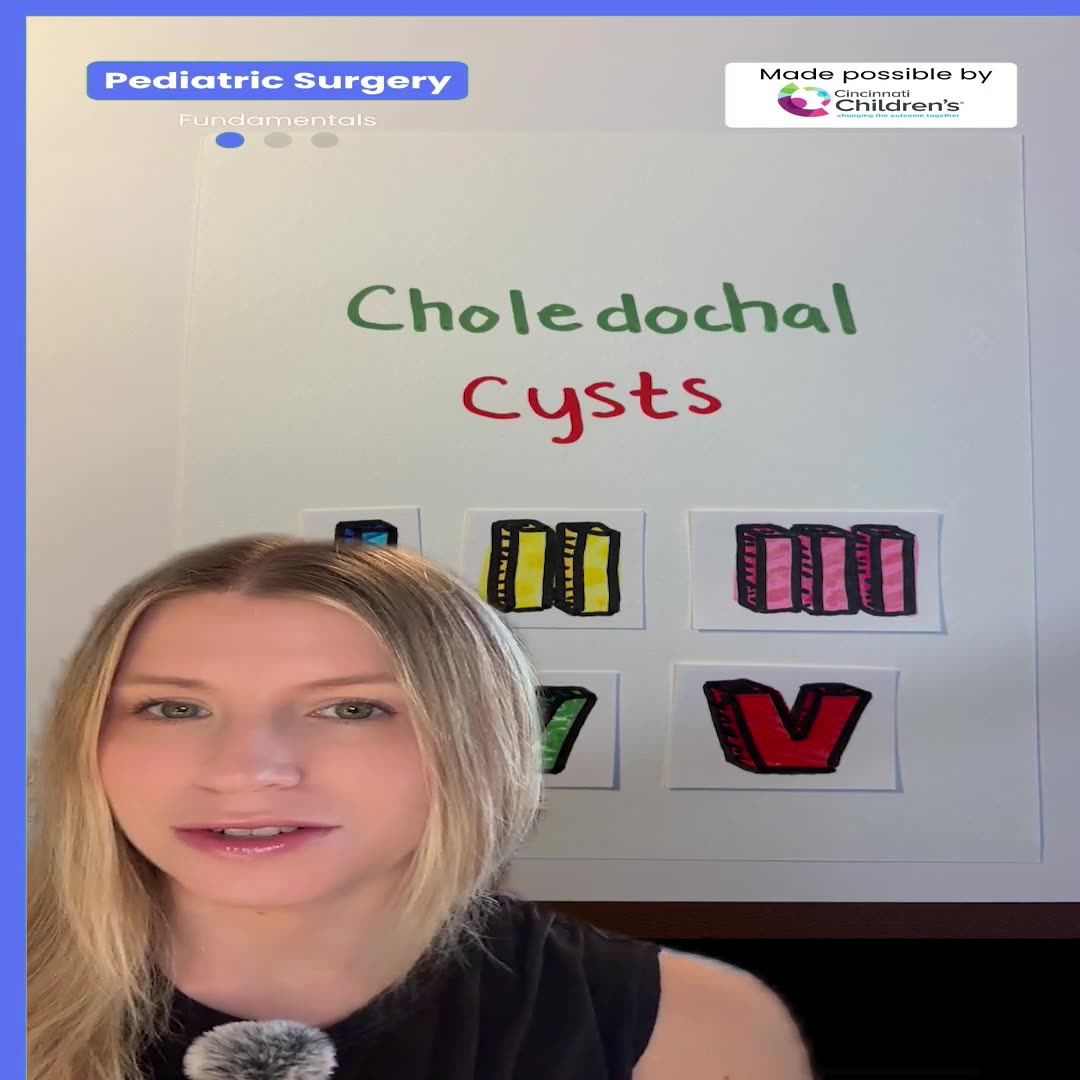
Choledochal Cyst Types Explained: Pediatric Surgery Fundamentals
1 min · Published Sep 2026
What the experts said
The goal of surgery in craniopharyngioma in the pediatric population is sometimes biopsy followed by radiation, different from adult paradigms where gross total resection may be the goal.
Intraventricular endoscopy has limitations including subpar optics compared to air medium and issues with hemorrhage obscuring the view in a fluid medium.
Endoscopic-assisted approaches in an air medium provide much better optics and the ability to do bimanual manipulation of tissues compared to fluid-medium intraventricular approaches.
Pediatric skull base lesions can be categorized into four groups: benign neoplastic lesions, malignant neoplastic lesions, congenital malformations, and iatrogenic or traumatic defects.
Five key considerations for endoscopic cases in children are: nasal aperture size (can limit bimanual operation), pneumatization, skull maturation, intercarotid distance, and defect closure.
The pathology of craniopharyngioma in children is very different molecularly and genetically than it is in adults.
In pediatric skull base surgery, the goal is sometimes biopsy or subtotal resection rather than gross total resection, with the aim of decompression, preservation of function, and allowing normal development before other therapy.
The transclival transodontoid approach has transitioned from a traditional transoral approach to what is exclusively now an endoscopic endonasal approach in the speaker's practice.
Advantages of the endoscopic endonasal approach for odontoid resection include the ability to extubate early and begin feeding early, seen in both adult and pediatric populations.
Odontoid resections are almost always done in conjunction with posterior fossa decompression and cervical instrumentation because of the instability that ensues from odontoid resection.
A linear incision in the retropharyngeal fascia works well for transodontoid approach, as long as suction is used to retract contralateral soft tissue; this replaced an earlier U-shaped incision technique.
The closure for transodontoid approach is simple: flow seal in the cavity and re-approximation of retropharyngeal fascia with one or two single interrupted stitches through a single nasal approach.
In the speaker's series of 10 odontoid resection patients, all are extubated on day 0 or 1, with early extubation now attempted on the same day of surgery.
One early reintubation in the odontoid series was due to aspiration of a sealant, which is no longer used because it was redundant and unnecessary due to lack of CSF leak.
The odontoid resection patient population is very select: children with cervicomedullary angles approximating 100 degrees and Grabb-Oakes measurements in the 10-15 millimeter or larger range, representing significant brainstem compression and torque.
For right-handed surgeons coming from the right nare in odontoid resection, there is a tendency to leave the very tip of the odontoid or the left side of the dens because getting to the contralateral side is challenging.
Pre-operative CTA or MRA is sometimes part of the workup for odontoid resection to identify and navigate the carotid arteries throughout the case.
The practice initially performed staged odontoid resection and fusion procedures (instrumentation/decompression on Monday, endonasal resection on Wednesday) to avoid additive morbidity, then moved to one-day procedures, but now prefers staged procedures again because single-day cases become 10-12 hour days with equipment and flow challenges.
The practice has not yet incorporated a sublabial approach to the sphenoid sinus in pediatric cases.
There is a steep learning curve for endoscopic endonasal surgery in young children due to ergonomic challenges of getting the scope and two instruments working together in tight spaces.
Endonasal equipment and scopes are designed to work in very small spaces and work well in the pediatric nose; while it is a little tighter, it is not so tight that cases cannot be done, and the practice has never had to avoid using an instrument because the nose was too small.
Application-specific equipment and scope technology for endoscopic neurosurgery has evolved to meet demands, with the armamentarium for skull base work being distinctly different from that used for intraventricular work.