


From
Live Event Content
Clinically Significant Gas Embolus - APSA Practice Gaps 2019
Chapter 1 of 3 · Case-Based Learning
Differential diagnosis
Case presentation and differential diagnosis of intraoperative arrest
Expert statements on this page
No expert statements were drawn from this page.
Host summaries · secondary, not cited in answers
Educational content from recorded physician discussions — not medical advice. Talk to your (or your child's) care team about your situation.
Video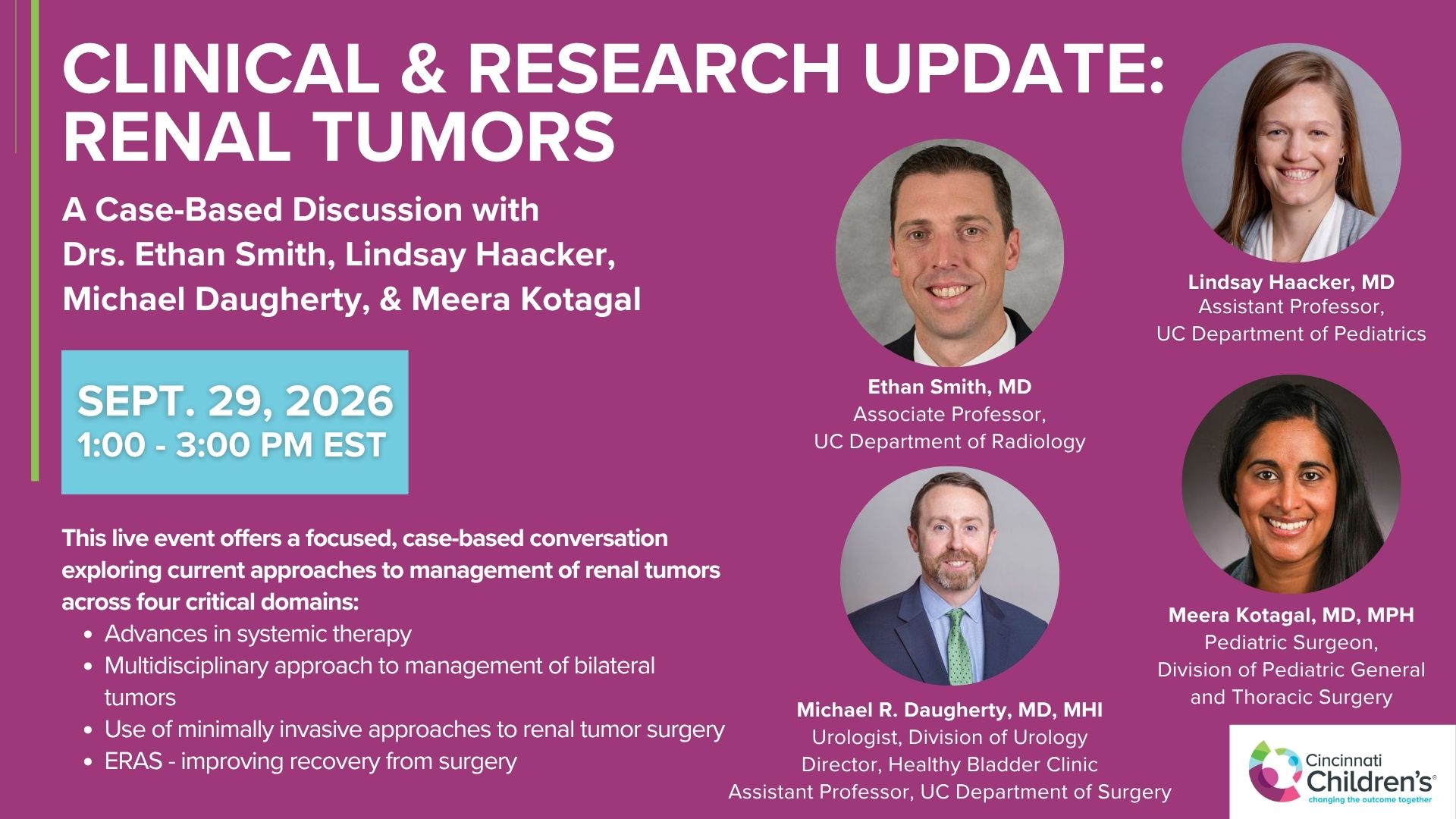
Clinical & Research Update: Renal Tumors with Drs. Ethan Smith, Lindsay Haacker, Michael Daugherty, and Meera Kotagal
71 min · Published Sep 2026
Video
Clinical & Research Update: Neuroblastoma with Drs. Katherine Somers, Cara Morin, Juan Gurria, and Meera Kotagal
67 min · Published Sep 2026
Video
Clinical & Research Update: Sarcoma w/ Drs. Roshni Dasgupta, Joseph Pressey, Arthur Meyer, Luke Pater
66 min · Published Sep 2026
Video
2026 Laparoscopic Pediatric Hernia Repair
123 min · Published Jun 2026
Video
Beyond the Spectrum: Diagnosis, Myths & Management - Caitlin Couch & Leslie Lopez - APP Conference 2026
50 min · Published May 2026
Video
Dysautonomia: Navigating the Journey - Martha Willis - APP Conference 2026
55 min · Published May 2026
What the experts said
Gas embolism during laparoscopy is rare but has high mortality.
Nitrogen and air embolism cause the most problems with hemodynamics compared to CO2 embolism.
Insufflation tubing contains a large amount of air, probably 40 mL.
Running CO2 through the insufflation tubing before connecting it to the patient can minimize the amount of nitrogen introduced.
Management of gas embolism includes removing the cannula, deflating the abdomen, placing the patient in Trendelenburg position, administering inotropes, and performing chest compressions.
ECMO or hyperbaric oxygen are treatment options for gas embolism.
In general surgery training, management of air embolism was emphasized despite most trainees never seeing a case.
Some people think that pre-flushing tubing with CO2 will decrease the risk of having a significant gas embolus.
Some people advocate aspirating gas through a central venous catheter as part of gas embolism management.