


From
StayCurrentMD
How should esophagitis in esophageal atresia patients be recognized and treated?
With Dr. Robert Rika · hosted by Dr. Todd Ponsky
Part of
Esophageal Atresia 77 items
Chapter 1 of 3 · Fundamentals
Knowledge gaps
Introduction and Knowledge Gaps in EA Esophagitis
Expert statements on this page
No expert statements were drawn from this page.
Host summaries · secondary, not cited in answers
Educational content from recorded physician discussions — not medical advice. Talk to your (or your child's) care team about your situation.
More about this diagnosis
EsophagitisVideo
What are risk factors for anti-reflux surgery after esophageal atresia repair?
Published Oct 2019
Podcast
Journal of Pediatric Surgery Article Review: October 2023
12 min · Published Apr 2024
Video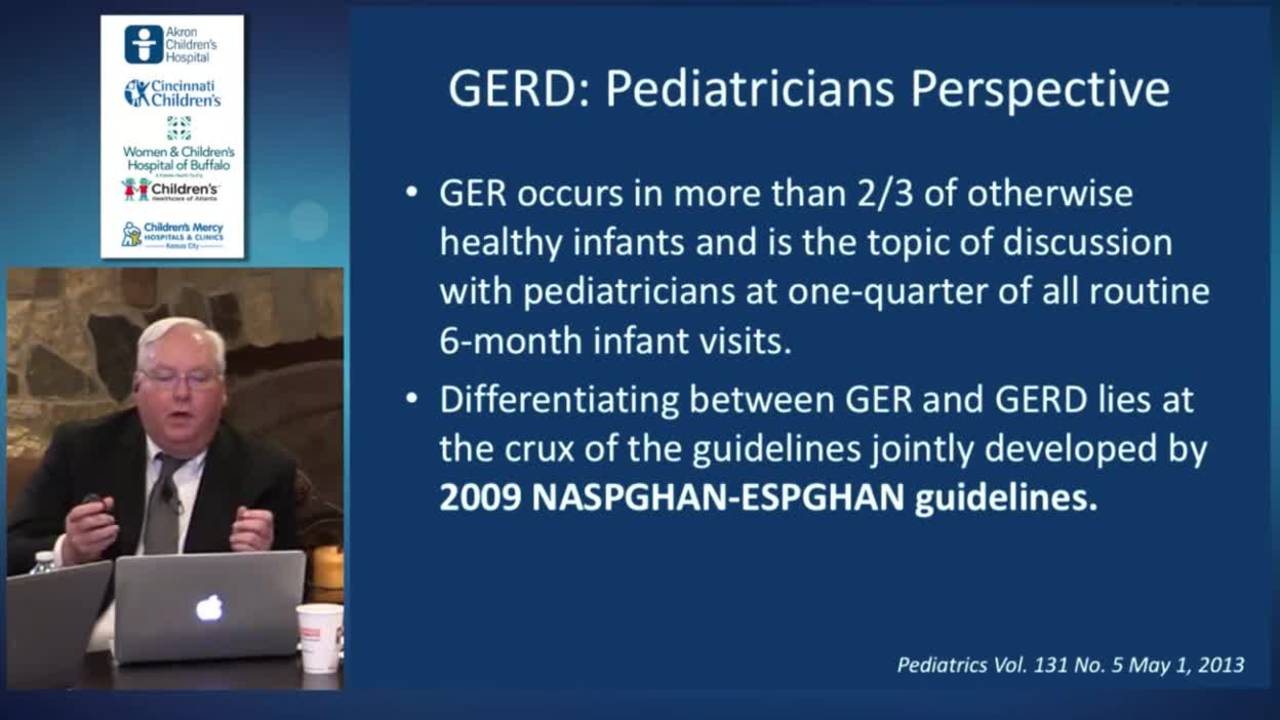
Gastoesophageal Reflux: Update Course 2015
30 min · Published Nov 2018
Podcast
Gastroesophageal Reflux Disease
Jeffrey Ponsky · 33 min · Published Jun 2016
Podcast
Gastroesopheal Reflux Disease
33 min · Published Dec 2016
Only a few other public items share this expert — go deeper there →
Video
Intestinal Atresia Types Explained: Grossfeld Classification for Pediatric Surgery
1 min · Published Sep 2026
Video
Derivation and validation of the Pediatric Community-Acquired Pneumonia Severity (PedCAPS) score: A prospective cohort study
50 s · Published Sep 2026
Video
FETO for Late-Diagnosed Severe Congenital Diaphragmatic Hernia (CDH) at Cincinnati Children's with Dr. Beth Rymeski
4 min · Published Sep 2026
Video
Severe Congenital Diaphragmatic Hernia (CDH) Case: FETO Management & Unexpected Findings with Dr. Beth Rymeski
3 min · Published Sep 2026
Video
Fetoscopic Endoluminal Tracheal Occlusion (FETO) Procedure: Step-by-Step Guide with Dr. Beth Rymeski
4 min · Published Sep 2026
Video
Choledochal Cyst Types Explained: Pediatric Surgery Fundamentals
1 min · Published Sep 2026
What the experts said
The November article examines esophagitis in pediatric esophageal atresia, addressing knowledge gaps in occurrence, best management strategy, and whether children need long-term follow-up.
These children may be at risk for developing Barrett's esophagitis and adenocarcinoma later in life.
Children with esophageal atresia need surveillance and annual follow-up with endoscopy and biopsy.
The esophagitis seen in esophageal atresia children is multifactorial in nature.
Children with esophageal atresia need annual follow-up throughout adolescence.
Esophageal atresia patients should be viewed as long-term chronic patients, similar to anorectal malformation patients, rather than considering repair as definitive treatment.
Evaluation of esophageal atresia children with esophagitis requires understanding the underlying mechanism to treat other conditions such as eosinophilic esophagitis or dysmotility issues.
Surveillance needs to continue beyond the current recommendations of three biopsies at some point during childhood.
More research is needed into therapies for esophagitis when acid is not the cause.
The study examined a cohort of children from a single institution who underwent endoscopic surveillance and biopsy over a two-year period to assess esophagitis prevalence.
About half of children on acid suppressive therapy still had esophagitis present on biopsy.
Even asymptomatic children may be developing esophagitis.
About a quarter of the children had fundoplication.
Many children with fundoplication still had evidence of esophagitis despite the procedure.
Acid suppressive medications reduce the risk of esophagitis in esophageal atresia patients.
Increasing the dose of acid suppressive medications does not decrease esophagitis.
Even with acid suppressive medications and surgery, some children still develop esophagitis.