


From
StayCurrentMD
Journal Club: Review of 2018 Pediatric Surgery Practice Gaps
With Dr. Todd Ponsky
Part of
DVT 6 items
Chapter 1 of 6 · Evidence & Research
Transfusion thresholds
Introduction and Practice Gap #10: Restrictive Transfusion Policies
Expert statements on this page
No expert statements were drawn from this page.
Host summaries · secondary, not cited in answers
Educational content from recorded physician discussions — not medical advice. Talk to your (or your child's) care team about your situation.
Video
APSA 2018 Practice Gaps
Published Mar 2020
Video
7th Annual Pediatric Surgery Update Course 2019 - FULL SHOW
285 min · Published Jul 2020
Video
Restrictive Transfusion Policies: 2018 Pediatric Surgery Practice Gap #10
Dr. Todd Ponsky · Published Jun 2019
Video
Enteral Nutritional Support For Pancreatitis: Practice Gap discussion at...
16 min · Published Aug 2018
Video
Update Course Rewind: DVT Prophylaxis 2024
Published Dec 2024
Video
Venous Thromboembolism Prophylaxis In Trauma Patients: Practice Gap...
10 min · Published Aug 2018
Video
Acute Cholecystitis
Todd Ponsky · 32 min · Published Jul 2026
Video
Update Course Rewind 2025: Updates in NEC Management
11 min · Published Jul 2026
Video
Pediatric Pre-Operative Bowel Prep
Todd Ponsky · 1 min · Published Jul 2026
Video
Journal of Pediatric Surgery Article Review: September 2021
Todd Ponsky · 11 min · Published Jul 2026
Video
22. HerniaTalk LIVE Q&A: Pediatric Hernias
Todd Ponsky · 59 min · Published Jul 2026
Video
ATLS 2021 Pediatric Surgery Update
Todd Ponsky · 16 min · Published Jul 2026
Video
Intestinal Atresia Types Explained: Grossfeld Classification for Pediatric Surgery
1 min · Published Sep 2026
Video
Derivation and validation of the Pediatric Community-Acquired Pneumonia Severity (PedCAPS) score: A prospective cohort study
50 s · Published Sep 2026
Video
FETO for Late-Diagnosed Severe Congenital Diaphragmatic Hernia (CDH) at Cincinnati Children's with Dr. Beth Rymeski
4 min · Published Sep 2026
Video
Severe Congenital Diaphragmatic Hernia (CDH) Case: FETO Management & Unexpected Findings with Dr. Beth Rymeski
3 min · Published Sep 2026
Video
Fetoscopic Endoluminal Tracheal Occlusion (FETO) Procedure: Step-by-Step Guide with Dr. Beth Rymeski
4 min · Published Sep 2026
Video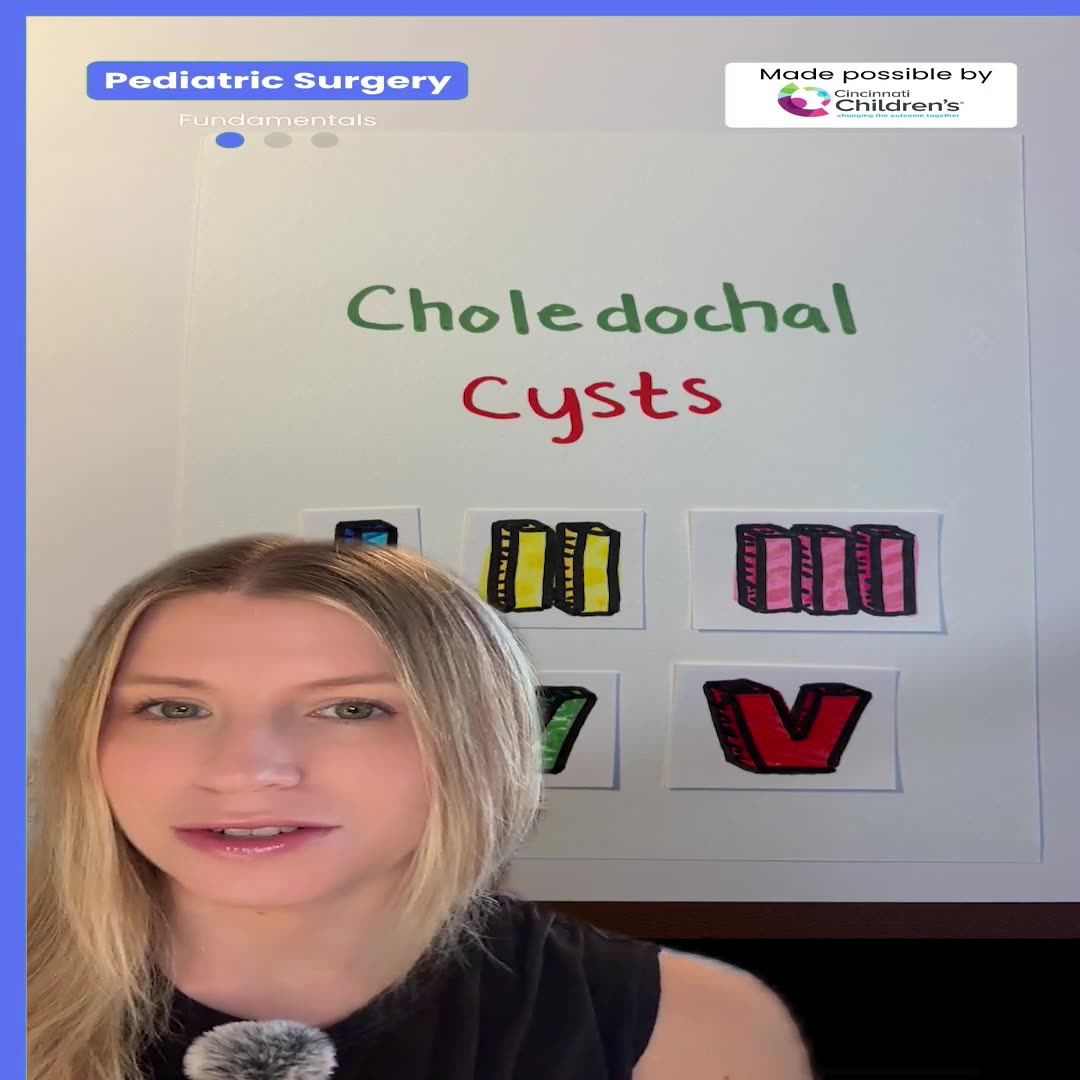
Choledochal Cyst Types Explained: Pediatric Surgery Fundamentals
1 min · Published Sep 2026
What the experts said
A practice gap is the distance between what is best practices or evidence-based and what you should be doing and what actually happens.
Transfusing to a target hemoglobin of seven instead of nine or ten has no difference in mortality.
Blood transfusions increase the risk of DVT in patients.
The restrictive transfusion policy of 7 not 9 or 10 applies across the board to pediatric patients, not just trauma, including NICU patients and other general surgery patients.
Early enteral feedings when not associated with vomiting decreases morbidity, infectious risk and mortality in pancreatitis.
NG feeds are equally as tolerated as NJ feeds in pancreatitis.
We should be operating earlier for gallstone pancreatitis.
Ultrasounds right now are not very good in terms of ruling out ovarian torsion.
In a patient with suspected ovarian torsion, you have to go to the operating room, and when you're there, you don't take the ovary out even if it's black in order to preserve fertility.
Even if there's Doppler flow in a suspected ovarian torsion, you still need to go to the operating room because it could be intermittently torsing or there may be a part that has blood flow and some that doesn't.
For low bleeding risk trauma patients, it's okay to do SCDs and low molecular weight heparin for VTE prophylaxis.
For high bleeding risk trauma patients, they recommend SCDs until they're ambulatory, and then a screening ultrasound on ICU day seven.
Burnout directly impacts patient care and establishing support systems should be a focus throughout education and practice.
The most effective state laws in reducing pediatric firearm injuries are those that hold adults criminally liable for negligently storing firearms.
You should continue with isotonic fluids instead of switching from isotonic to hypotonic once you reach maintenance space because this decreases the risk of hyponatremia without any adverse consequences.
We need to be sure that we're taking out lymph nodes when doing Wilms tumor nephrectomy because that automatically upstages our patients if we're not taking out the nodes.
Pulmonary metastases do not preclude a primary nephrectomy in Wilms tumor.
Treating appendicitis with antibiotics had equal outcome measures compared to initial operative management, with a 15% risk of recurrence at one-year follow-up, but decreased hospital stays and decreased days of disability.
You don't need to be giving opioids for incision and drainages or for breast biopsies.
Tylenol plus NSAIDs like Motrin are equally as effective as narcotics in kids.