

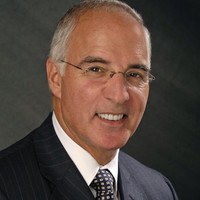
From
Dr. Jeffrey Ponsky
Meet the Master: Jeffrey L. Ponsky, MD, FACS
With Dr. Jeffrey Ponsky · hosted by Dr. Brian Duncan
Chapter 1 of 8 · Fundamentals
Early background
Early Life and Path to Surgery
Expert statements on this page
No expert statements were drawn from this page.
Host summaries · secondary, not cited in answers
Educational content from recorded physician discussions — not medical advice. Talk to your (or your child's) care team about your situation.
Video
Ponsky and Gauderer invent the PEG tube
Jeffrey Ponsky · 7 min · Published Sep 2017
Video
Update Course 2023 - Updates in Pediatric Achalasia Management
26 min · Published Aug 2023
Video
SAGES/ALACE Symposium: Integrating New Technologies, Old Tricks, and Operative Approaches
Jeffrey Ponsky · 12 min · Published Mar 2012
Video
How effective is POEM in children?
Published Oct 2019
Video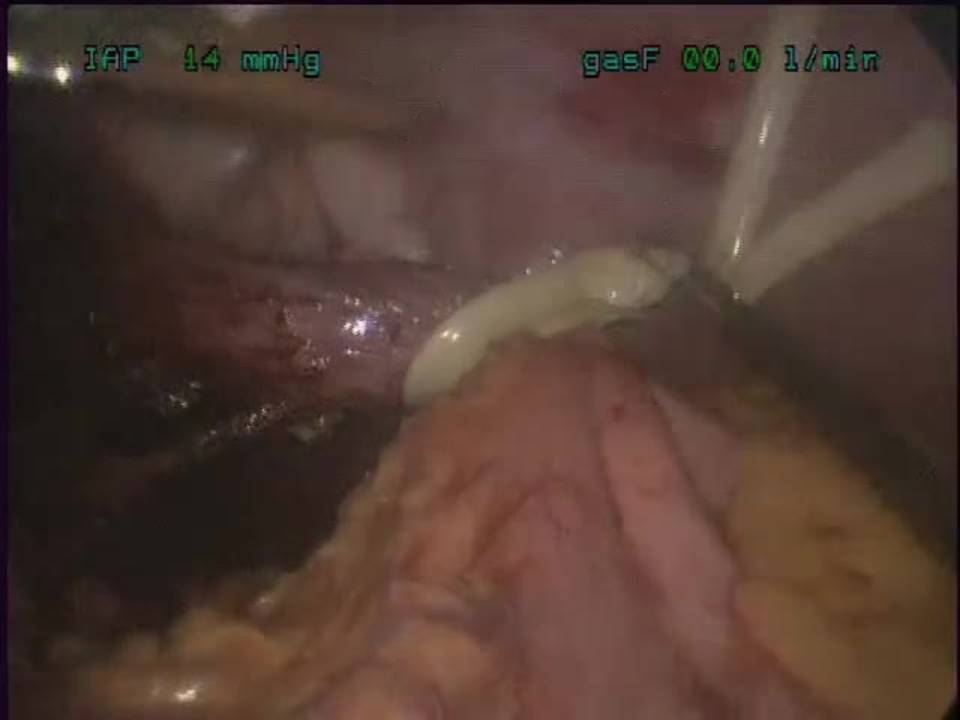
Laparoscopic Heller Myotomy
3 min · Published Feb 2020
Video
Update Course Rewind: Updates in Achalasia 2023
Published Mar 2024
Podcast
The invention of the PEG tube with Dr. Jeffrey Ponsky
Jeffrey Ponsky · 33 min · Published Jul 2026
Podcast
Update Course Rewind: Pediatric Biliary Stones - Preventing Gallstone Pancreatitis 2024
Jeffrey Ponsky · 3 min · Published Aug 2025
Video
ACS Icons in Surgery | Jeffrey L. Ponsky, MD, FACS
Jeffrey Ponsky · 20 min · Published Jul 2024
Video
SAGES Stories Episode 11 – Jeff Ponsky, MD
Jeffrey Ponsky · 61 min · Published Jun 2024
Video
From Idea to Ubiquity - the PEG Journey
Jeffrey Ponsky · Published Nov 2023
Podcast
Innovations in Surgery: PEG Tube
Jeffrey Ponsky · Published Aug 2023
What the experts said
In 1973, Dr. Ponsky was refused endoscopy training by Case Western Reserve's gastroenterology department, with the chief stating 'we're not going to train a surgeon to do endoscopy.'
Dr. Ponsky performed approximately 500 endoscopies during a 4-6 month fellowship with Jim King in Canton, Ohio in 1974.
Early endoscopy disinfection consisted of washing scopes with green soap and hanging them to dry, without gloves even for colonoscopy, and without high-level disinfection or washing machines.
Percutaneous endoscopic gastrostomy (PEG) was developed by Dr. Ponsky and Michael Gower in May 1979, with the first 5 cases performed in infants at Rainbow Babies and Children's Hospital.
The first adult PEG procedures were performed at Mount Sinai Hospital shortly after the initial pediatric cases in 1979.
PEG was presented at the ASGE plenary session in Salt Lake City in 1980, where Peter Cotton stated 'I'm only sorry that I didn't think of this.'
Transillumination in infants was critical to PEG development because the light shone through the thin abdominal wall, allowing visualization of stomach apposition to the abdominal wall.
Early PEG tubes were fashioned from Pezzer catheters with Bunsen burner tubing as bolsters and medicut IV catheters as dilators.
The technique of stretching the rubber tube to make it thinner for easier insertion through the dilating catheter was discovered by accident while walking down a hospital hallway.
Using a snare around the puncturing needle to grasp the suture proved more reliable than attempting to grab it with biopsy forceps during PEG placement.
The concept underlying PEG is affixing a loop of bowel to the abdominal wall and creating a permanent tract, which can be applied to various anatomic sites including stomach, jejunum, and cecum.
Dr. Ponsky published cecostomy using the PEG technique for Ogilvie syndrome in 1984.
Dr. Ponsky published the first report of endoscopic tattooing with India ink in 1975 to mark colonic lesions for surgical localization.
Jacques Perrisat showed the first video of laparoscopic cholecystectomy at the SAGES meeting in Louisville, Kentucky in 1989.
SAGES membership grew from 300 members when Dr. Ponsky became president in 1990 to 2,000 members by the end of his tenure, driven by the laparoscopic cholecystectomy revolution.
ASGE operates as a meritocracy requiring members to work through committees (membership, governing board, treasurer) over approximately 20 years before becoming president.
Dr. Ponsky was the second surgeon to serve as ASGE president, after Ted Schrock.
The Schindler Award from ASGE in 2002 was the most prestigious award in Dr. Ponsky's career because it represented recognition by gastroenterologists as an endoscopist who made significant contributions.
The concept of NOTES originated from a laparoscopic surgeon performing needlescopic cholecystectomy who removed the gallbladder through a gastrotomy, though this was never published.
Tony Kalloo and Sergei Kantsevoy at Johns Hopkins published animal cases of transgastric surgery using the Eagle Claw device with the Apollo Group in 2004.
Reddy and Rao in India performed the first transgastric appendectomy and showed the video but never published the work.
NOSCAR (Natural Orifice Surgery Consortium for Assessment and Research) was formed by surgeons and gastroenterologists doing NOTES research, with the acronym conceived by Nathaniel Soper over wine.
PEG rescue—accessing the peritoneal cavity through a dislodged PEG tract to place a new tube—was the first NOTES procedure performed in humans in the United States under IRB protocol.
At age 72, Dr. Ponsky performs approximately 1,200 endoscopies annually at Cleveland Clinic, working at multiple sites including monthly trips to Florida.
POEM (peroral endoscopic myotomy) was first performed in humans by Haruhiro Inoue in Yokohama around 2007, though the tunneling concept was conceived earlier at IRCAD in France during the NOTES era.
Eric Hungness at Northwestern taught Dr. Ponsky and Jeff Marks the POEM technique in the lab, then proctored their first 2 human cases approximately 7 years ago (circa 2012).
Patients undergoing POEM report life-changing improvement, with many stating 'you changed my life' at follow-up.
Peroral pyloromyotomy (POP) via a lesser-curve tunnel 25 cm in length has been performed in over 300 cases at Cleveland Clinic.
Two-thirds to three-quarters of patients undergoing POP show improved or normalized gastric emptying.
POP is essentially an outpatient procedure that does not cause significant harm.
Intramural tunneling can be used to resect stromal tumors and leiomyomas of the esophagus and stomach.
Zenker's diverticulotomy using a double-sided submucosal tunnel approach allows complete myotomy with mucosal closure using clips, enabling same-day discharge.
Robotic endoscopic platforms will enable surgical techniques including tissue manipulation, knot-tying, and full-thickness resection from a console, similar to robotic surgery.
A step trocar (radially expanding surgical trocar) can be used through a PEG tract to place a large-bore gastrostomy tube when the esophagus is too stenotic to allow standard PEG tube passage.
Surgeons interested in making endoscopy a major part of their career should complete a fellowship in advanced endoscopy to ensure their credentials cannot be challenged.