


From
StayCurrentMD
22. HerniaTalk LIVE Q&A: Pediatric Hernias
With Dr. Todd Ponsky · hosted by Dr. Shirin Towfigh & Dr. Todd Ponsky
Part of
Umbilical Hernia 9 items
Chapter 1 of 10 · Fundamentals
Introduction
Introduction and Background on Pediatric Hernia Surgery
Expert statements on this page
No expert statements were drawn from this page.
Host summaries · secondary, not cited in answers
Educational content from recorded physician discussions — not medical advice. Talk to your (or your child's) care team about your situation.
Video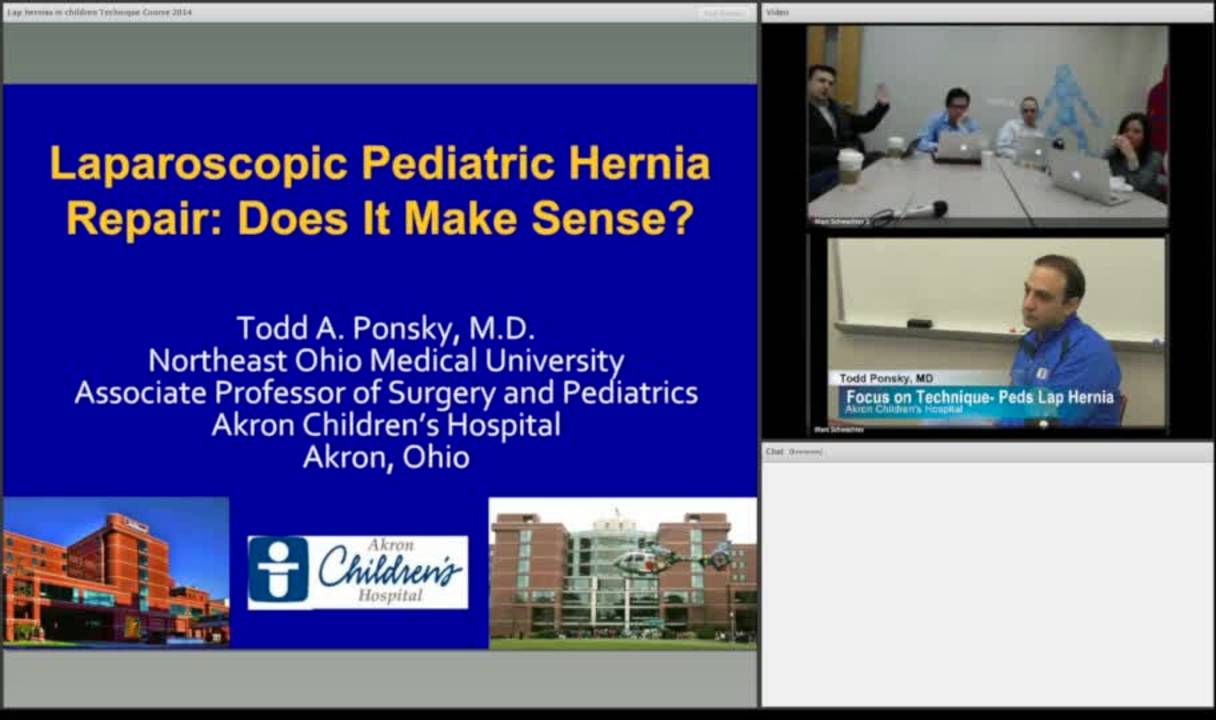
Focus on Technique- Laparoscopic Pediatric Hernia Repair 2015
Dr. Todd Ponsky · 140 min · Published Mar 2014
Video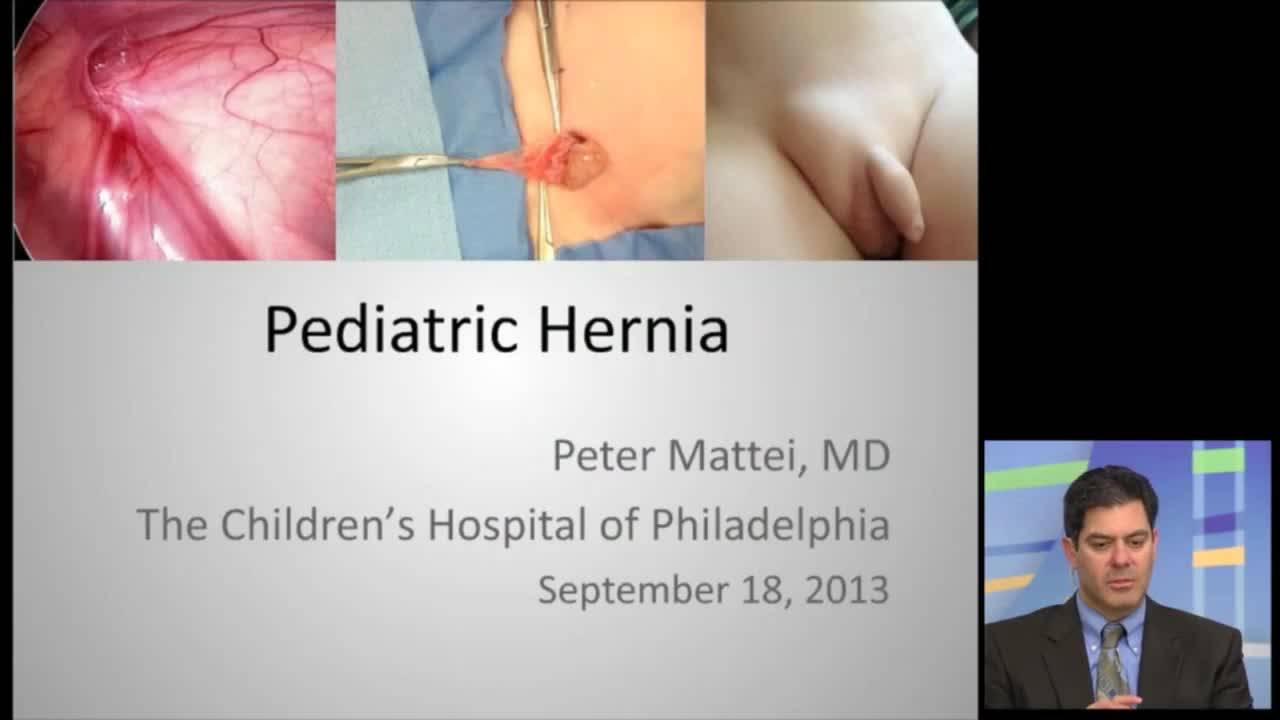
Pediatric Hernia: Update Course 2013
52 min · Published Jul 2017
Video
2024 Laparoscopic Hernia Event
102 min · Published Jun 2024
Video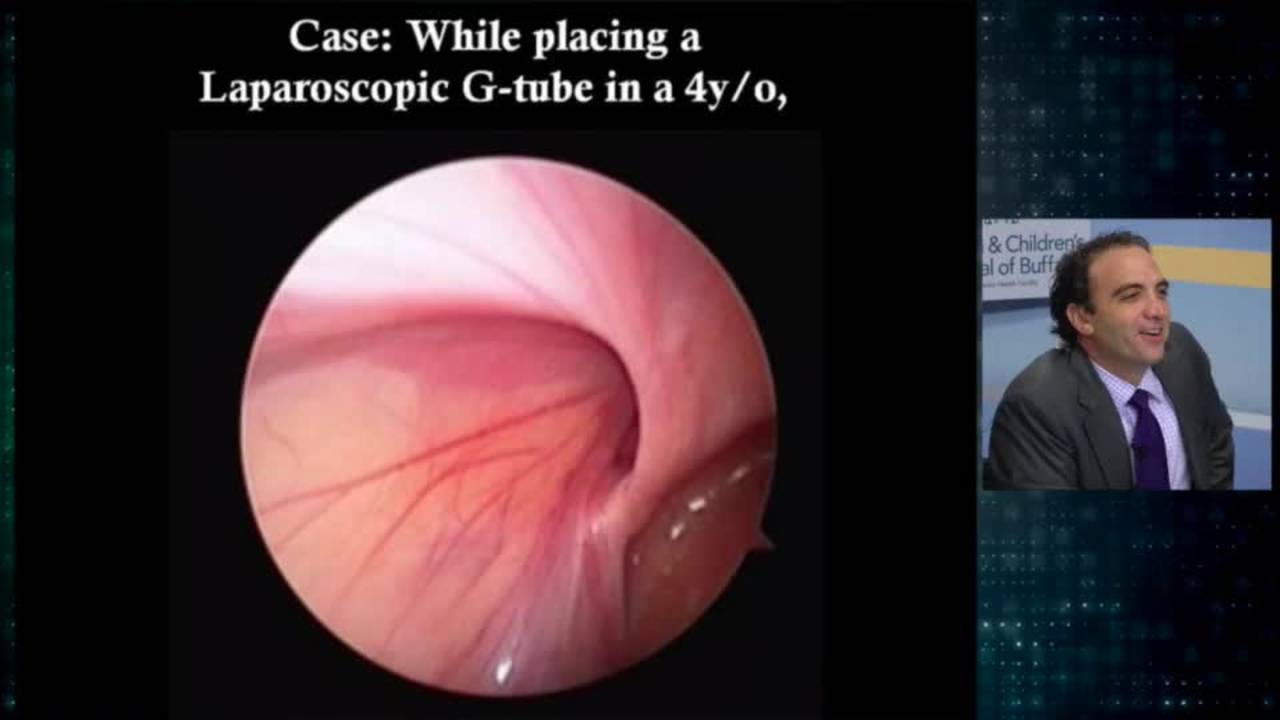
Groin Controversies: Update Course 2016
Dr. Todd Ponsky · 28 min · Published Jul 2017
Video
Laparoscopic Pediatric Hernia Repair 2025
140 min · Published Jun 2025
Podcast
Inguinal Hernias: Diagnosis and Management
16 min · Published Apr 2021
Video
Acute Cholecystitis
Todd Ponsky · 32 min · Published Jul 2026
Video
Update Course Rewind 2025: Updates in NEC Management
11 min · Published Jul 2026
Video
Pediatric Pre-Operative Bowel Prep
Todd Ponsky · 1 min · Published Jul 2026
Video
Journal of Pediatric Surgery Article Review: September 2021
Todd Ponsky · 11 min · Published Jul 2026
Video
Todd Ponsky: What is new in Pediatric Surgery? Teaser
Todd Ponsky · 65 min · Published Jul 2026
Video
ATLS 2021 Pediatric Surgery Update
Todd Ponsky · 16 min · Published Jul 2026
Video
Intestinal Atresia Types Explained: Grossfeld Classification for Pediatric Surgery
1 min · Published Sep 2026
Video
Derivation and validation of the Pediatric Community-Acquired Pneumonia Severity (PedCAPS) score: A prospective cohort study
50 s · Published Sep 2026
Video
FETO for Late-Diagnosed Severe Congenital Diaphragmatic Hernia (CDH) at Cincinnati Children's with Dr. Beth Rymeski
4 min · Published Sep 2026
Video
Severe Congenital Diaphragmatic Hernia (CDH) Case: FETO Management & Unexpected Findings with Dr. Beth Rymeski
3 min · Published Sep 2026
Video
Fetoscopic Endoluminal Tracheal Occlusion (FETO) Procedure: Step-by-Step Guide with Dr. Beth Rymeski
4 min · Published Sep 2026
Video
Choledochal Cyst Types Explained: Pediatric Surgery Fundamentals
1 min · Published Sep 2026
What the experts said
Hernias in children (inguinal and appendicitis) are among the most common operations performed in pediatric surgery.
There are three types of hernias in children: inguinal hernias in the groin, umbilical hernias in the belly button, and epigastric hernias in the top of the abdomen.
80% of umbilical hernias will close spontaneously by the time the child is 3 to 5 years of age.
If umbilical hernia repair is performed under age 3, there is a higher chance of recurrence.
Age 4 or 5 is the sweet spot for umbilical hernia repair timing.
The incidence of umbilical hernia incarceration (intestines getting stuck) is less than 2%.
The chance of inguinal hernia incarceration in premature newborns is 30% (1 out of 3).
Once children reach about 1 year of age, the inguinal hernia incarceration rate drops to the same level as adulthood, which is very low (less than 1%).
During the third trimester of gestation, testicles or ovaries drop from high in the abdomen down into the pelvis, and testicles continue outside the abdomen through a canal between the muscles.
The tunnel created by testicular descent usually closes behind the testicles after they descend; when this fails to close (often due to premature birth), a canal remains through which intestines can follow, creating an inguinal hernia.
The laparoscopic hernia repair recurrence rate using the modified Japanese approach is less than 1%, confirmed by multiple studies.
The original laparoscopic hernia repair technique had a 3-4% recurrence rate, but newer techniques have reduced this to less than 1%.
A baby hernia is fundamentally different from an adult hernia: it is not a problem with the muscle, which is totally normal, but rather a persistent thin layer of peritoneum that went between the muscles and stayed open.
For pediatric inguinal hernia repair, all that is needed is to remove the thin peritoneal tissue, and the muscles close again naturally.
The chance of a pediatric hernia repair failing twice is extremely low, unless the child has a connective tissue disorder.
In adolescents, the laparoscopic non-mesh inguinal hernia repair has less than 2% recurrence rate for all patients.
At 5-year follow-up, which covers when most recurrences happen (early after surgery), the pediatric repair shows good durability, though lifetime follow-up data beyond 5 years is limited.
Direct inguinal hernias are extremely rare in children; Dr. Ponsky has seen only one in 20 years of practice, and it was likely caused by surgical injury during a prior operation.
With laparoscopic repair, injury to the thin floor that can cause direct hernias cannot happen because the technique does not involve lifting and manipulating structures; it only places a stitch.
For pediatric inguinal hernia repair, the technique is typically high ligation (tying off the peritoneal tissue at its origin and removing excess), not a Marcy repair; a Marcy stitch to reinforce muscle is unusual and only used if there is visible muscle weakness.
Braided sutures can cause reactions and infections or abscesses when placed close to the skin in open inguinal hernia repairs, so most surgeons use dissolvable stitches for open repairs.
In laparoscopic repairs, braided permanent sutures are inside the abdomen and reactions should not occur, though they are possible.
Pediatric surgeons are trained specifically for pediatric anatomy and procedures, and patients also benefit from pediatric anesthesiologists when treated by pediatric surgeons.
The incidence of mortality from anesthesia in children is less than the chance of being struck by lightning, and less than the chance of being hit by a car while walking.
Children can develop incisional hernias, and in tiny babies, midline incisions can have a higher incisional hernia rate than in adults because the muscles are not yet strong and formed.
In tiny babies, transverse (across the abdomen) incisions are preferred over midline incisions because they have a lower rate of incisional hernia.
Mesh is avoided in children because they are still growing; a piece of mesh placed over an area will become distorted and move off to the side as the child grows, no longer covering the intended area.
Mesh is not needed in pediatric groin hernias because the primary tissue repair (high ligation) has a less than 1% recurrence rate, which works very well even up to adolescence.
Placing mesh in a child who has not been through their fertile years could theoretically injure the spermatic cord (which carries sperm) through scarring and scaffolding formation, which is a concern for future fertility.
Biologic mesh does not work very well in pediatric surgery; when bridging is needed (e.g., diaphragmatic hernias, abdominal wall defects), polypropylene or Gore-Tex mesh is typically used.
Sports hernias are not true hernias but ligamentous tears from aggressive sports; treatment is 6-8 weeks of physical therapy and rest, not surgery.
Epigastric hernias (defects in the top of the abdomen) are controversial; many surgeons now trend toward not fixing them because they are more cosmetic, though some fix them to prevent harder repairs in adulthood.
When an asymptomatic inguinal hernia defect is found incidentally during another operation, it is typically not repaired at that time because many people have such holes that never cause problems; families are informed it could become symptomatic and require future repair.
In children, 20% of the time when fixing one inguinal hernia, there is also a hernia on the other side.
A hydrocele is a type of hernia where the canal closed almost all the way after testicular descent but left a microscopic hole allowing fluid (but not intestines) to accumulate; these are not dangerous and are mainly a cosmetic problem.
Hydroceles are repaired but surgeons wait until children are older because there is no urgency and most resolve spontaneously.
Undescended testicles that remain high by the abdomen can cause infertility and have a slightly increased risk of cancer, so they should be brought down into the scrotum for examination and fertility preservation.
Undescended testicle repair is performed by about 6 months to 1 year of age, but many testicles that appear high at birth will descend spontaneously, so observation is appropriate initially.
A retractile testicle (where strong muscles pull small testicles upward but they can be easily pulled down manually) does not require surgery; the testicles will fall normally as the child grows.
There is absolutely a familial/congenital component to hernias, though it does not follow exact autosomal dominant or recessive genetic patterns.
Hiatal hernias are very common in newborns (who vomit frequently due to large hiatal hernias that improve with time), and surgery is avoided unless the baby cannot feed.
New research suggests there may be long-term deleterious neurodevelopmental effects of anesthesia in babies under age 2.
Most pediatric surgeons in the United States now avoid elective operations until age 2 or 3 unless urgent, due to anesthesia concerns.
A Mayo Clinic 50-year follow-up study found that the small number of patients requiring re-operation after pediatric inguinal hernia repair had developed direct hernias, which are adult-type hernias, suggesting these were new hernias rather than true recurrences.
A New England Journal of Medicine publication raised the theory that multiple anesthetics in babies under 2 years may cause neurodevelopmental effects noticeable in adulthood, though this is unclear and will be refuted soon.