


From
StayCurrentMD
Improve Wound Misclassification with Focused Education
Chapter 1 of 3 · Fundamentals
Classification challenges
Introduction to wound classification challenges
Expert statements on this page
No expert statements were drawn from this page.
Host summaries · secondary, not cited in answers
Educational content from recorded physician discussions — not medical advice. Talk to your (or your child's) care team about your situation.
Video
El cuidado perioperatorio estandarizado reduce las infecciones del sitio quirúrgico en niños
Published Apr 2023
Video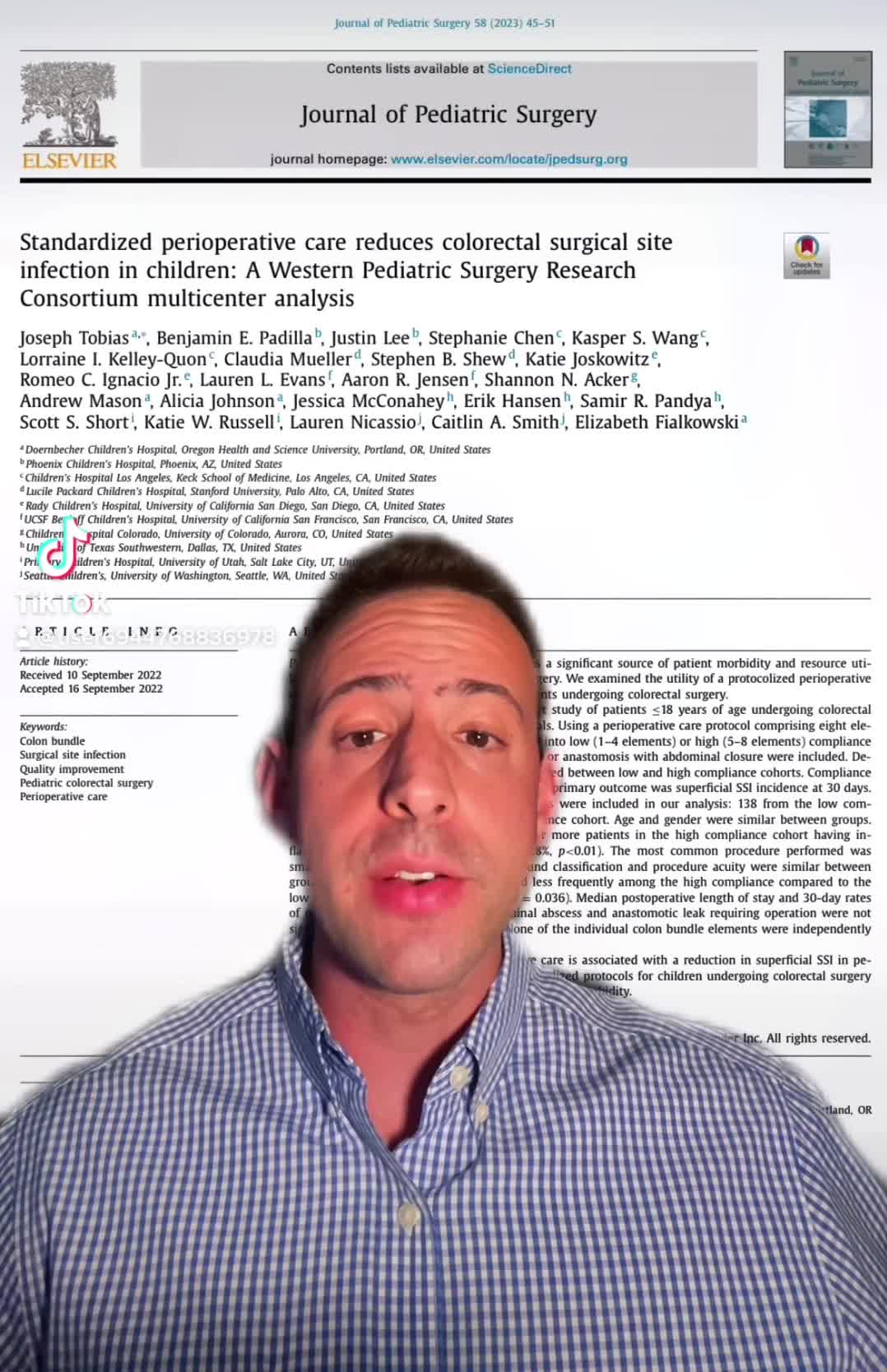
Standardized perioperative care reduces colorectal surgical site infection in children
1 min · Published Apr 2023
Video
MediByte - Intraoperative temperatures impact on postoperative infections
Published May 2020
Video
Update Course Rewind: Effects of Mechanical Bowel Prep on SSIs 2022
Published Jun 2023
Video
The Role of Diversion During Ileal Pouch Anal Anastomosis (IPAA) Creation in Pediatric Ulcerative Colitis - JPS
Published Feb 2024
Video
Surgical Site Infections and Perioperative Antibiotic Use in Children with Medical Complexity
52 s · Published Aug 2026
Video
Intestinal Atresia Types Explained: Grossfeld Classification for Pediatric Surgery
1 min · Published Sep 2026
Video
Derivation and validation of the Pediatric Community-Acquired Pneumonia Severity (PedCAPS) score: A prospective cohort study
50 s · Published Sep 2026
Video
FETO for Late-Diagnosed Severe Congenital Diaphragmatic Hernia (CDH) at Cincinnati Children's with Dr. Beth Rymeski
4 min · Published Sep 2026
Video
Severe Congenital Diaphragmatic Hernia (CDH) Case: FETO Management & Unexpected Findings with Dr. Beth Rymeski
3 min · Published Sep 2026
Video
Fetoscopic Endoluminal Tracheal Occlusion (FETO) Procedure: Step-by-Step Guide with Dr. Beth Rymeski
4 min · Published Sep 2026
Video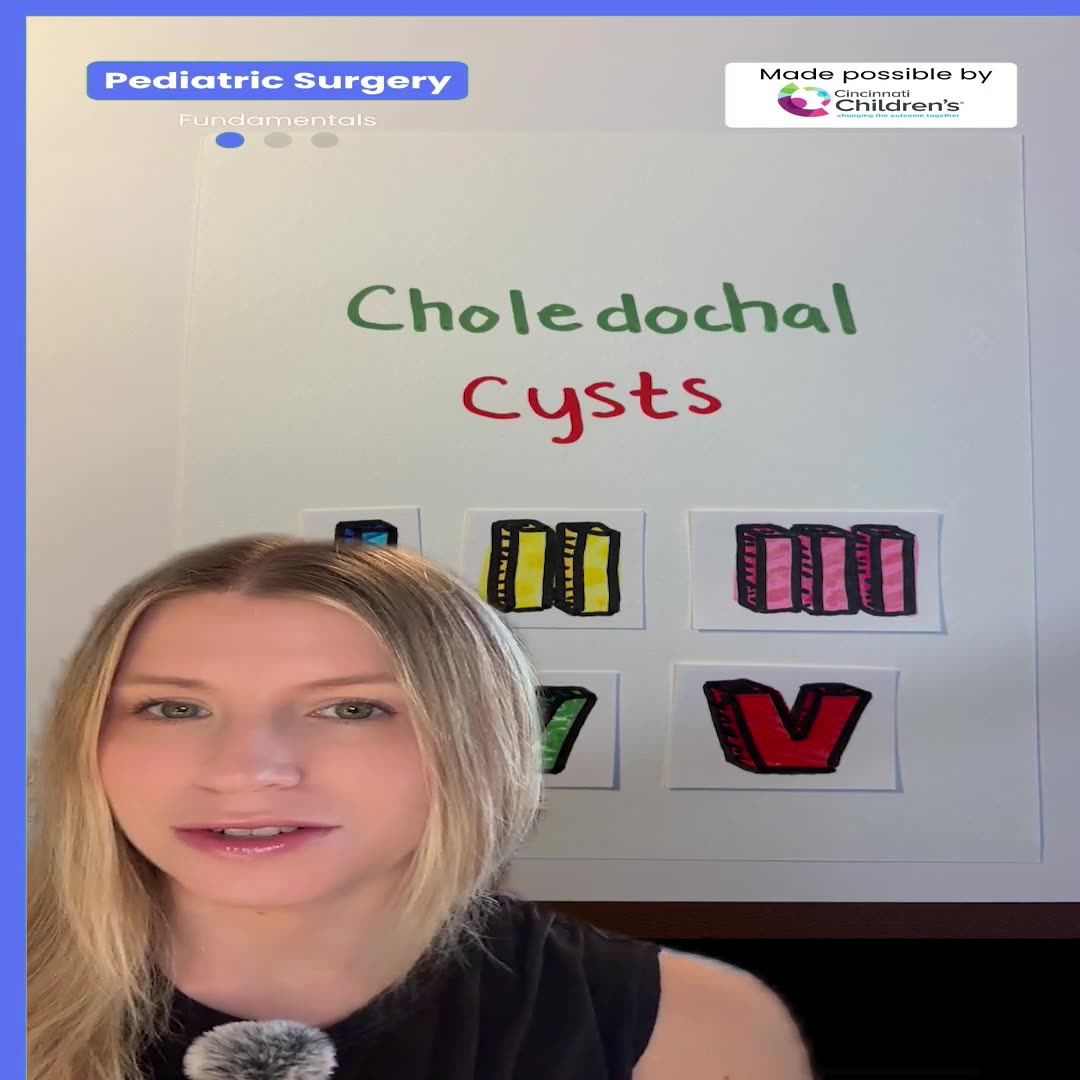
Choledochal Cyst Types Explained: Pediatric Surgery Fundamentals
1 min · Published Sep 2026
What the experts said
Surgical wound classification is regularly highlighted and discussed during M&M conferences
Surgical wound classification is followed closely due to its associated risk of surgical site infections
Wound classification is often used as a surrogate to assess quality of care
Evidence shows wounds continue to be misclassified on a regular basis
Butler and Rockstroh created a cheat sheet for wound classification of 114 common pediatric surgical procedures under their corresponding wound class
The educational intervention involved all pediatric surgeons and OR nurses attending a class with educational slide presentations and case discussions
Laminated posters of OR and wound classification algorithms and a reference list of pediatric procedures sorted by wound class were placed in each operating room
The study compared 200 cases before and 200 cases after the intervention, using the operative report to determine the most accurate wound classification based on CDC guidelines
The two study groups had equal number of class one wounds
Class two wounds were greater in the pre-intervention group
Classes three and four wounds were greater in the post-intervention group
The number of cases that had to be corrected decreased from 35% to 9%
The number of cases upgraded decreased from 24.5% to 9%
Appendectomies are one of the most commonly misclassified cases
For appendectomies, the number of wound classes corrected decreased from 48.4% to 11.1%
For appendectomies, the number of cases that needed to be upgraded decreased from 45% to 11%
Education on how to classify wounds can increase accuracy, thereby improving ability to assess the risk of surgical site infections
The wound classification of common pediatric surgical procedures created by Butler and colleagues may provide intraoperative guidance at other institutions