


From
StayCurrentMD
Letter to the Editor Comment on: Opioid-sparing utility of subcutaneous analgesia systems in pediatric oncology patients following major tumor resection surgery: A matched case-control study
Part of
Pediatric Oncology 696 items
jpedsurg.org shows its articles on its own site.
Read the article on jpedsurg.org ↗Article · Mar 2026 · 1 min read
In brief
In brief
This letter discusses a case-control study examining subcutaneous analgesia systems as an opioid-sparing strategy in pediatric oncology patients after major tumor resection. The commentary highlights the study's methodological strengths in age-matching and standardized opioid dose conversion, addressing the critical need to minimize opioid exposure in vulnerable pediatric surgical populations.
- Subcutaneous analgesic systems (SAS) may reduce opioid exposure in pediatric oncology patients after major tumor resection.
- Age-matched and incision-matched controls strengthen the validity of comparing postoperative opioid requirements.
- Standardized oral morphine equivalent daily dose (MEDD) conversion enables consistent measurement of opioid consumption.
- Opioid-sparing strategies are particularly important in vulnerable pediatric oncology populations.
- Case-control methodology provides clinically relevant framework for evaluating multimodal analgesia approaches.
Written by the GCMD Library team from the article.
We read with great interest the matched case control analysis by Tham and colleagues evaluating subcutaneous analgesic systems (SAS) in pediatric oncology resections (1). Focused matching by age and incision site and standardized conversion to oral morphine equivalent daily dose provide a clinically relevant framework for comparing postoperative opioid exposure. The topic is timely given the need for opioid minimization in vulnerable pediatric populations.
Educational content from recorded physician discussions — not medical advice. Talk to your (or your child's) care team about your situation.
Video
Oncology Tumor Board Showdown: Pediatric Oncology 5 Question Quiz
1 min · Published Oct 2026
Article
Minimally invasive surgery for abdominal and thoracic neuroblastic tumors: A systematic review by the APSA Cancer committee
Juan Pablo Gurria · Published Oct 2026
Video
Clinical & Research Update: Renal Tumors with Drs. Ethan Smith, Lindsay Haacker, Michael Daugherty, and Meera Kotagal
71 min · Published Sep 2026
Video
Clinical & Research Update: Neuroblastoma with Drs. Katherine Somers, Cara Morin, Juan Gurria, and Meera Kotagal
67 min · Published Sep 2026
Video
Clinical & Research Update: Sarcoma w/ Drs. Roshni Dasgupta, Joseph Pressey, Arthur Meyer, Luke Pater
66 min · Published Sep 2026
Video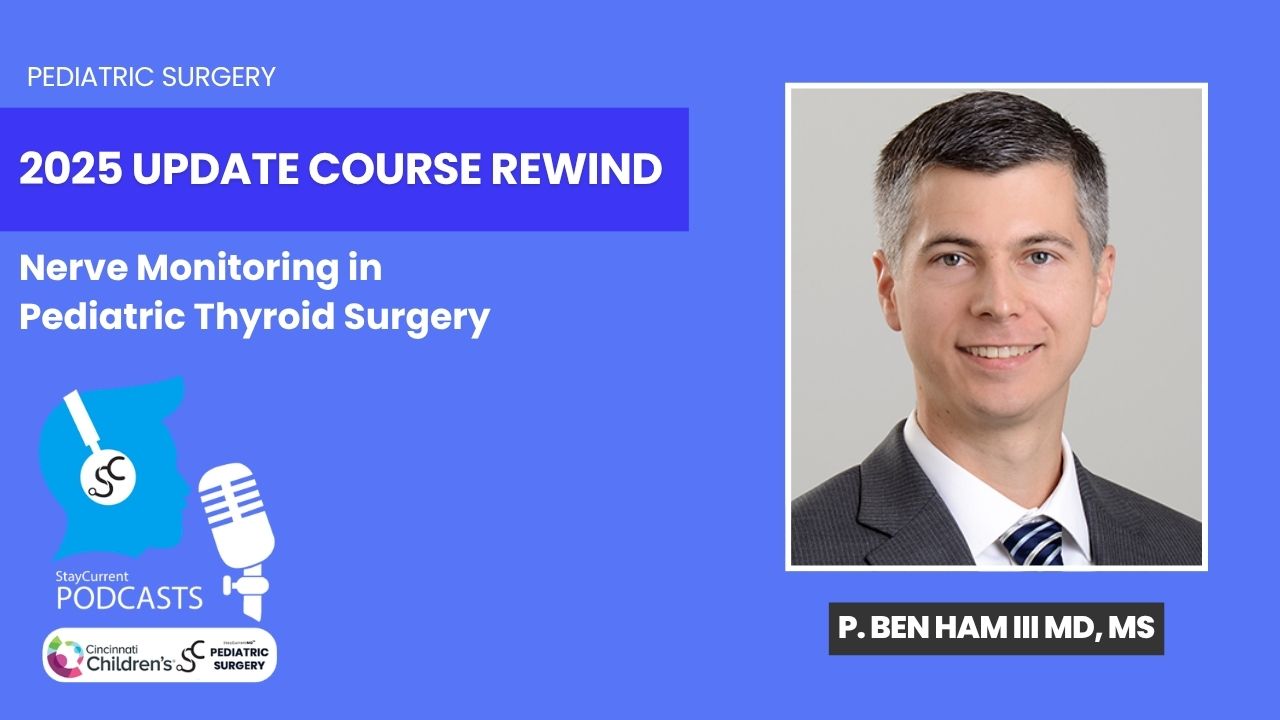
Update Course Rewind 2025: Nerve Monitoring in Pediatric Thyroid Surgery
6 min · Published Jul 2026
Video
Intestinal Atresia Types Explained: Grossfeld Classification for Pediatric Surgery
1 min · Published Sep 2026
Video
Derivation and validation of the Pediatric Community-Acquired Pneumonia Severity (PedCAPS) score: A prospective cohort study
50 s · Published Sep 2026
Video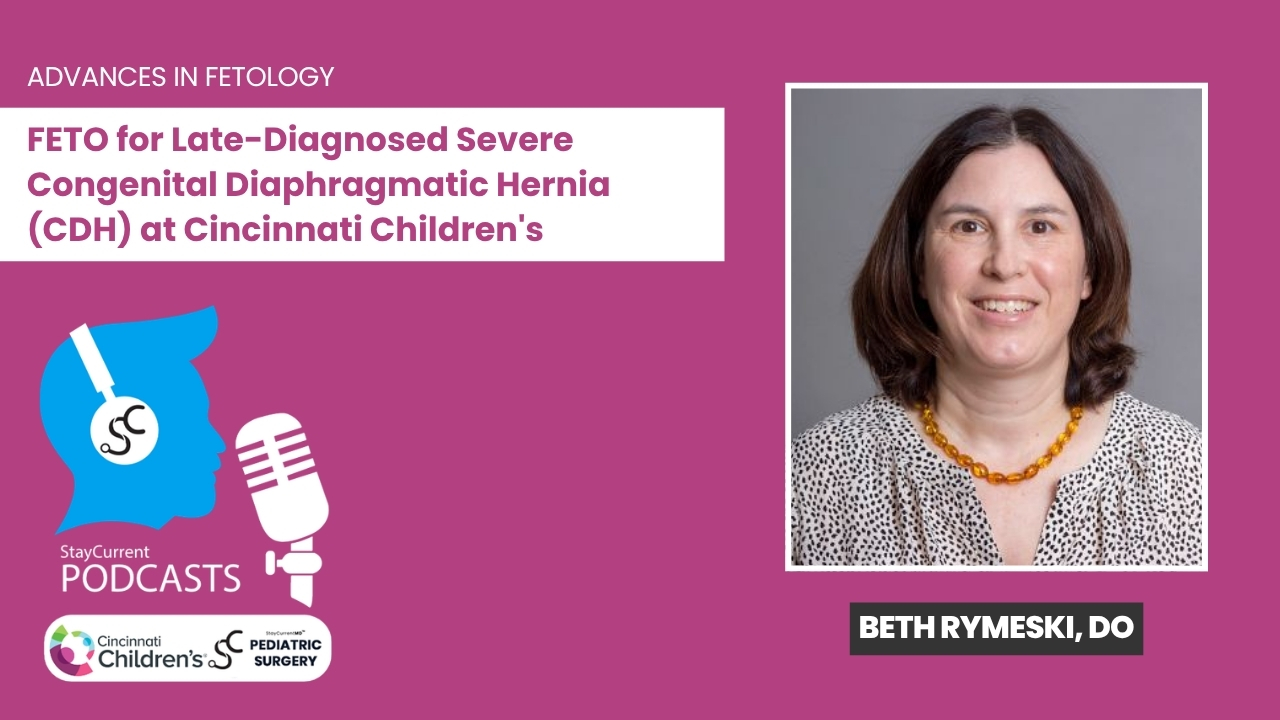
FETO for Late-Diagnosed Severe Congenital Diaphragmatic Hernia (CDH) at Cincinnati Children's with Dr. Beth Rymeski
4 min · Published Sep 2026
Video
Severe Congenital Diaphragmatic Hernia (CDH) Case: FETO Management & Unexpected Findings with Dr. Beth Rymeski
3 min · Published Sep 2026
Video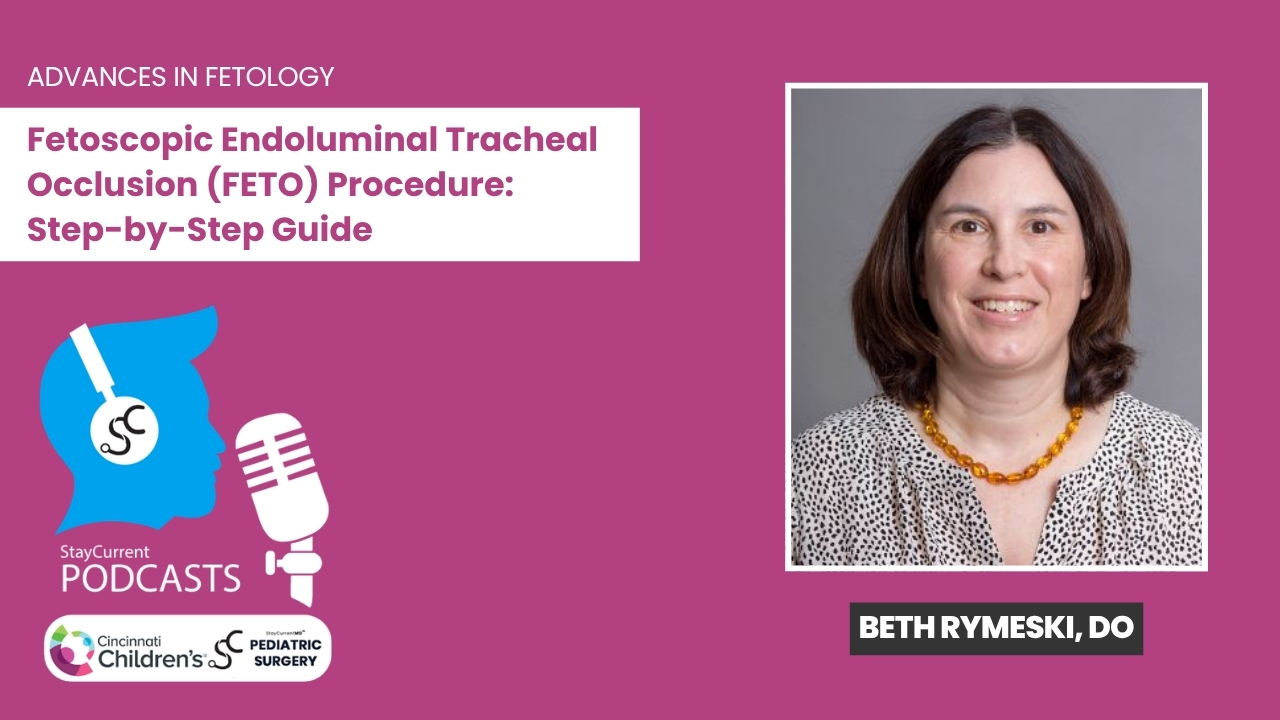
Fetoscopic Endoluminal Tracheal Occlusion (FETO) Procedure: Step-by-Step Guide with Dr. Beth Rymeski
4 min · Published Sep 2026
Video
Choledochal Cyst Types Explained: Pediatric Surgery Fundamentals
1 min · Published Sep 2026