


Optimizing Surveillance Strategies for Sacrococcygeal Teratoma (SCT) | Retrospective Cohort Multi-institutional | 11 pediatric centers | 178 patients ≤18 years old underwent SCT resection | Median follow-up: 2.9 years | Excluded: Currarino syndrome | 2010-2020 | Overall sacrococcygeal teratoma recurrence rate = 10% | Recurrence-free survival: 1 year: 93.7% | 3 years: 88.8% | 5 years: 88.8% | Malignancy was the only significant predictor of recurrence | Significant variation in surveillance: imaging frequency | tumor marker monitoring | duration to surveillance | Conclusion: Most recurrences occur within 3 years. Standardized surveillance protocols could reduce unnecessary testing, improve early detection, and improve consistency. | https://pubmed.ncbi.nlm.nih.gov/40536476/ | Srivatsa S et al. | Center for Surgical Outcomes Research, Division of Pediatric Surgery, Nationwide Children's Hospital, USA | @LizzyPAC8 | @globalcastmd | @StayCurrentMD | Cincinnati Children's
From
StayCurrentMD
Optimizing surveillance strategies for sacrococcygeal teratoma: A Midwest pediatric surgery consortium multi-institutional study
Part of
Pediatric Oncology 696 items
Infographic · Jan 2026 · 1 min read
In brief
In brief
Multi-institutional study of 178 pediatric SCT patients found 10% recurrence rate over median 2.88-year follow-up, with malignant histology as sole significant predictor (HR 5.83). Study recommends minimum 3-year surveillance protocol for lower-risk tumors, as most recurrences occurred within first 3 years post-resection.
- 10% of pediatric SCT patients experienced recurrence during median 2.88-year follow-up; most recurrences occurred within first 3 years post-resection
- Malignant histopathology was the only significant predictor of recurrence (HR 5.83), while timing of diagnosis, resection completeness, and Altman classification were not
- Surveillance strategies varied significantly across 11 institutions with no standardized protocol for post-resection monitoring
- Minimum 3-year surveillance with imaging, tumor markers, and clinical exams recommended for lower-risk mature and immature teratomas
- Overall recurrence-free survival was 93.7% at 1 year, 88.8% at 3 years, and 88.8% at 5 years across all histologic subtypes
Written by the GCMD Library team from the infographic.
The infographic uses a teal, pink, and yellow color scheme with anatomical spine illustration on the right. Layout includes a header section, central statistics in colored boxes, and a conclusion banner at bottom. Icons include a clipboard checklist and an MRI scanner illustration with a patient.
Shachi Srivatsa, Lindsay Gil , Yueran Zhang , Beth Rymeski , Amelia Gavulic , Grace Mak , Sindhu V Mannava , Troy A Markel, Matthew P Landman , Dave R Lal , Jennifer Schuh , Devashish Joshi , Brianna Spencer , Samir Gadepalli , Seth D Goldstein , Mark Ranalli , Kyle J Van Arendonk , Peter Minneci , Jennifer H Aldrink
Abstract
Sacrococcygeal teratomas (SCTs) are the most common germ cell tumors in neonates and infants. While typically benign, SCTs carry an undefined risk of recurrence and malignant transformation, making post-resection surveillance critical. However, no consensus guidelines exist to direct post-resection surveillance. We conducted a multi-institutional retrospective cohort study across 11 pediatric institutions in the Midwest Pediatric Surgery Research Consortium. The study included patients 18 years or younger who underwent SCT resection from January 2010 to December 2020, excluding those with Currarino syndrome. The primary outcome was SCT recurrence, assessed via clinical exams, imaging, and tumor markers. Secondary outcomes included recurrence histology and surveillance practices. Cox proportional hazards modeling evaluated recurrence risk factors.
Of the 178 patients, 10% experienced recurrence during a median follow-up period of 2.88 years (IQR: 1.52, 4.80). Overall recurrence-free survival for the entire cohort was 93.7%, 88.8%, and 88.8% at 1, 3, and 5 years, respectively. Malignant histopathology was the only factor significantly associated with recurrence (HR 5.83, p = .014). The timing of SCT diagnosis, completeness of resection, and Altman classification were not significantly associated with recurrence. Surveillance strategies varied significantly across institutions, with no standardized protocol for follow-up.
The majority of recurrences occurred within the first 3 years post-resection, with malignant histopathology being the strongest predictor. For lower risk tumors (mature and immature teratomas), a minimum of 3 years of surveillance, including imaging, tumor markers, and clinical exams, is recommended. Standardized surveillance protocols could improve consistency and early detection.
The text in the image
Educational content from recorded physician discussions — not medical advice. Talk to your (or your child's) care team about your situation.
Video
Oncology Tumor Board Showdown: Pediatric Oncology 5 Question Quiz
1 min · Published Oct 2026
Article
Minimally invasive surgery for abdominal and thoracic neuroblastic tumors: A systematic review by the APSA Cancer committee
Juan Pablo Gurria · Published Oct 2026
Video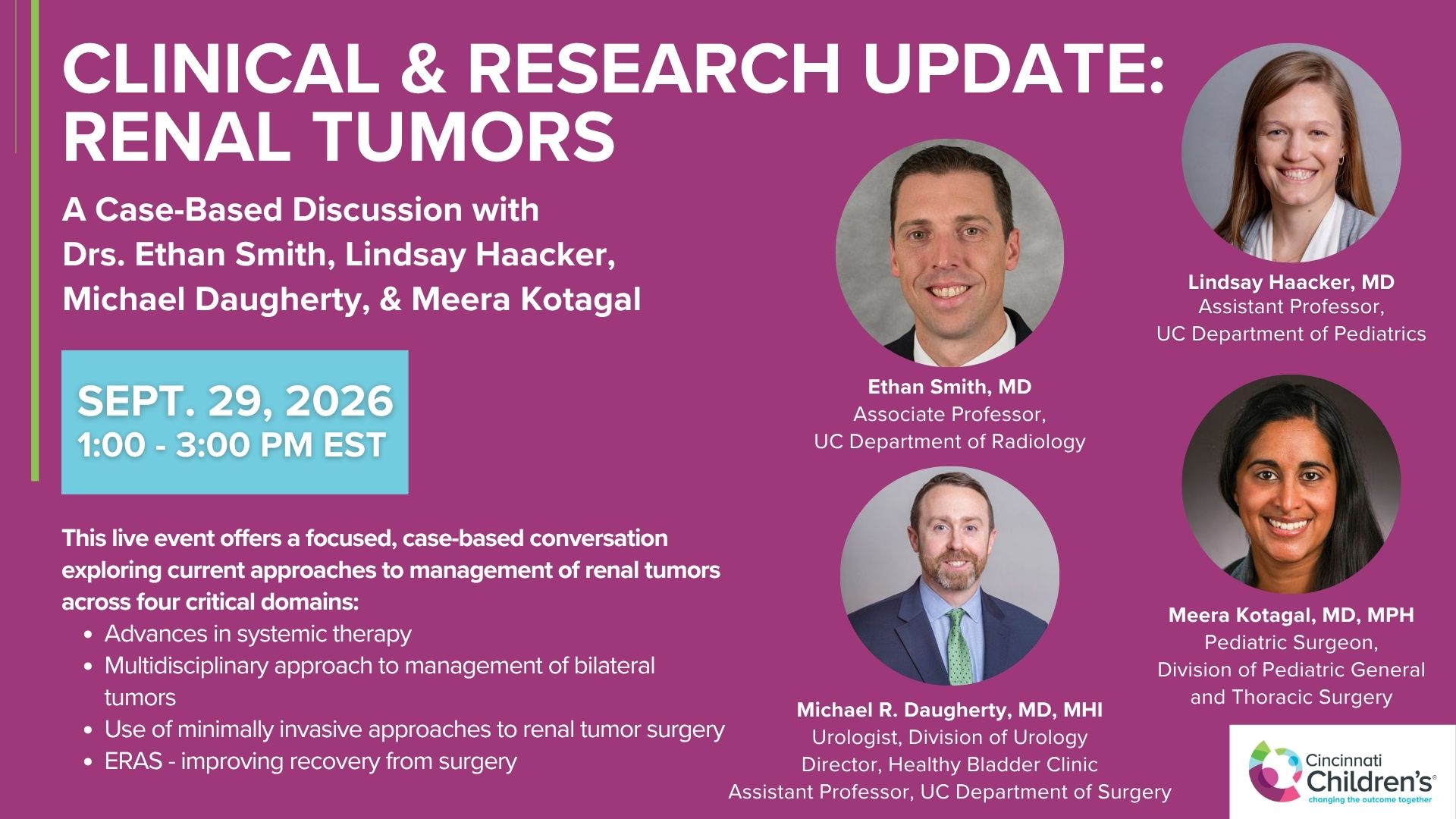
Clinical & Research Update: Renal Tumors with Drs. Ethan Smith, Lindsay Haacker, Michael Daugherty, and Meera Kotagal
71 min · Published Sep 2026
Video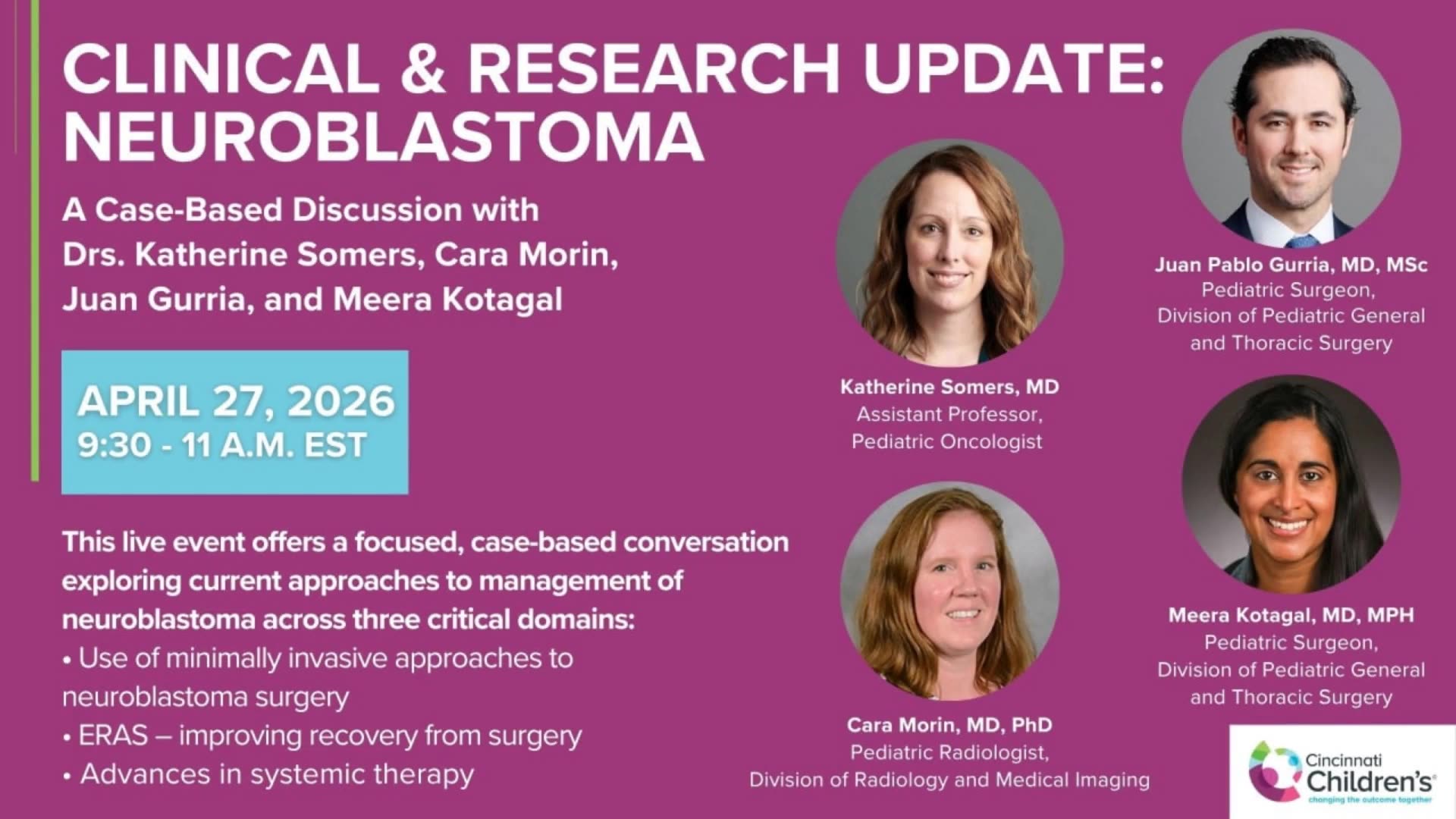
Clinical & Research Update: Neuroblastoma with Drs. Katherine Somers, Cara Morin, Juan Gurria, and Meera Kotagal
67 min · Published Sep 2026
Video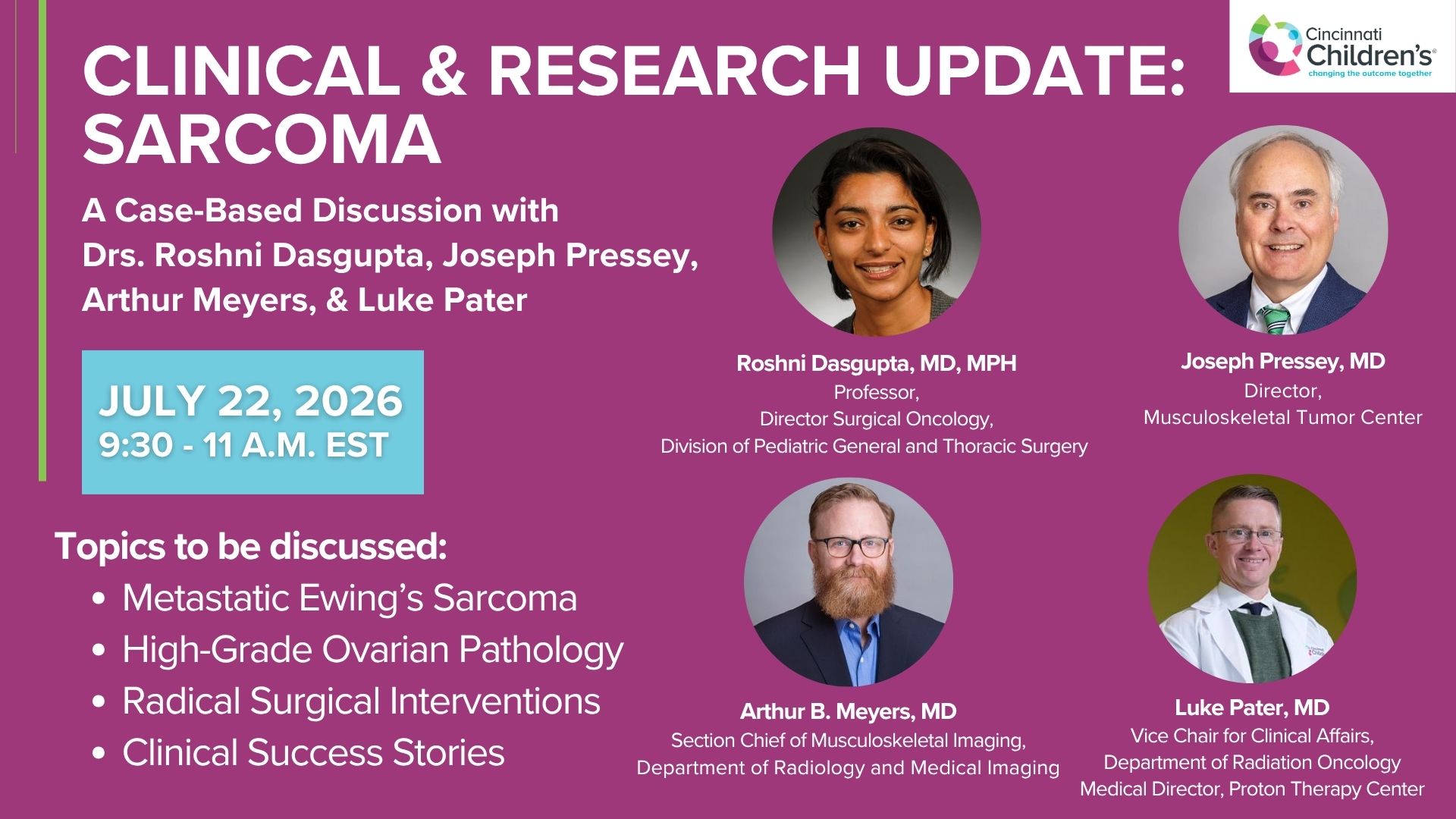
Clinical & Research Update: Sarcoma w/ Drs. Roshni Dasgupta, Joseph Pressey, Arthur Meyer, Luke Pater
66 min · Published Sep 2026
Video
Update Course Rewind 2025: Nerve Monitoring in Pediatric Thyroid Surgery
6 min · Published Jul 2026
Video
Intestinal Atresia Types Explained: Grossfeld Classification for Pediatric Surgery
1 min · Published Sep 2026
Video
Derivation and validation of the Pediatric Community-Acquired Pneumonia Severity (PedCAPS) score: A prospective cohort study
50 s · Published Sep 2026
Video
FETO for Late-Diagnosed Severe Congenital Diaphragmatic Hernia (CDH) at Cincinnati Children's with Dr. Beth Rymeski
4 min · Published Sep 2026
Video
Severe Congenital Diaphragmatic Hernia (CDH) Case: FETO Management & Unexpected Findings with Dr. Beth Rymeski
3 min · Published Sep 2026
Video
Fetoscopic Endoluminal Tracheal Occlusion (FETO) Procedure: Step-by-Step Guide with Dr. Beth Rymeski
4 min · Published Sep 2026
Video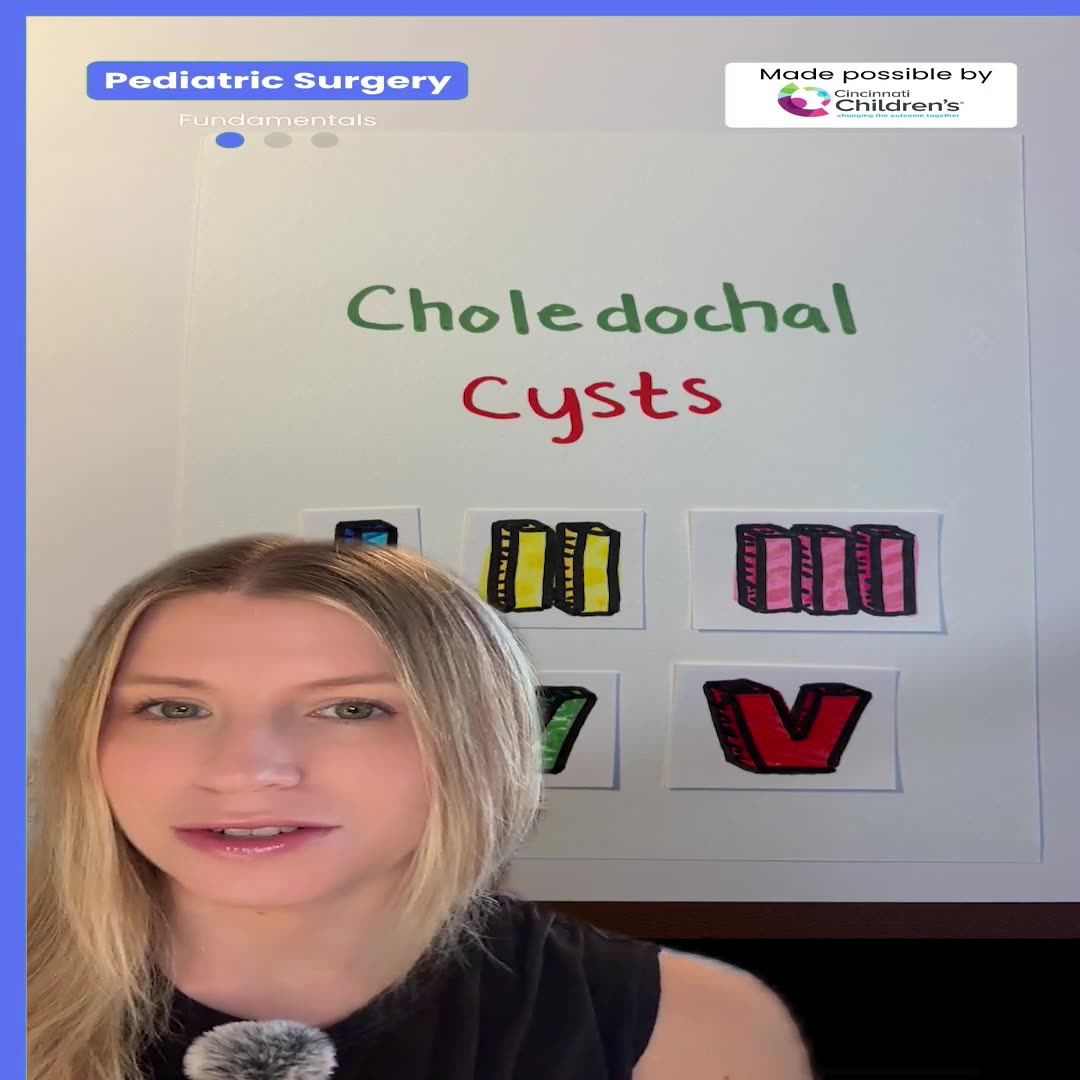
Choledochal Cyst Types Explained: Pediatric Surgery Fundamentals
1 min · Published Sep 2026