


From
StayCurrentMD
Combined MEK and YAP inhibition in a mouse model of neuroblastoma: A promising approach for minimal residual disease
Part of
Pediatric Oncology 696 items
jpedsurg.org shows its articles on its own site.
Read the article on jpedsurg.org ↗Article · Oct 2025 · 1 min read
In brief
In brief
This study investigates combined MEK and YAP inhibition as a strategy to overcome resistance in high-risk neuroblastoma treatment. Using a mouse model mimicking post-surgical minimal residual disease, researchers address the challenge of YAP-mediated resistance that develops during long-term trametinib therapy.
- Trametinib (MEK inhibitor) shows efficacy in neuroblastoma models and prolongs survival in minimal residual disease settings.
- Long-term trametinib monotherapy leads to resistance via YAP activation in the Hippo pathway.
- Combined MEK and YAP inhibition may overcome resistance mechanisms in high-risk neuroblastoma treatment.
- Minimal residual disease mouse models effectively mimic post-surgical residual tumor for therapy testing.
Written by the GCMD Library team from the article.
The cure rate of high-risk neuroblastoma remains unsatisfactory, necessitating the development of novel therapies. We previously reported the in vitro and in vivo efficacy of trametinib (TR), a MEK inhibitor, in neuroblastoma. The administration of TR further prolonged survival in a mouse model of neuroblastoma with minimal residual disease (MRD), which mimics post-tumorectomy residuals. However, the acquisition of resistance to long-term TR administration with YAP activation in the Hippo pathway remains an issue.
Educational content from recorded physician discussions — not medical advice. Talk to your (or your child's) care team about your situation.
Video
Oncology Tumor Board Showdown: Pediatric Oncology 5 Question Quiz
1 min · Published Oct 2026
Article
Minimally invasive surgery for abdominal and thoracic neuroblastic tumors: A systematic review by the APSA Cancer committee
Juan Pablo Gurria · Published Oct 2026
Video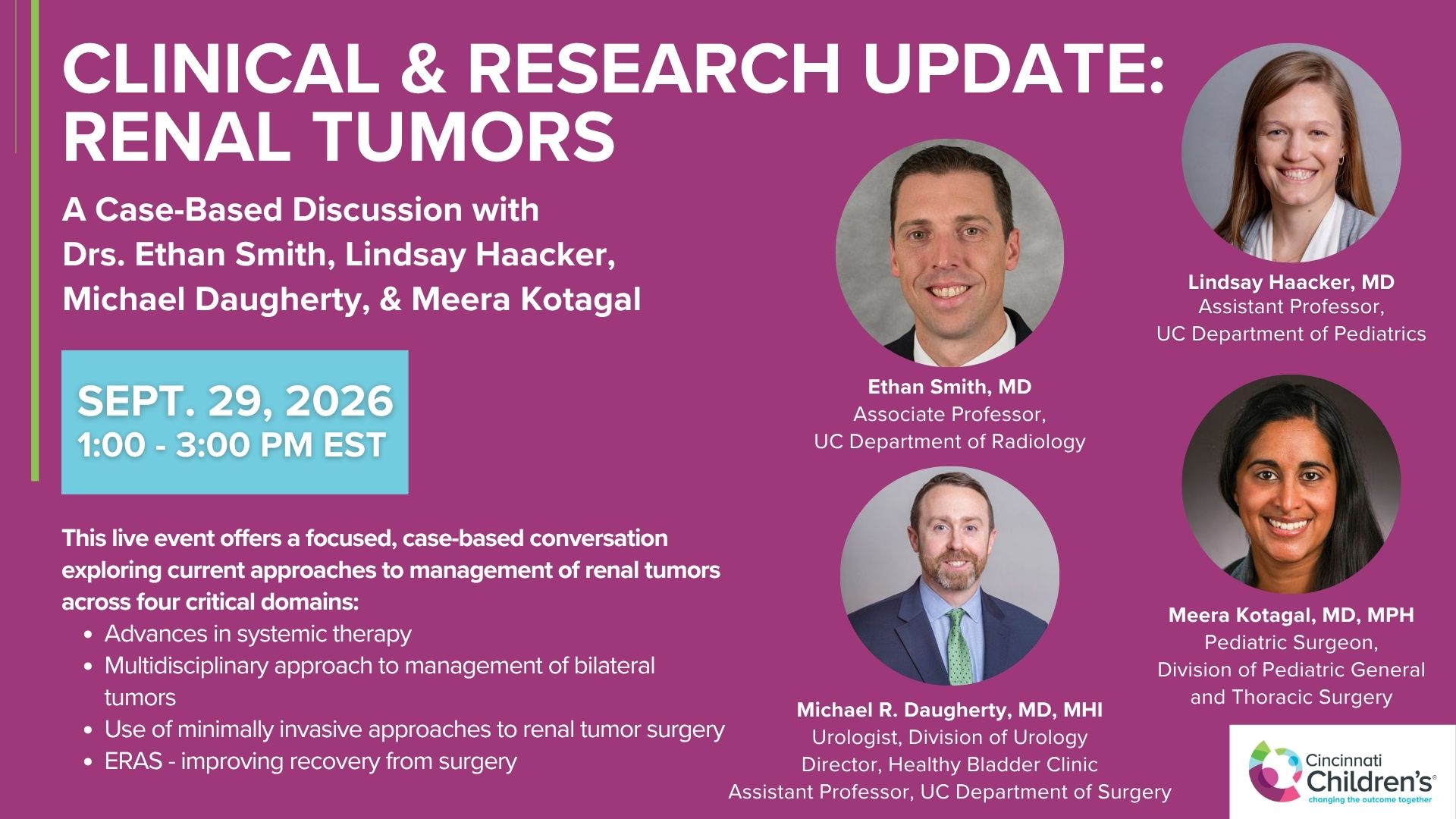
Clinical & Research Update: Renal Tumors with Drs. Ethan Smith, Lindsay Haacker, Michael Daugherty, and Meera Kotagal
71 min · Published Sep 2026
Video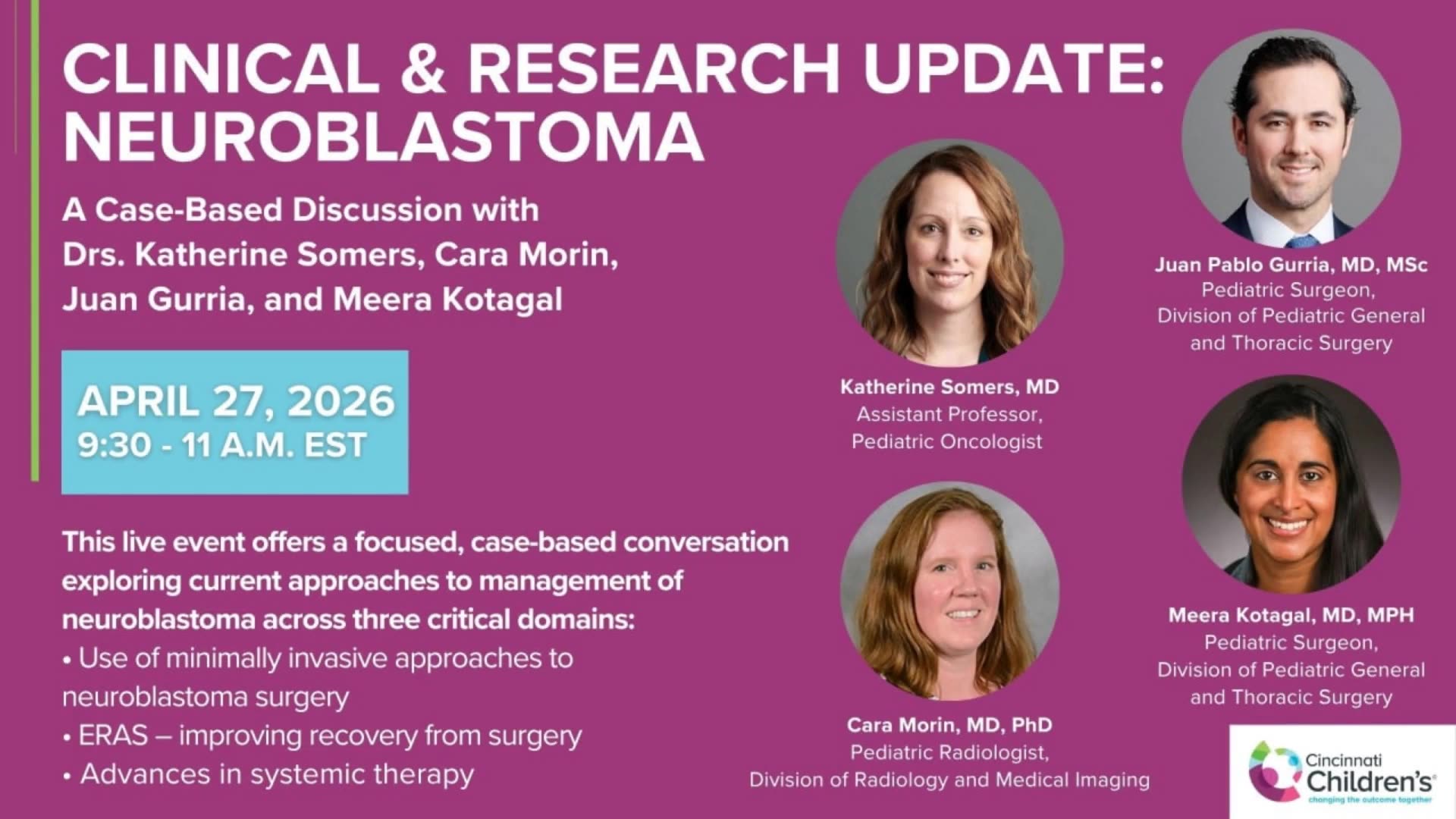
Clinical & Research Update: Neuroblastoma with Drs. Katherine Somers, Cara Morin, Juan Gurria, and Meera Kotagal
67 min · Published Sep 2026
Video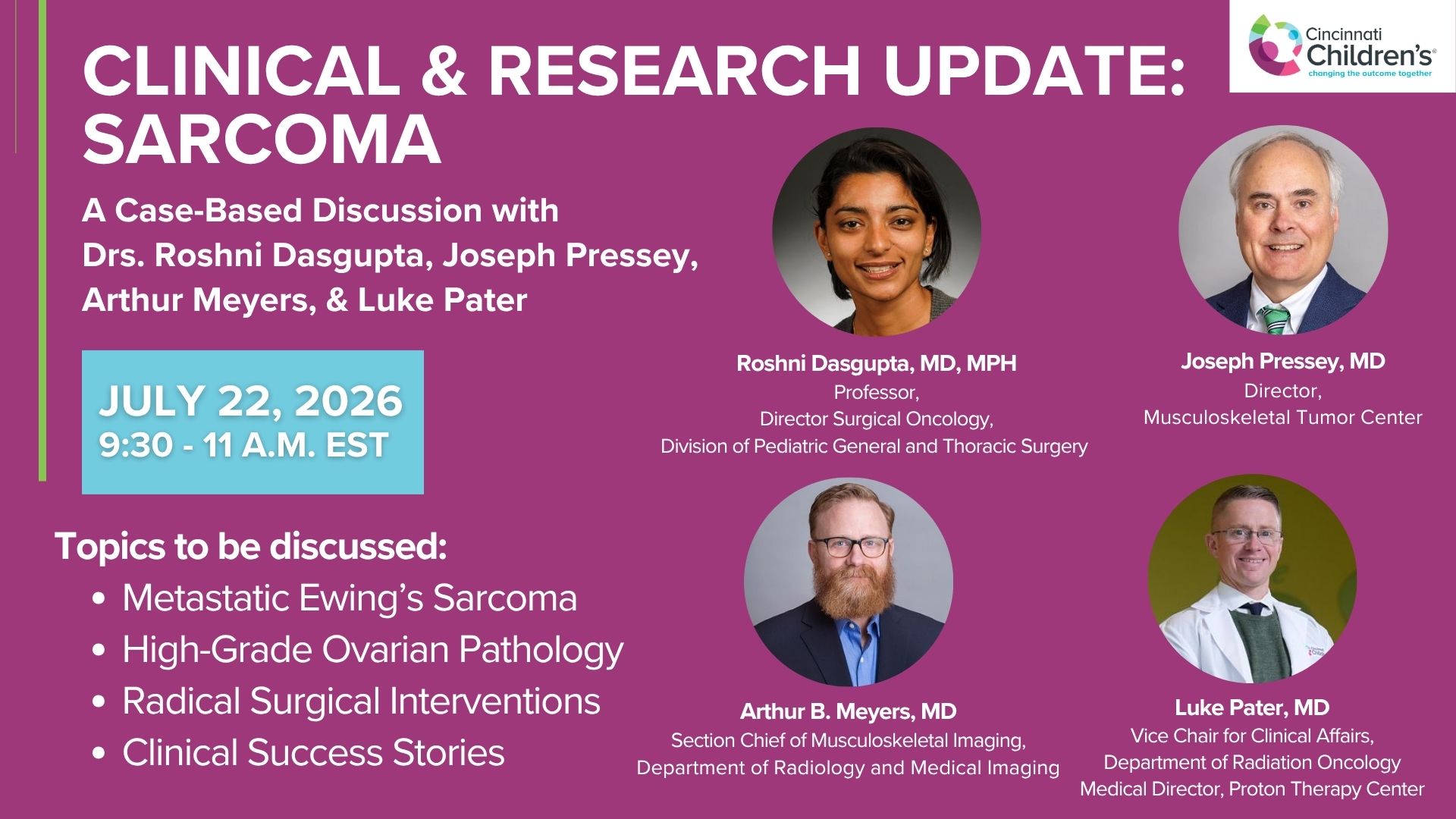
Clinical & Research Update: Sarcoma w/ Drs. Roshni Dasgupta, Joseph Pressey, Arthur Meyer, Luke Pater
66 min · Published Sep 2026
Video
Update Course Rewind 2025: Nerve Monitoring in Pediatric Thyroid Surgery
6 min · Published Jul 2026
Video
Intestinal Atresia Types Explained: Grossfeld Classification for Pediatric Surgery
1 min · Published Sep 2026
Video
Derivation and validation of the Pediatric Community-Acquired Pneumonia Severity (PedCAPS) score: A prospective cohort study
50 s · Published Sep 2026
Video
FETO for Late-Diagnosed Severe Congenital Diaphragmatic Hernia (CDH) at Cincinnati Children's with Dr. Beth Rymeski
4 min · Published Sep 2026
Video
Severe Congenital Diaphragmatic Hernia (CDH) Case: FETO Management & Unexpected Findings with Dr. Beth Rymeski
3 min · Published Sep 2026
Video
Fetoscopic Endoluminal Tracheal Occlusion (FETO) Procedure: Step-by-Step Guide with Dr. Beth Rymeski
4 min · Published Sep 2026
Video
Choledochal Cyst Types Explained: Pediatric Surgery Fundamentals
1 min · Published Sep 2026