


From
StayCurrentMD
Invited Commentary for: A Report on Testicular Tissue Cryopreservation for Fertility Preservation in Children: Confirmation of Germ Cell Preservation and Few Surgical Complications
Part of
Pediatric Oncology 696 items
jpedsurg.org shows its articles on its own site.
Read the article on jpedsurg.org ↗Article · May 2025 · 1 min read
In brief
In brief
This commentary addresses testicular tissue cryopreservation as an emerging fertility preservation option for prepubertal boys facing cancer treatment or other conditions threatening future fertility. As pediatric cancer survival improves, preserving reproductive potential before gonadotoxic therapy has become a key quality-of-life consideration, with this technique showing promise for germ cell preservation with minimal surgical risk.
- Fertility preservation is now a critical quality-of-life concern for pediatric cancer survivors with improving survival rates.
- Sperm banking is standard for postpubertal males; oocyte/embryo cryopreservation is standard for postpubertal females.
- Prepubertal children with malignant or nonmalignant conditions increasingly need fertility preservation options before treatment.
- Testicular tissue cryopreservation offers emerging fertility preservation for prepubertal boys unable to produce sperm samples.
Written by the GCMD Library team from the article.
The increasing survival rates for pediatric cancer patients have shifted the focus towards long-term quality of life, with fertility preservation emerging as a critical concern. Fertility preservation (FP) in adults undergoing treatment for malignancy has been well established, with sperm cryopreservation (“sperm banking”) a well-established option for men. For postpubertal women, oocyte and embryo cryopreservation are considered standard. In recent decades, the need for FP in prepubertal children at risk due to malignant or nonmalignant (hematologic, DSD, and other) conditions has been increasingly recognized (optimally prior to treatment), with advances in the options available [1,2].
Educational content from recorded physician discussions — not medical advice. Talk to your (or your child's) care team about your situation.
Video
Oncology Tumor Board Showdown: Pediatric Oncology 5 Question Quiz
1 min · Published Oct 2026
Article
Minimally invasive surgery for abdominal and thoracic neuroblastic tumors: A systematic review by the APSA Cancer committee
Juan Pablo Gurria · Published Oct 2026
Video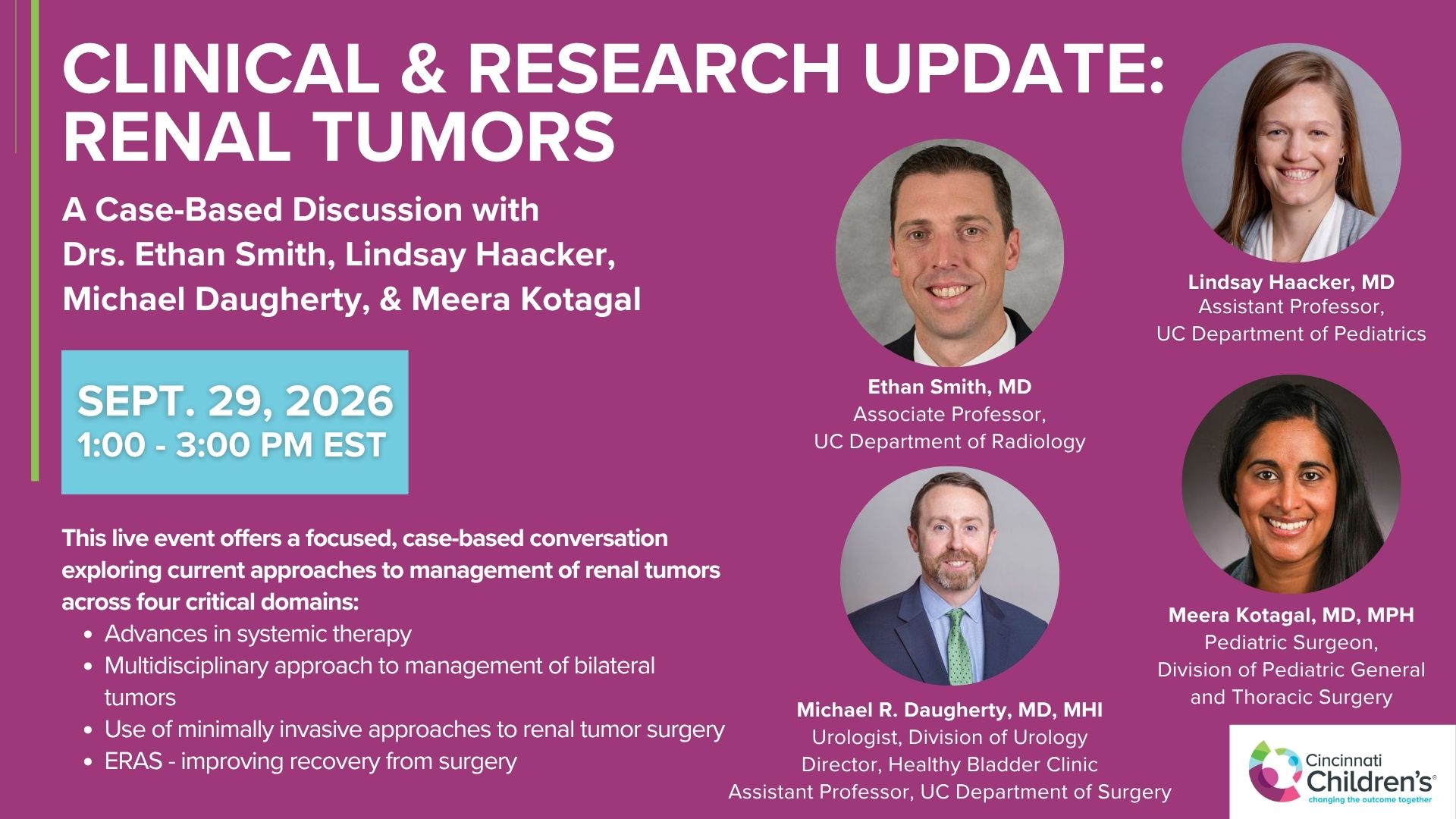
Clinical & Research Update: Renal Tumors with Drs. Ethan Smith, Lindsay Haacker, Michael Daugherty, and Meera Kotagal
71 min · Published Sep 2026
Video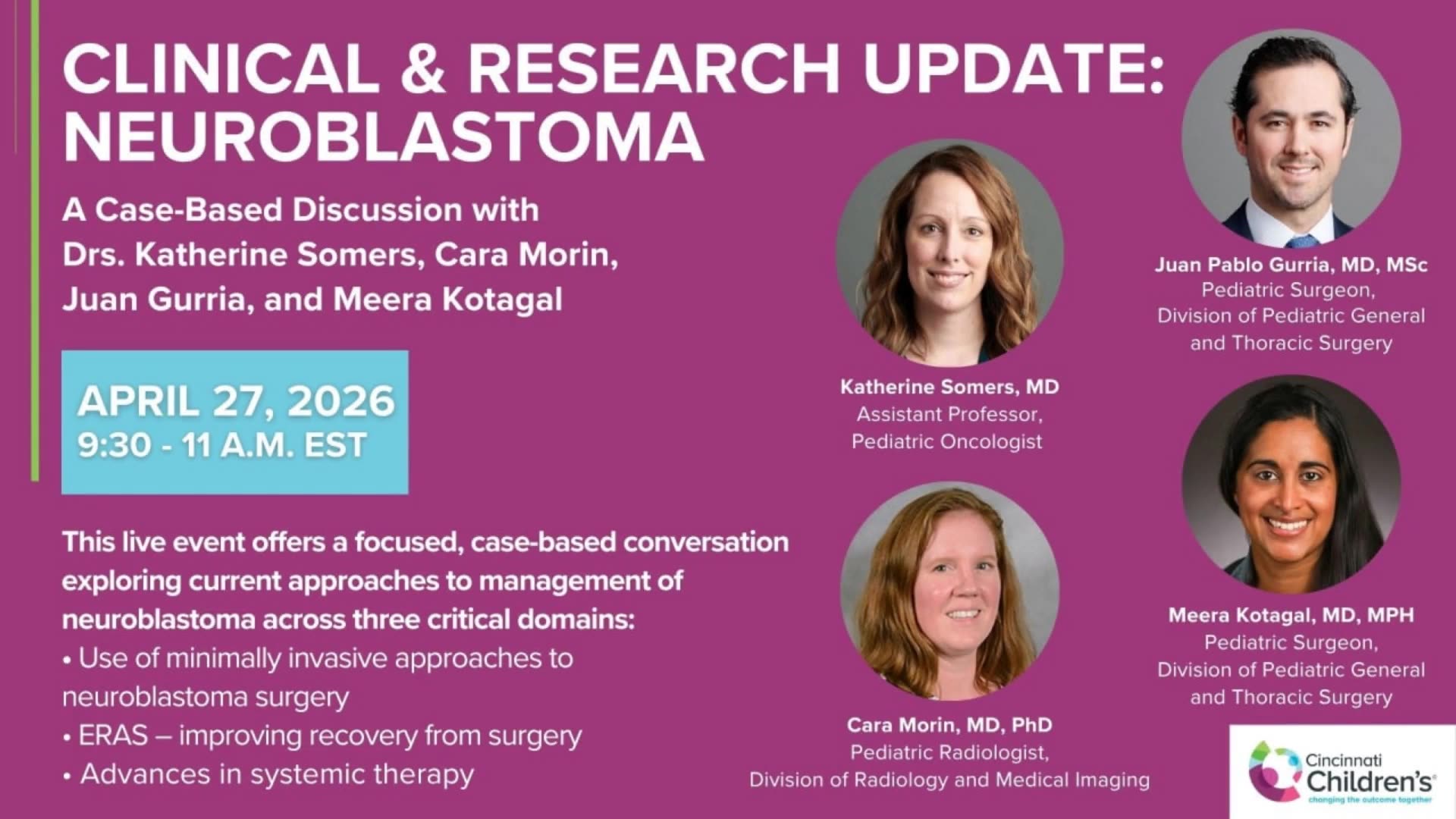
Clinical & Research Update: Neuroblastoma with Drs. Katherine Somers, Cara Morin, Juan Gurria, and Meera Kotagal
67 min · Published Sep 2026
Video
Clinical & Research Update: Sarcoma w/ Drs. Roshni Dasgupta, Joseph Pressey, Arthur Meyer, Luke Pater
66 min · Published Sep 2026
Video
Update Course Rewind 2025: Nerve Monitoring in Pediatric Thyroid Surgery
6 min · Published Jul 2026
Video
Intestinal Atresia Types Explained: Grossfeld Classification for Pediatric Surgery
1 min · Published Sep 2026
Video
Derivation and validation of the Pediatric Community-Acquired Pneumonia Severity (PedCAPS) score: A prospective cohort study
50 s · Published Sep 2026
Video
FETO for Late-Diagnosed Severe Congenital Diaphragmatic Hernia (CDH) at Cincinnati Children's with Dr. Beth Rymeski
4 min · Published Sep 2026
Video
Severe Congenital Diaphragmatic Hernia (CDH) Case: FETO Management & Unexpected Findings with Dr. Beth Rymeski
3 min · Published Sep 2026
Video
Fetoscopic Endoluminal Tracheal Occlusion (FETO) Procedure: Step-by-Step Guide with Dr. Beth Rymeski
4 min · Published Sep 2026
Video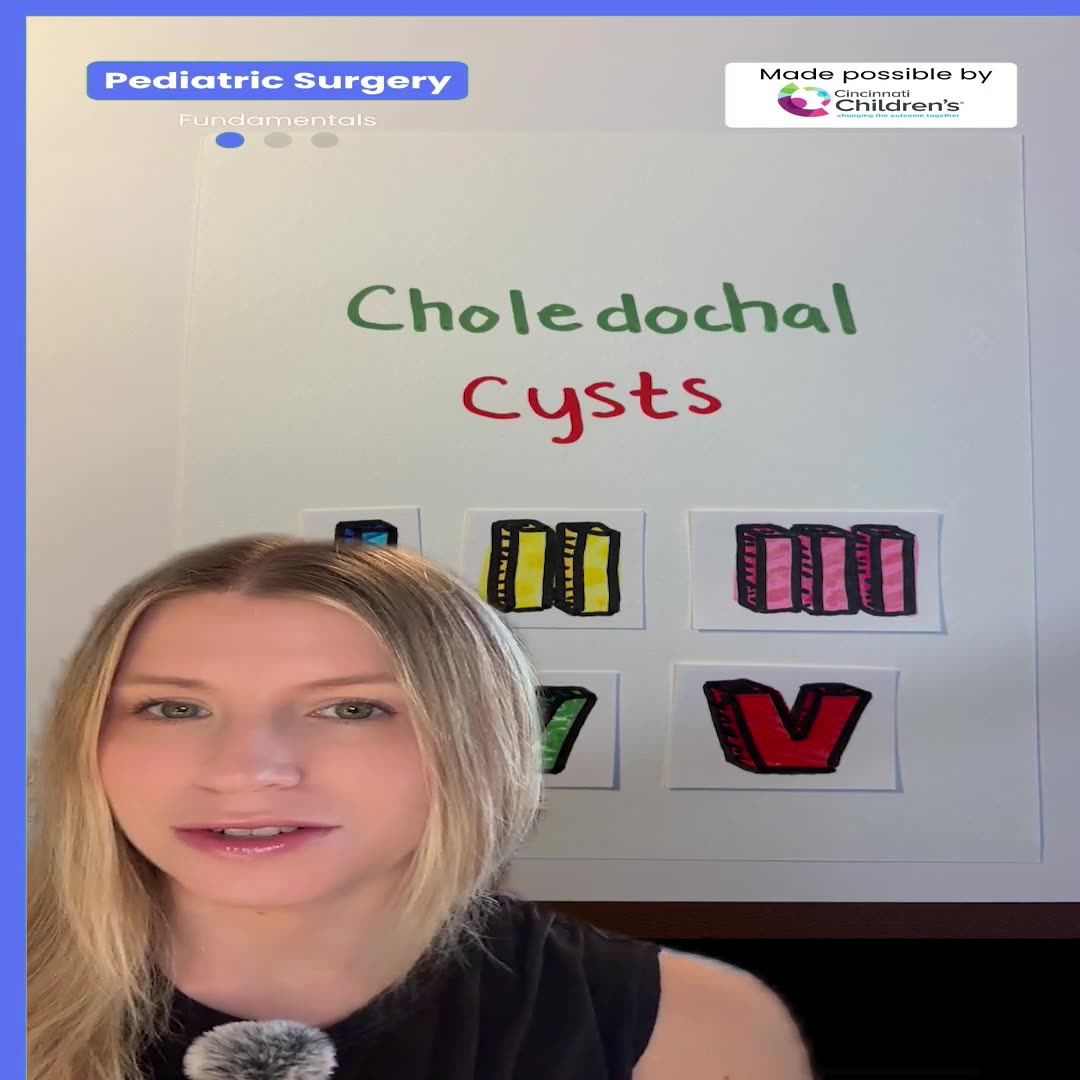
Choledochal Cyst Types Explained: Pediatric Surgery Fundamentals
1 min · Published Sep 2026