


From
StayCurrentMD
Journal of Pediatric Surgery Article Review: July 2023, PAPS Issue
With Dr. Mary Brindle & Dr. Jamie Schnuck & Dr. Bill Chu · hosted by Dr. Cecilia Gigena & Dr. Em Gootee
Chapter 1 of 5 · Evidence & Research
Introduction
Introduction and Episode Overview
Expert statements on this page
No expert statements were drawn from this page.
Host summaries · secondary, not cited in answers
Educational content from recorded physician discussions — not medical advice. Talk to your (or your child's) care team about your situation.
Video
Cryoablation in 350 Nuss procedures
56 s · Published Oct 2023
Video
Impact of Cryoanalgesia Use During Minimally Invasive Pectus Excavatum Repair on Hospital Days and Total Hospital Costs Among Pediatric Patients
59 s · Published Jan 2024
Video
Update Course Rewind: Cryoanalgesia in Pectus Cases 2024
7 min · Published Apr 2025
Video
Quick Literature Updates Episode 16
4 min · Published Jan 2025
Video
Update Course Rewind 2021 - Updates in Pectus
61 min · Published May 2022
Video
APSA - Is same day discharge possible following the Nuss repair for pectus excavatum - R. Luke Rettig
7 min · Published May 2022
Only a few other public items share this expert — go deeper there →
Video
Intestinal Atresia Types Explained: Grossfeld Classification for Pediatric Surgery
1 min · Published Sep 2026
Video
Derivation and validation of the Pediatric Community-Acquired Pneumonia Severity (PedCAPS) score: A prospective cohort study
50 s · Published Sep 2026
Video
FETO for Late-Diagnosed Severe Congenital Diaphragmatic Hernia (CDH) at Cincinnati Children's with Dr. Beth Rymeski
4 min · Published Sep 2026
Video
Severe Congenital Diaphragmatic Hernia (CDH) Case: FETO Management & Unexpected Findings with Dr. Beth Rymeski
3 min · Published Sep 2026
Video
Fetoscopic Endoluminal Tracheal Occlusion (FETO) Procedure: Step-by-Step Guide with Dr. Beth Rymeski
4 min · Published Sep 2026
Video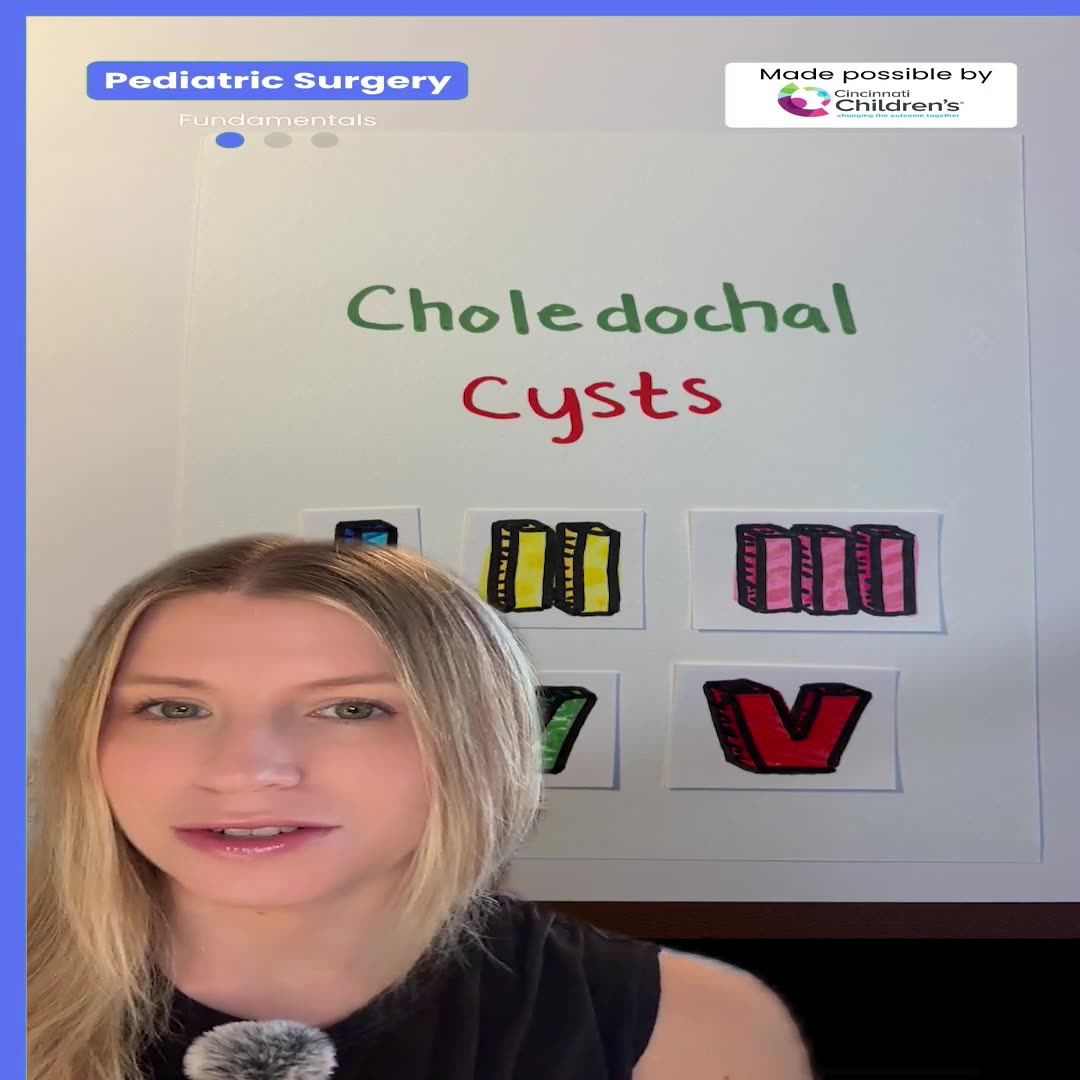
Choledochal Cyst Types Explained: Pediatric Surgery Fundamentals
1 min · Published Sep 2026
What the experts said
Insurance coverage for laser hair reduction varies, with some agencies covering it while in Canada advocacy to health systems is needed, making effectiveness data important for coverage decisions.
All three articles were chosen as PAPS Award winners at the annual conference.
The three studies represent evolutionary (rather than revolutionary) advances important for day-to-day pediatric surgical care management.
The cryoanalgesia study compared patients from 2011 to 2021, with 29 patients receiving cryoanalgesia and 15 not receiving it.
Patients who received cryoanalgesia had shorter hospital stays: 3.0 days versus 5.4 days for those without cryoanalgesia.
Hospital costs were slightly lower (less than $1000 difference) in patients who received cryoanalgesia despite the expensive equipment.
Cryoanalgesia was associated with a 70% decrease in complication rates, from approximately 33% down to 17%.
The chest tube study included 130 lung resections performed between 2013 and 2022.
Of the 130 procedures, 59 were lobectomies (group 1), 19 were diagnostic wedge resections (group 2), and 52 were excisional wedge resections (group 3).
In lobectomy patients (group 1), 75% had no air leak and median chest tube duration was 2 days.
In diagnostic wedge resection patients (group 2), nearly 90% had no air leak and median chest tube duration was 1 day.
In excisional wedge resection patients (group 3), 80% had no air leak and median chest tube duration was 1 day.
Most chest tubes were removed on the first day after surgery and a majority of patients did not have an air leak.
The pilonidal disease study included 198 patients presenting between 2019 and 2022, with data prospectively gathered in a retrospective study design.
The pilonidal disease cohort included 21 patients with skin types 1-2, 156 with skin types 3-4, and 21 with skin types 5-6, with approximately 151 having dark colored hair.
To reach 75% hair reduction requires a mean of 4.8 to 6.8 laser ablation sessions depending on skin and hair characteristics.
Dark hair and skin types 5-6 were associated with higher recurrence rates in pilonidal disease after laser hair reduction.
The overall recurrence rate for pilonidal disease after laser hair reduction was 6%.