


From
StayCurrentMD
Journal Club: Appendicitis in 2021
With Dr. Jose Campos · hosted by Dr. Rod Gerardo & Dr. Ellen Encisco & Dr. Todd Ponsky
Chapter 1 of 8 · Case-Based Learning
Case presentation
Case presentation and initial assessment
Expert statements on this page
No expert statements were drawn from this page.
Host summaries · secondary, not cited in answers
Educational content from recorded physician discussions — not medical advice. Talk to your (or your child's) care team about your situation.
Video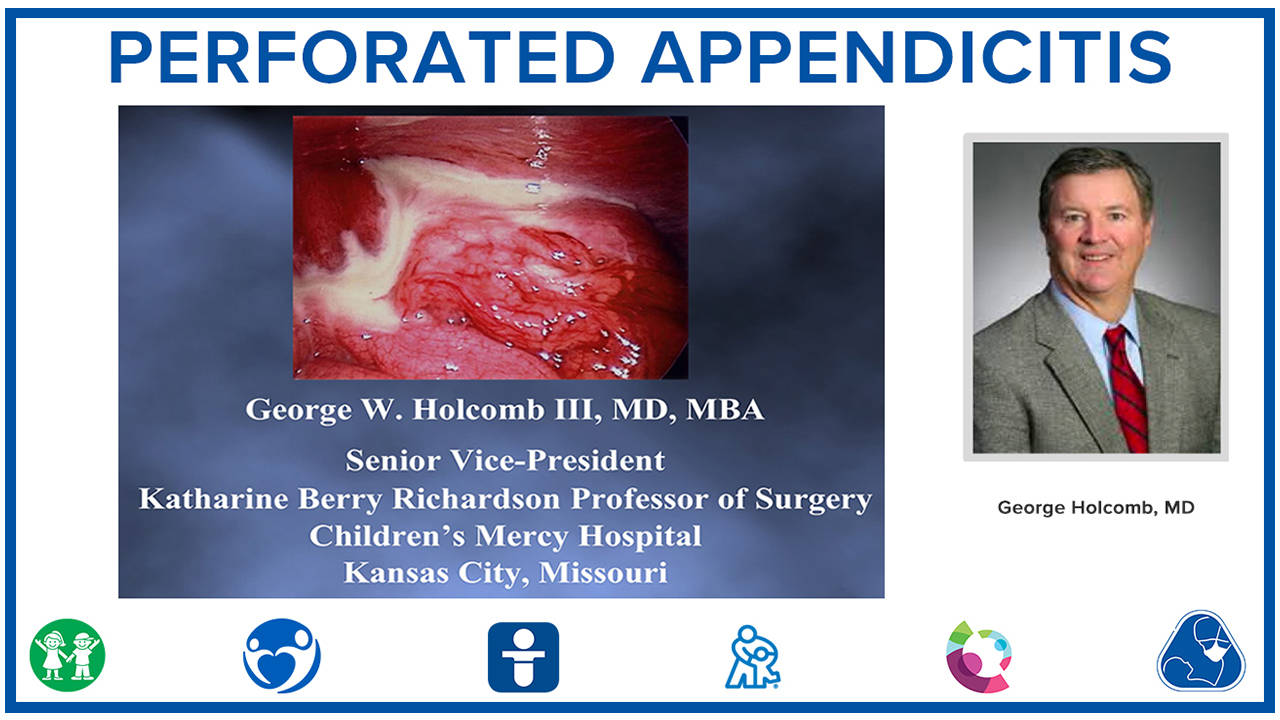
Perforated Appendicitis
18 min · Published Mar 2020
Video
Appendicitis Management & APPY Trial: Update Course 2016
31 min · Published Oct 2018
Podcast
Update Course Rewind: Perforated Appendicitis 2019
12 min · Published Apr 2021
Podcast
Appendicitis with Dr. Whit Holcomb
58 min · Published Apr 2017
Podcast
Evidence-based diagnosis and management of pediatric appendicitis with Dr. Whit Holcomb
58 min · Published Apr 2017
Video
Narrated Dipes appy
Dr. Steve Rothenberg · 3 min · Published May 2026
Video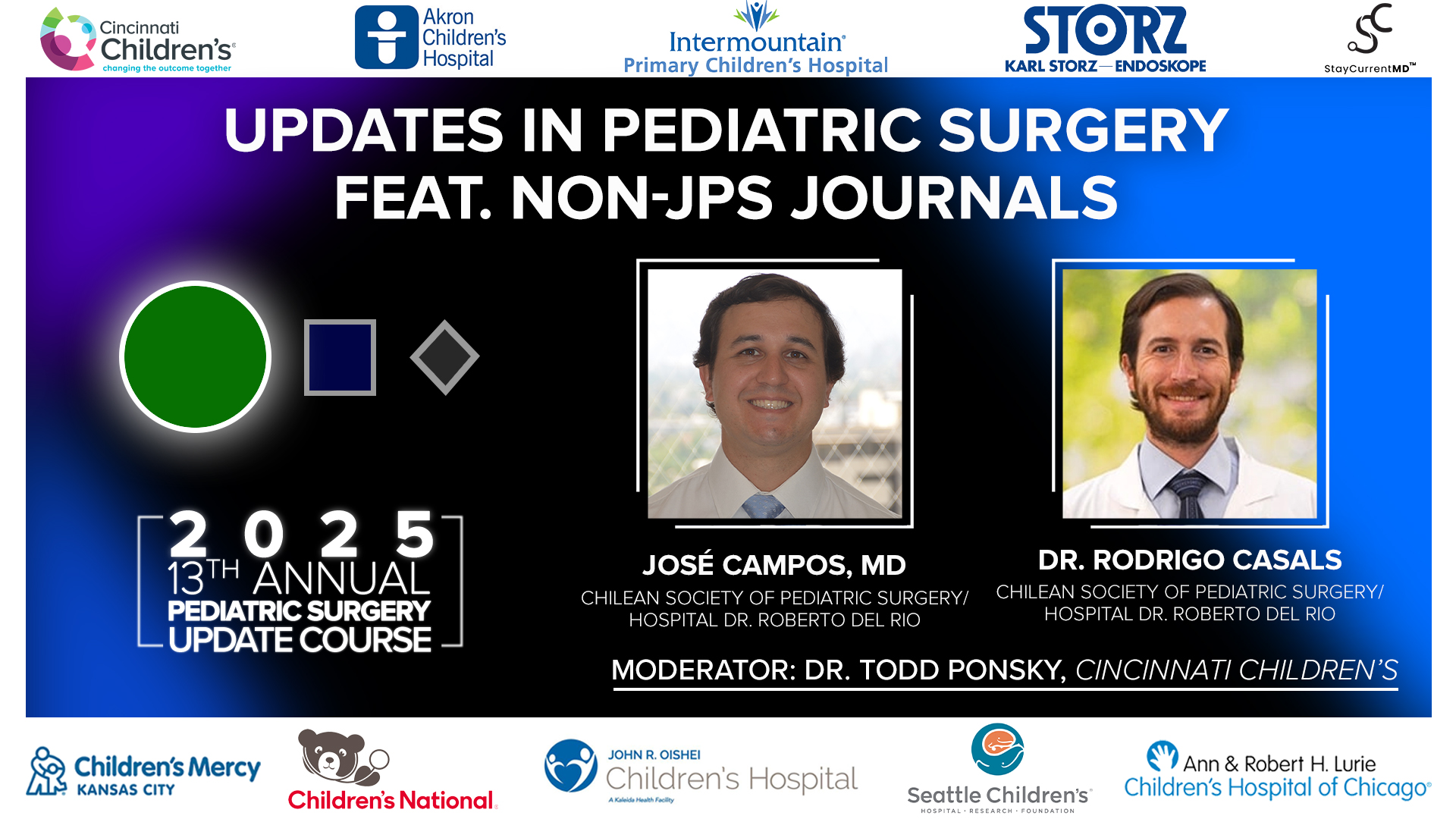
2025 Pediatric Surgery Update Course - Updates in Pediatric Surgery feat. non-JPS Journals
Dr. Todd Ponsky · 22 min · Published Aug 2025
Podcast
Case-Based Journal Review: Inguinal Hernia 2025
19 min · Published Apr 2025
Podcast
Case-Based Journal Review: Cholelithiasis 2024
18 min · Published Jul 2024
Podcast
Case-Based Journal Review: G-Tube & Fundoplication for GERD 2023
18 min · Published Sep 2023
Video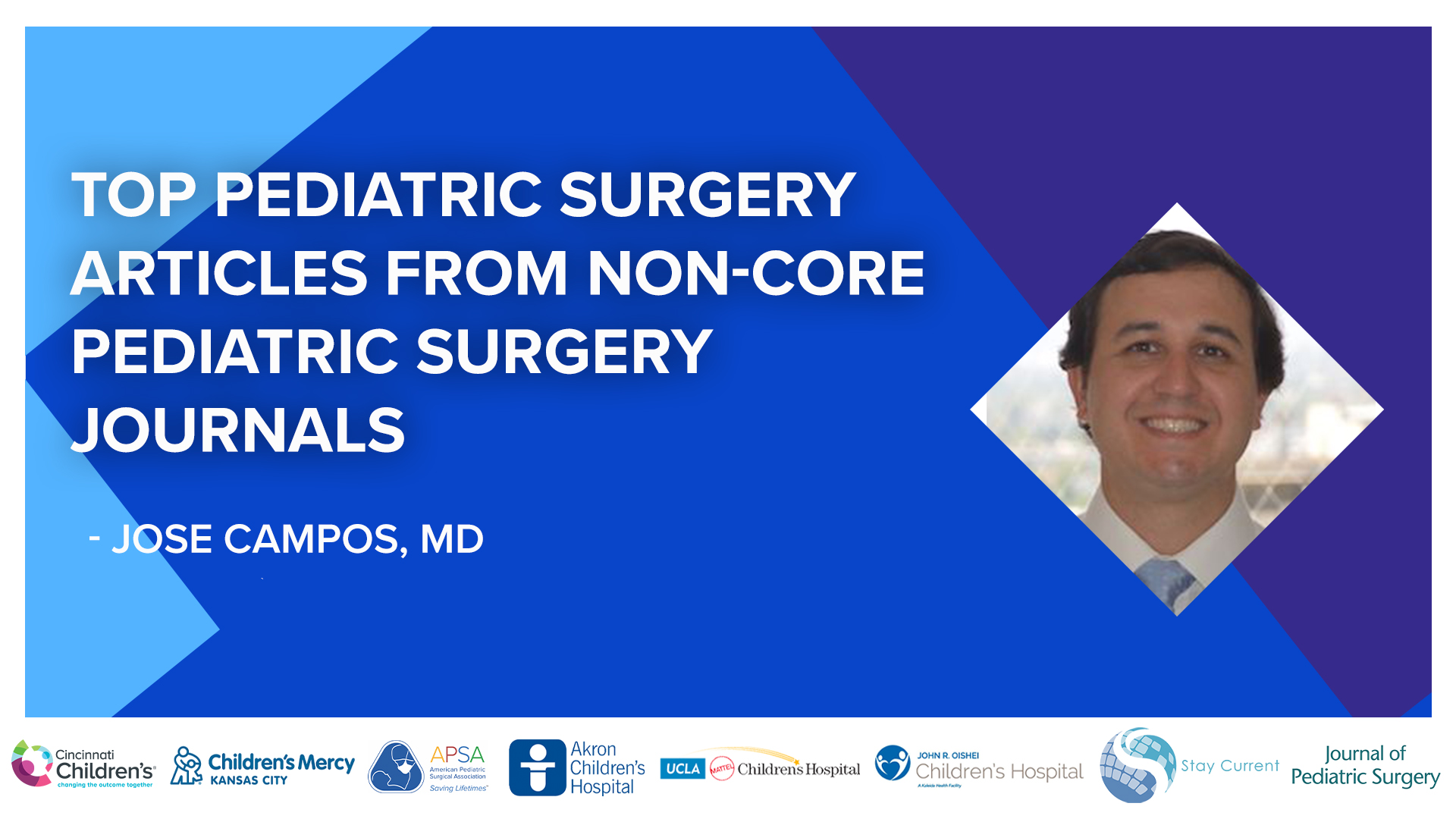
Update Course 2022 - TOP PUBLICATIONS IN NON- PED SURG JOURNALS - Jose Campos
27 min · Published Sep 2022
Podcast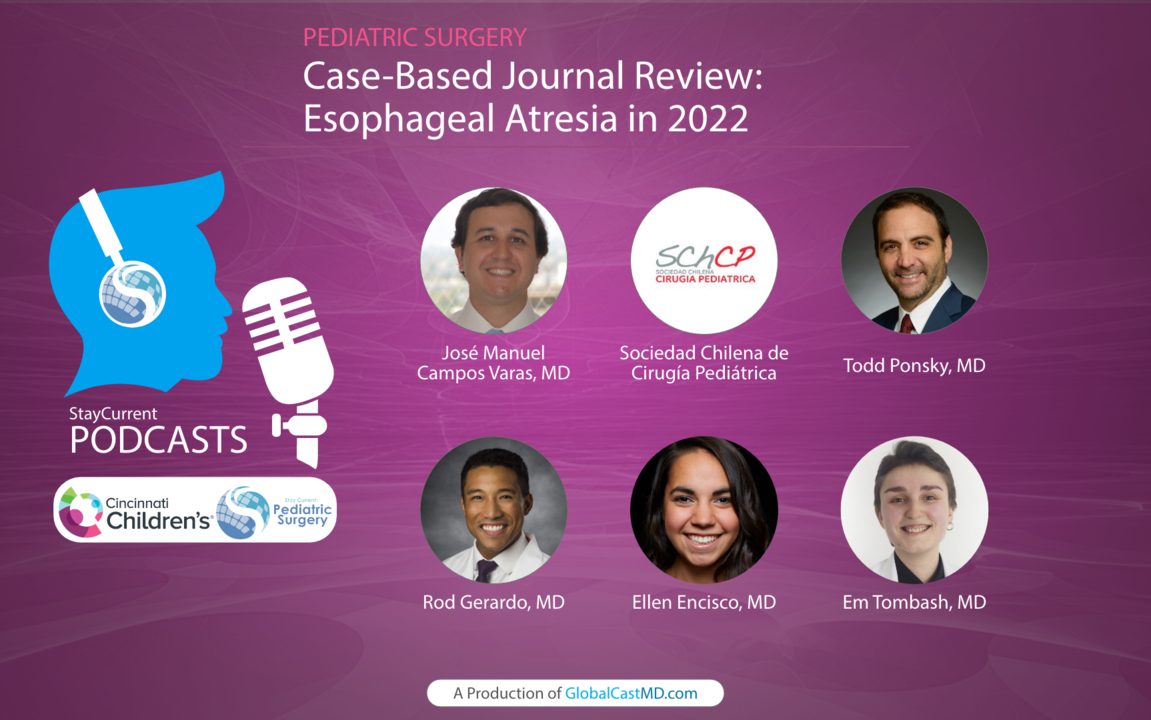
Case Based Journal Review: Esophageal Atresia in 2022
17 min · Published Aug 2022
Video
Intestinal Atresia Types Explained: Grossfeld Classification for Pediatric Surgery
1 min · Published Sep 2026
Video
Derivation and validation of the Pediatric Community-Acquired Pneumonia Severity (PedCAPS) score: A prospective cohort study
50 s · Published Sep 2026
Video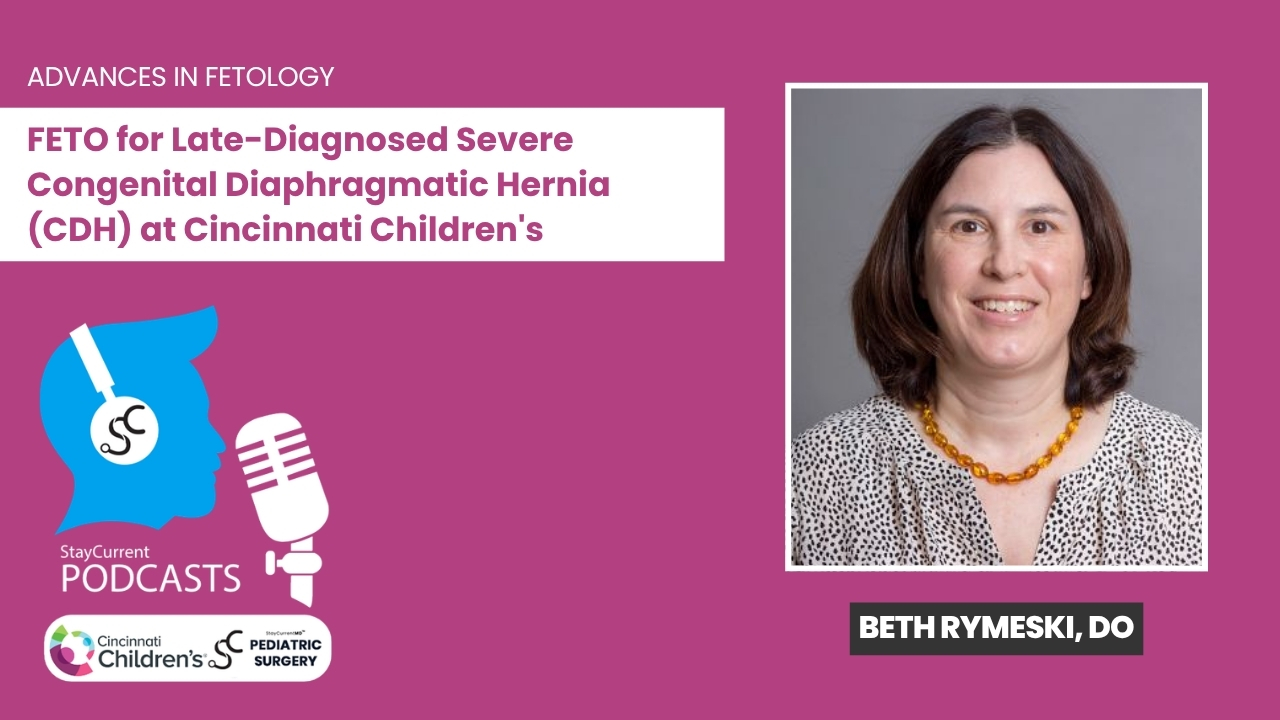
FETO for Late-Diagnosed Severe Congenital Diaphragmatic Hernia (CDH) at Cincinnati Children's with Dr. Beth Rymeski
4 min · Published Sep 2026
Video
Severe Congenital Diaphragmatic Hernia (CDH) Case: FETO Management & Unexpected Findings with Dr. Beth Rymeski
3 min · Published Sep 2026
Video
Fetoscopic Endoluminal Tracheal Occlusion (FETO) Procedure: Step-by-Step Guide with Dr. Beth Rymeski
4 min · Published Sep 2026
Video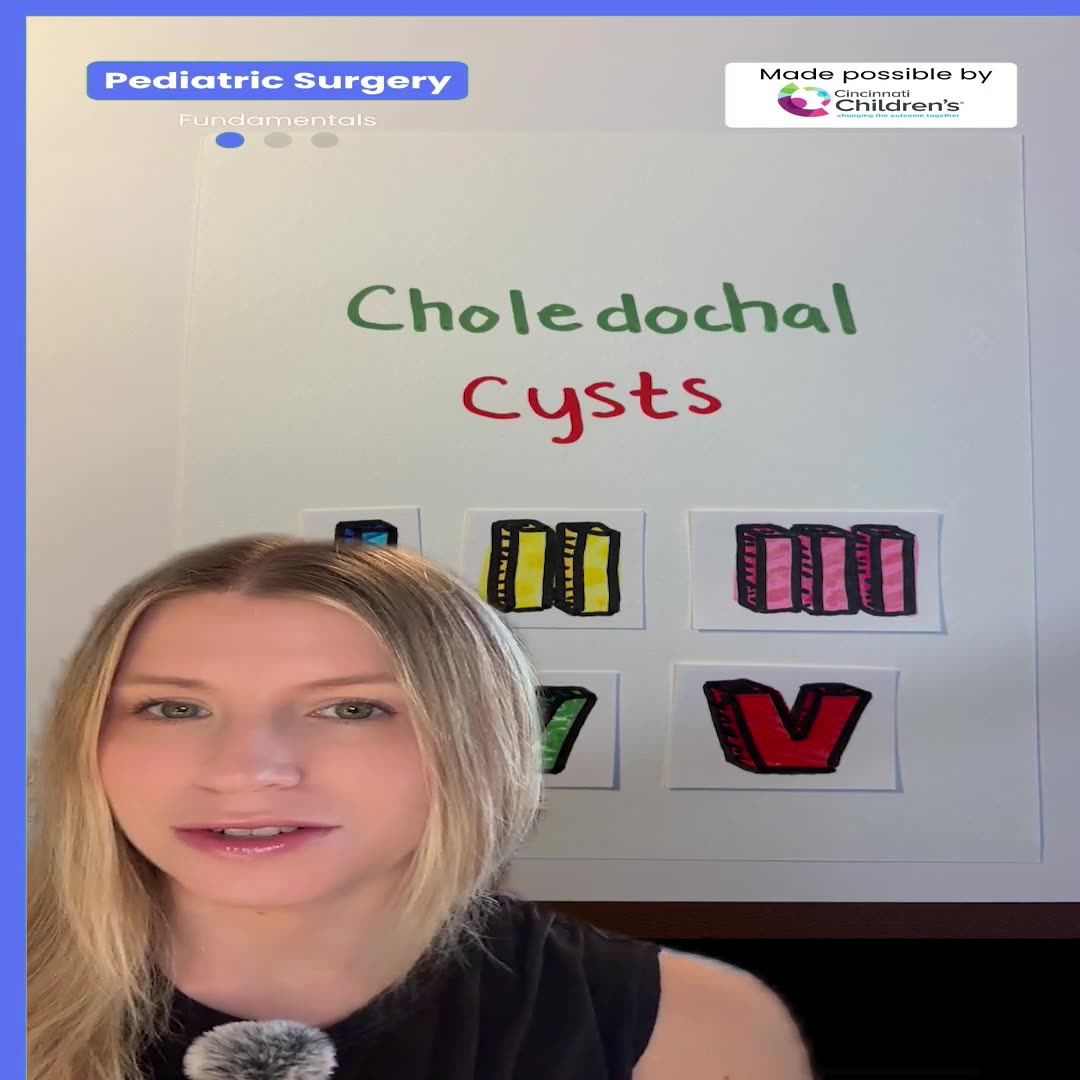
Choledochal Cyst Types Explained: Pediatric Surgery Fundamentals
1 min · Published Sep 2026
What the experts said
The postoperative antibiotic study did not examine postoperative abscess rates, which is the primary concern after uncomplicated appendectomy rather than surgical site infections.
The RIFT study prospectively evaluated 15 different clinical prediction models in children with right iliac fossa pain by calculating area under the curve and failure rates.
The Shira score had an area under the curve of 0.84 and a failure rate of 3%, making it the best performing model for ruling out appendicitis.
A standardized ultrasound reporting template reduced equivocal reports from 27% to 9%.
The standardized ultrasound reporting reduced CT use from 19% to 9% without affecting negative laparotomy rates.
In a pilot RCT of non-perforated appendicitis, surgical failure rate was 0% versus 45% medical failure rate, with failure defined as requiring laparoscopic appendectomy during follow-up.
The non-operative versus appendectomy study randomized 26 patients to surgery and 24 to antibiotics.
Ceftriaxone plus metronidazole showed a 90% reduction in surgical site infection compared to cefoxitin for non-complicated appendicitis in a large NSQIP-based retrospective cohort study published in Annals of Surgery in 2020.
Dr. Sean Saint Peter and Whitt Holcomb defined perforated appendicitis in 2005 as a hole in the appendix or fecal material in the abdomen.
Four intraoperative findings correlate with complicated postoperative course for appendicitis: visible hole, abscess, fecal material, and diffuse fibrinopurulent exudate outside the right iliac fossa or pelvis.
These four intraoperative findings were associated with higher adverse effects, higher length of stay, higher emergency visits, and higher use of hospital and patient resources after adjusting for all variables.
Pus in the abdomen is a predictor of abscess in the recent study, which differs from Sean Saint Peter's study where it was not a predictor.
A double-blind RCT of 243 patients randomized to two doses of postoperative antibiotics versus placebo found a significant reduction in skin infection rate from 6.6% to 0.8% for simple appendicitis.
A 6% baseline infection rate for simple appendicitis seems too high.
A pre-post intervention study completely eliminated opioid prescriptions after non-perforated appendectomy and found no increase in self-reported pain or extra medication use via phone interviews and surgical follow-up.
After converting from opiates to Tylenol and/or Motrin for post-appendectomy pain, patients are fine and do not come back asking for opiates.