


From
StayCurrentMD
Update Course Rewind: 2020 Colorectal Part 1
With Dr. Megan Durham & Dr. Eunice Huang · hosted by Dr. Rod Gerardo
Chapter 1 of 6 · Case-Based Learning
Case 1 setup
Introduction and Case 1 Presentation
Expert statements on this page
No expert statements were drawn from this page.
Host summaries · secondary, not cited in answers
Educational content from recorded physician discussions — not medical advice. Talk to your (or your child's) care team about your situation.
Video
Hirschsprung Disease: Update Course 2015
CCHMC Pediatric Surgery · 7 min · Published Nov 2015
Video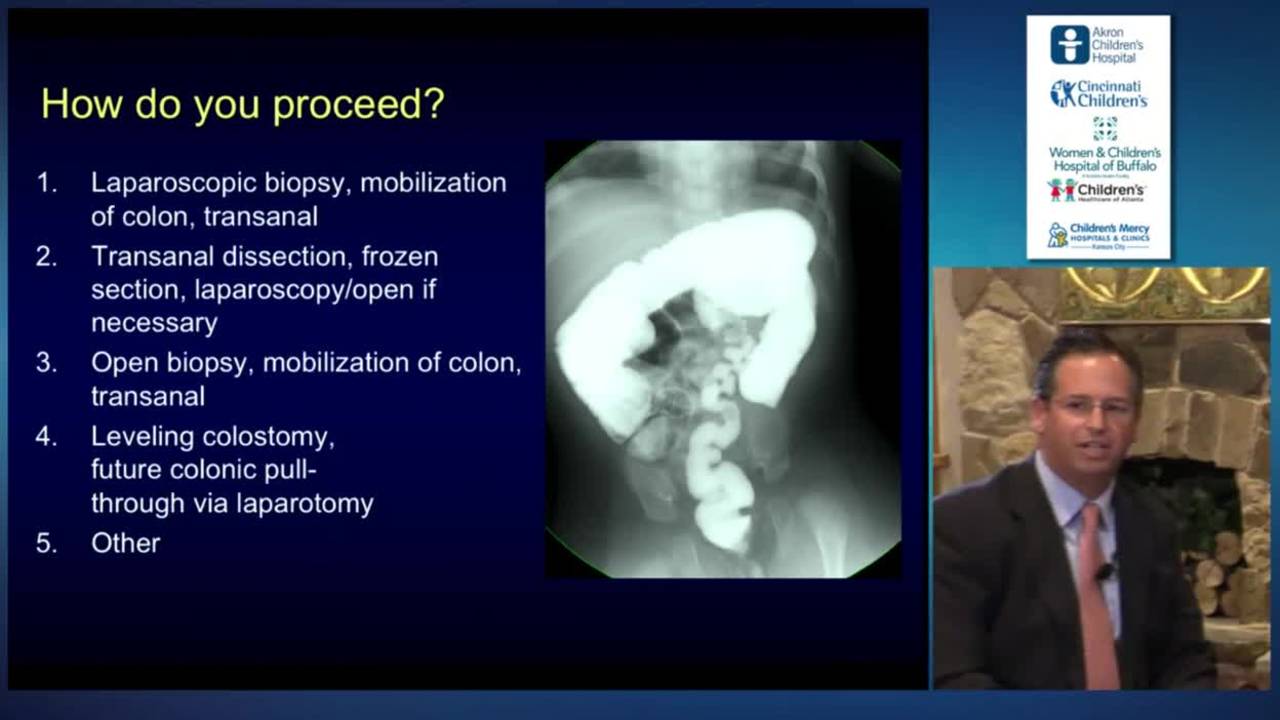
Hirschsprung Disease Rapid Fire: Update Course 2015
CCHMC Pediatric Surgery · 12 min · Published Nov 2015
Podcast
Hirschsprung Disease Workup
10 min · Published Jul 2021
Video
Panel Discussion and Case Presentation Part II: Pediatric Bowel Management 2013
Dr. Todd Ponsky · 33 min · Published May 2013
Video
Update Course Rewind 2025: Hirschsprung’s Pull-Through: Why Family Training May Save Lives
2 min · Published May 2026
Video
Hirschsprung Disease in Brief
Dr. Todd Ponsky · 10 min · Published Oct 2021
Video
Validation of an anorectal malformation trainer - Can a high-fidelity model simulate real life?
1 min · Published Jun 2026
Video
Complications and Long-Term Outcomes of Patients With Cloacal Malformation After Bowel Neovagina...
1 min · Published Jun 2026
Video
Safety and utility of long-acting steroid injection for management of post-operative stricture...
1 min · Published Jun 2026
Video
Association Between Social Determinants of Health and Choice of Urinary Reconstruction in Children
1 min · Published Jun 2026
Video
The Perineal Body Preserving PSARP (PPP)
11 min · Published Jun 2026
Video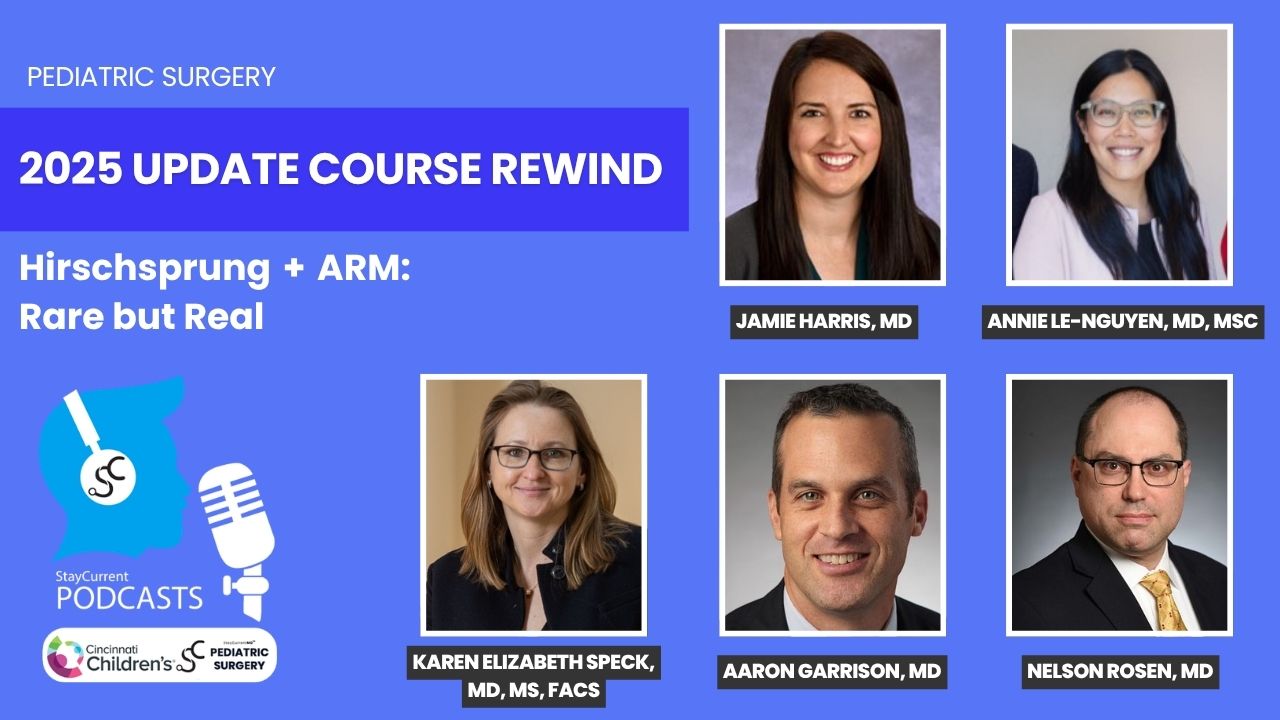
Update Course Rewind 2025: Hirschsprung + ARM: Rare but Real
1 min · Published May 2026
Video
Intestinal Atresia Types Explained: Grossfeld Classification for Pediatric Surgery
1 min · Published Sep 2026
Video
Derivation and validation of the Pediatric Community-Acquired Pneumonia Severity (PedCAPS) score: A prospective cohort study
50 s · Published Sep 2026
Video
FETO for Late-Diagnosed Severe Congenital Diaphragmatic Hernia (CDH) at Cincinnati Children's with Dr. Beth Rymeski
4 min · Published Sep 2026
Video
Severe Congenital Diaphragmatic Hernia (CDH) Case: FETO Management & Unexpected Findings with Dr. Beth Rymeski
3 min · Published Sep 2026
Video
Fetoscopic Endoluminal Tracheal Occlusion (FETO) Procedure: Step-by-Step Guide with Dr. Beth Rymeski
4 min · Published Sep 2026
Video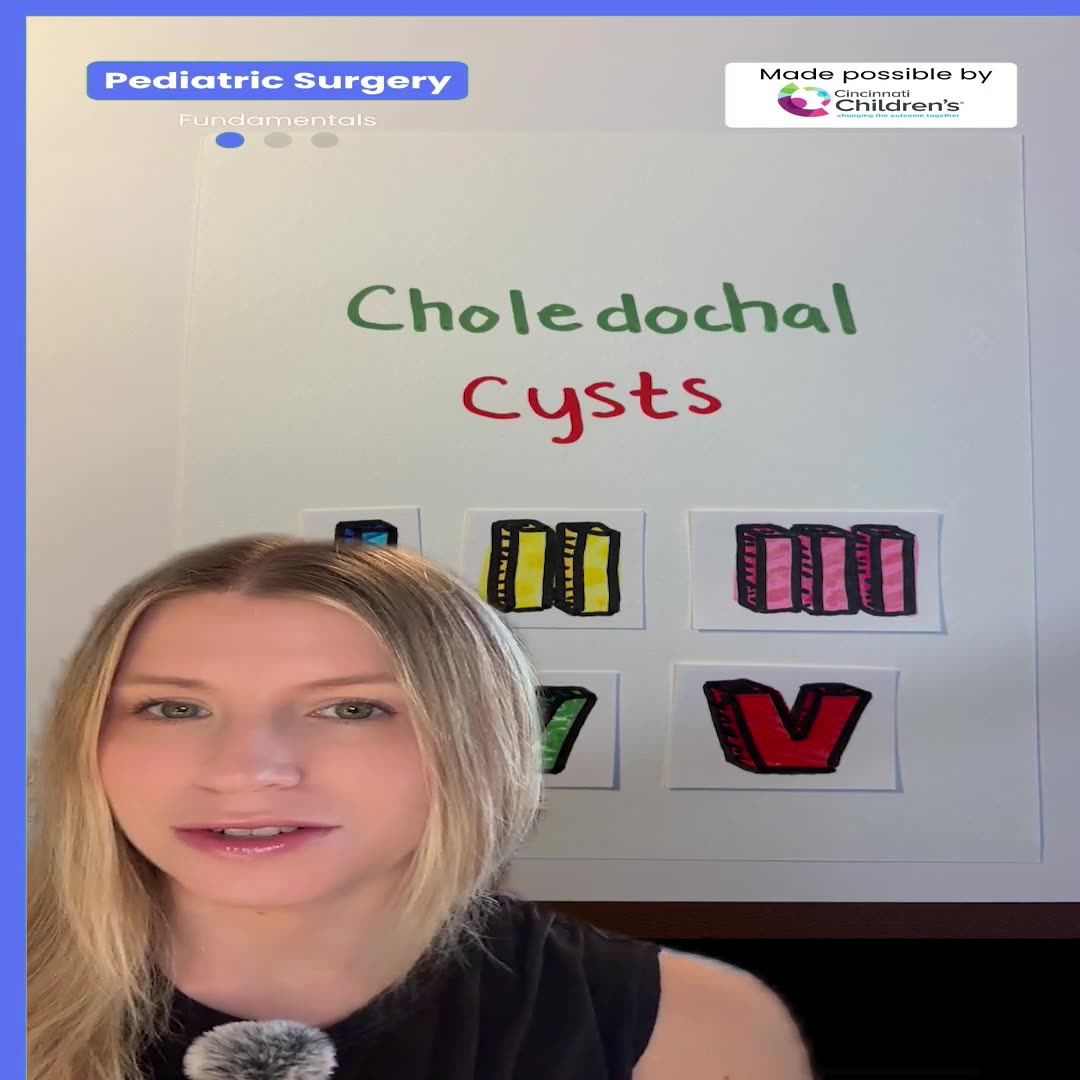
Choledochal Cyst Types Explained: Pediatric Surgery Fundamentals
1 min · Published Sep 2026
What the experts said
After Hirschsprung pull-through, Dr. Durham brings patients back about 2 weeks after surgery to calibrate the anus and assess for cicatrix or narrowing at the anastomosis.
Problems after Hirschsprung pull-through commonly occur later rather than very early on in the young child.
Dr. Huang does not perform routine post-operative therapies initially after Hirschsprung pull-through because the anastomosis is healing and insertion of finger or dilator risks disrupting the anastomosis.
There is probably not a standard post-operative method for Hirschsprung patients because each patient is different, with some doing beautifully after identical surgery while others require frequent follow-up.
For a first episode of enterocolitis in a patient who has been doing well, Dr. Huang would be more likely to not intervene much beyond treating the enterocolitis and ensuring appropriate recovery.
For chronic or recurrent enterocolitis after Hirschsprung pull-through, concerns include anatomic problems, physiologic dysmotility of the ganglionic segment, or technical issues such as a twist.
At Children's Healthcare of Atlanta, acute Hirschsprung-associated enterocolitis management does not include fixed NPO time or immediate TPN initiation.
Children's Healthcare of Atlanta protocol for enterocolitis includes rectal irrigations with about 10 cc/kg normal saline every 8 hours for at least the first 24 to 48 hours.
IV Flagyl is typically started for Hirschsprung-associated enterocolitis at Children's Healthcare of Atlanta.
Dr. Durham would discharge a child after enterocolitis on Flagyl, laxatives, and rectal irrigations for some period of time, particularly for children who tend to dilate their colon.
Teaching parents how to perform washouts at home and providing them the tools allows them freedom to do initial washout when their child is getting sick, improving quality of life at home.
Children's Healthcare of Atlanta has developed a standardized teaching regimen for rectal irrigations across different campuses and a regular education process for floor nurses.
Nursing staff commonly have different levels of education regarding rectal irrigations and enemas because this is not an everyday common occurrence.
A standardized order form with links to policy has been implemented to make rectal irrigation procedures clearer for nurses.
Dr. Langer published a guideline with the APSA Hirschsprung Disease Research Interest Group for diagnosis and management of obstructive symptoms after Hirschsprung pull-through.
Obstructed Hirschsprung patients are easier to identify because not passing stool is an easy sign for parents to see, whereas hypermodal patients with fecal incontinence present a more difficult diagnostic challenge.
In Case 2, exam under anesthesia revealed intact sphincters and intact dentate line.
The patient in Case 2 had high-amplitude propagating contractions (HAPCs) on manometry with pressures upwards of 400 mmHg all the way down to the anus.
Nobody can control the type of pressure (400 mmHg HAPCs) coming down to the anus.
Hirschsprung enterocolitis patients present across a spectrum from mild (slight white count elevation and concerning X-ray distention) to severe (gross distention with obvious shock), requiring different treatment approaches.
The APSA algorithm for post-pull-through obstruction includes decision points starting with rectal exam and contrast enema, potentially moving to rectal biopsy, botulinum toxin injection, and ultimately motility workup that determines need for further colonic resection versus bowel management, stoma, or ACE.
The patient in Case 2 was diagnosed with pseudo-incontinence with hypermotility.
Adjusting fiber intake, daily Imodium, and adding cholestyramine successfully managed the hypermotility patient, allowing return to school with other kids within about a year.