


From
StayCurrentMD
Update Course Rewind: 2020 ERAS
With Dr. Kurt Heise · hosted by Dr. Todd Ponsky
Part of
Crohn's Disease 11 items
Chapter 1 of 6 · Fundamentals
ERAS introduction
Introduction to ERAS in Pediatric Surgery
Expert statements on this page
No expert statements were drawn from this page.
Host summaries · secondary, not cited in answers
Educational content from recorded physician discussions — not medical advice. Talk to your (or your child's) care team about your situation.
Video
ERAS - Clinical Practice Updates
Published Sep 2020
Video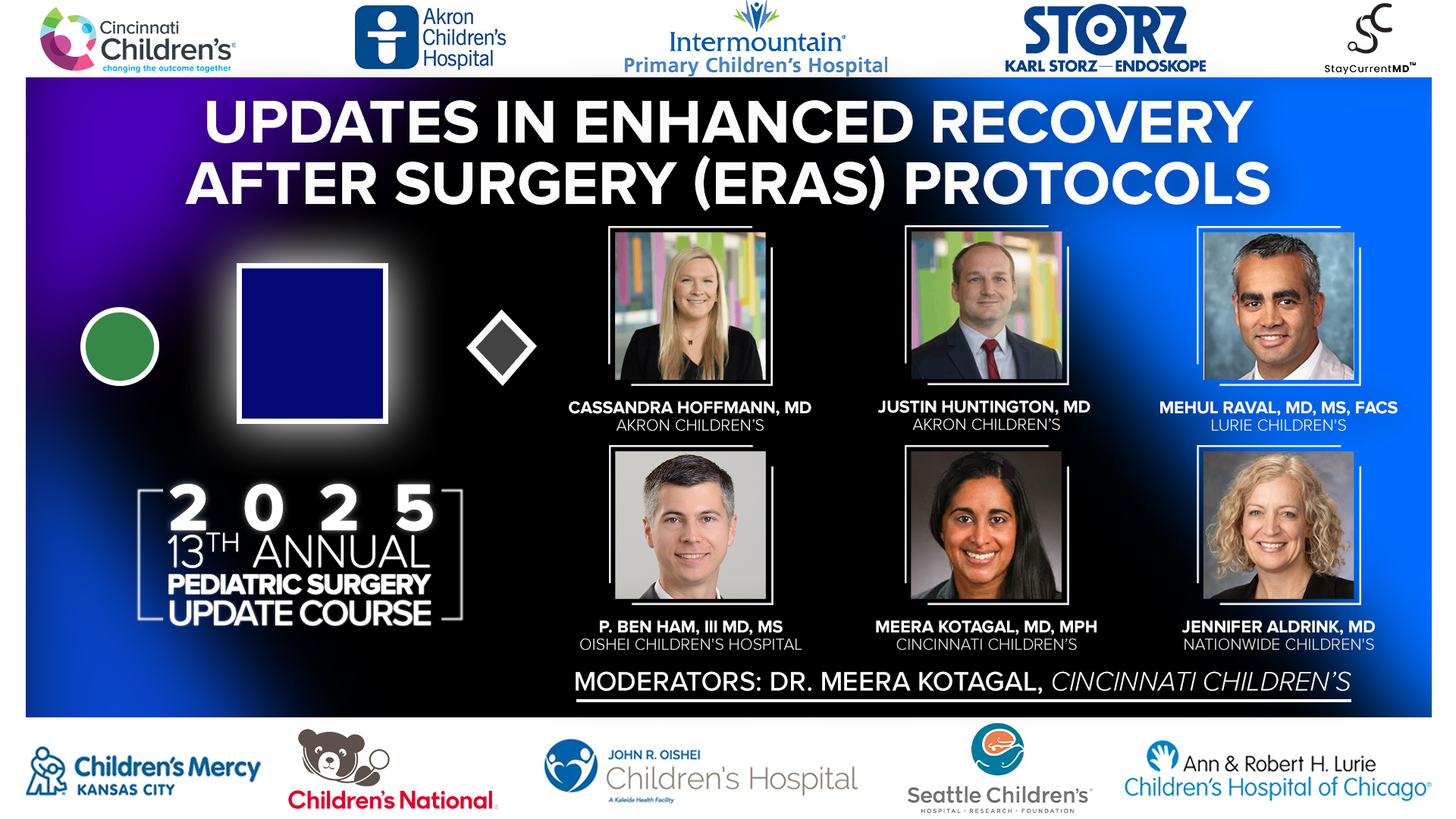
2025 Pediatric Surgery Update Course - Updates in Enhanced Recovery After Surgery (ERAS) Protocols
32 min · Published Aug 2025
Video
Enhanced Recovery After Surgery (ERAS) Program: Update Course 2016
44 min · Published Jul 2017
Video
Trinity Ileal resection w narration
Dr. Steve Rothenberg · 10 min · Published May 2026
Video
Inflammatory Bowel Disease (IBD) - Samir Pandya: Update Course 2014
28 min · Published Nov 2018
Video
Inflammatory Bowel Disease: Update Course 2014
28 min · Published Sep 2014
Only a few other public items share this expert — go deeper there →
Video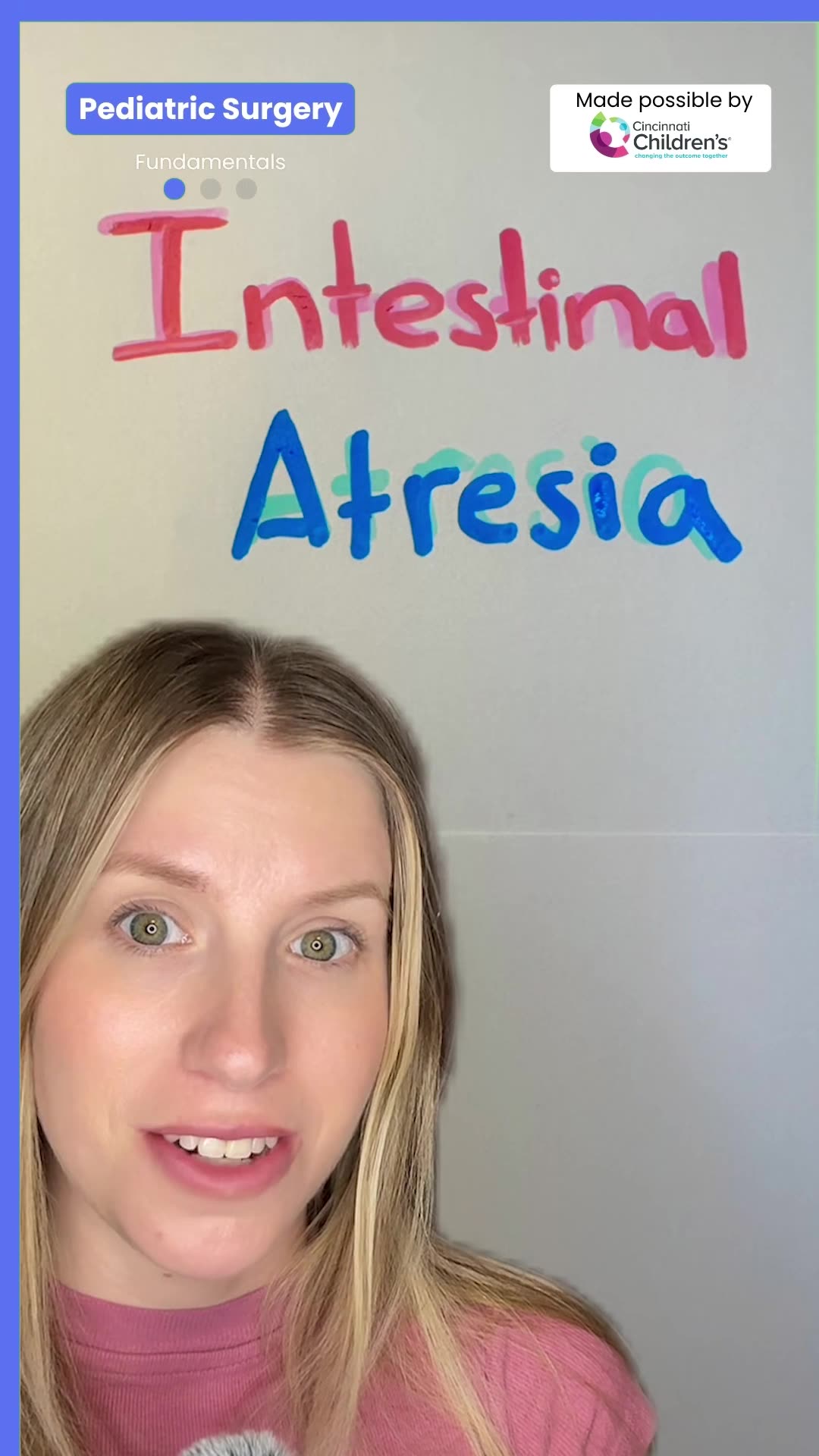
Intestinal Atresia Types Explained: Grossfeld Classification for Pediatric Surgery
1 min · Published Sep 2026
Video
Derivation and validation of the Pediatric Community-Acquired Pneumonia Severity (PedCAPS) score: A prospective cohort study
50 s · Published Sep 2026
Video
FETO for Late-Diagnosed Severe Congenital Diaphragmatic Hernia (CDH) at Cincinnati Children's with Dr. Beth Rymeski
4 min · Published Sep 2026
Video
Severe Congenital Diaphragmatic Hernia (CDH) Case: FETO Management & Unexpected Findings with Dr. Beth Rymeski
3 min · Published Sep 2026
Video
Fetoscopic Endoluminal Tracheal Occlusion (FETO) Procedure: Step-by-Step Guide with Dr. Beth Rymeski
4 min · Published Sep 2026
Video
Choledochal Cyst Types Explained: Pediatric Surgery Fundamentals
1 min · Published Sep 2026
What the experts said
Pediatric surgery knowledge is growing exponentially, making it impossible to stay up to date.
The patient was given protein shakes preoperatively for nutritional optimization.
On the day of operation, the patient came to the hospital drinking high carbohydrate clear liquids, which were stopped one hour before the operation.
Total IV fluids for the case was less than 4 ccs per kilo per hour.
Postoperatively, the patient was put on multimodal analgesia with Tylenol, Toradol, and Neurontin.
The patient was allowed to drink immediately after surgery and started to snack that night.
The patient went home the evening after a partial colectomy.
The institution has a protocol to discharge patients when physiologically ready as opposed to waiting for the surgeon to approve discharge.
Pre-op optimization period and heavy counseling with families about discharge goals is important for setting expectations.
The pain team tried epidurals for about a year but found that patients were slowed down with their discharge, so they changed to QL blocks, rectus sheath blocks, or TAP blocks.
Dr. Heise gave grand rounds to the anesthesia department twice with the chair present to secure buy-in for ERAS protocols.
In the adult population, literature supports that mobilization and early PO intake are the most important drivers to early discharge.
In the bariatric population after sleeve gastrectomy, over half of patients are discharged on the first post-operative day.
With regional blocks and multimodal pain control, big surgeries including colectomies and craniofacial reconstructions can be done without the use of narcotics.
ERAS is a multidisciplinary, multimodal, evidence-based way of delivering care to patients.
The goals of ERAS are to optimize patient physiology throughout the entire perioperative pathway.
The strategy of ERAS is to decrease operative trauma, inflammatory response, and stress.
ERAS tactics include optimizing fluid and analgesia, mobilizing early, and feeding early, which work synergistically.
ERAS outcomes include faster healing, earlier discharge, and fewer complications of all types, not just surgical complications.
When ERAS is done well, it should decrease readmission rates.
Dr. Heise's team at Emory found that ERAS implementation did not slow cases down, contrary to initial concerns.
Over years of ERAS implementation, there were decreases in intraoperative fluids, intraoperative and postoperative narcotics, and time to getting on a full diet.
Dr. Brindle authored a recent paper explaining a neonatal ERAS bundle created from scratch.