


From
Dr. Marc Levitt
Colorectal Quiz: Episode 2
With Dr. Marc Levitt & Dr. Jason Frischer · hosted by Dr. Rod Gerardo & Dr. Todd Ponsky
Chapter 1 of 6 · Fundamentals
Introduction
Introduction: The Challenge of Anorectal Malformation Reoperations
Expert statements on this page
No expert statements were drawn from this page.
Host summaries · secondary, not cited in answers
Educational content from recorded physician discussions — not medical advice. Talk to your (or your child's) care team about your situation.
Podcast
Colorectal Quiz Episode 2: When to redo a PSARP
18 min · Published Jan 2021
Video
Rectal Prolapse Repair Following a Posterior Sagittal Anorectoplasty
4 min · Published Jan 2025
Podcast
Anorectal Malformations Complications
Marc Levitt · 48 min · Published Feb 2016
Podcast
Complications of Anorectal Malformations with Dr. Marc Levitt
48 min · Published Jan 2017
Video
Colorectal Quiz Episode 38: Transitional Care in Colorectal Surgery
25 min · Published Mar 2024
Video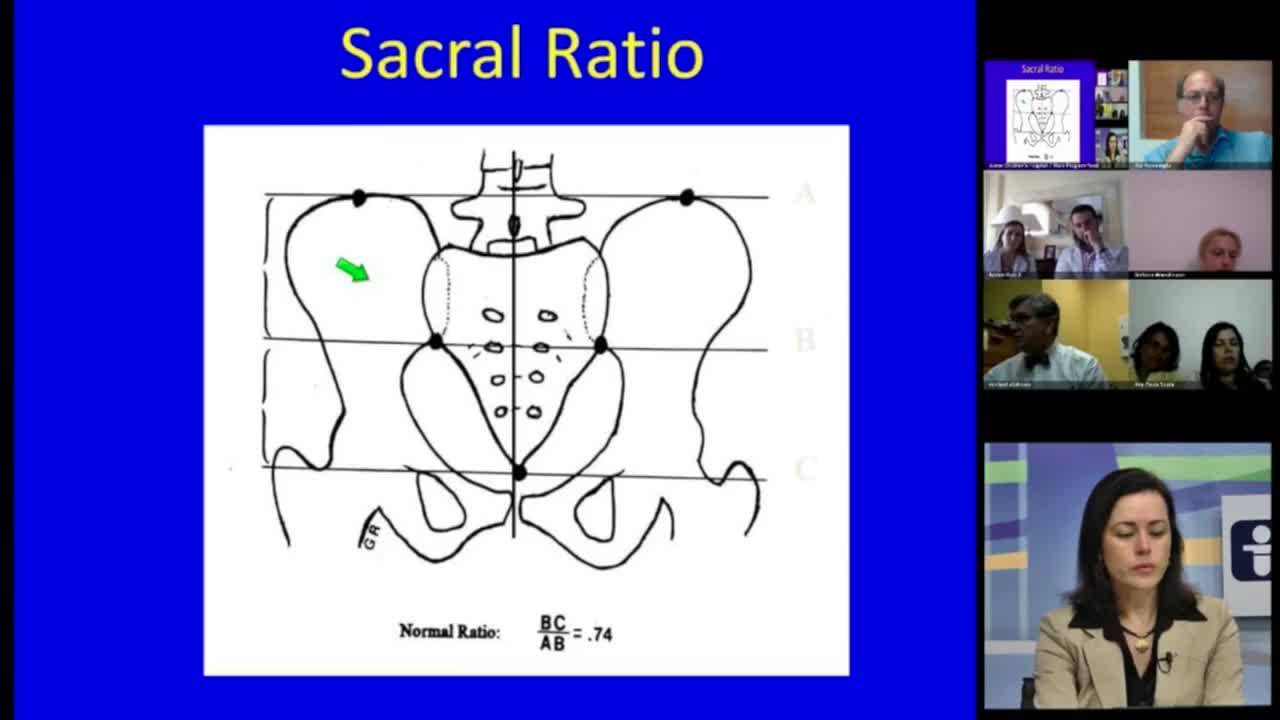
Panel Discussion and Case Presentation Part I: Pediatric Bowel Management 2013
Dr. Todd Ponsky · 12 min · Published May 2013
Video
Validation of an anorectal malformation trainer - Can a high-fidelity model simulate real life?
1 min · Published Jun 2026
Video
Complications and Long-Term Outcomes of Patients With Cloacal Malformation After Bowel Neovagina...
1 min · Published Jun 2026
Video
Safety and utility of long-acting steroid injection for management of post-operative stricture...
1 min · Published Jun 2026
Video
Association Between Social Determinants of Health and Choice of Urinary Reconstruction in Children
1 min · Published Jun 2026
Video
The Perineal Body Preserving PSARP (PPP)
11 min · Published Jun 2026
Video
Update Course Rewind 2025: Hirschsprung + ARM: Rare but Real
1 min · Published May 2026
Video
Colorectal Quiz Ep. 50 -16th Annual European Pediatric Colorectal & Pelvic Reconstruction Conference
Marc Levitt · Published Mar 2026
Podcast
Colorectal Quiz: Episode 50 - 16th Annual European Pediatric Colorectal and Pelvic Reconstruction Conference, Stockholm, Sweden, October 2025 - What did we learn?
24 min · Published Mar 2026
Video
Colorectal Quiz Episode 33: Cloaca Exstrophy
Marc Levitt · 22 min · Published Sep 2025
Video
The Colorectal Quiz Episode 21: The History of Hirschsprung Disease
Marc Levitt · 15 min · Published Sep 2025
Video
Colorectal Quiz: Episode 49 – Collaborating for Kids: Colorectal & Pelvic Care (with Help from AI)
Marc Levitt · 40 min · Published Jul 2025
Podcast
Colorectal Quiz: Episode 49 - Collaborating for Kids: Colorectal & Pelvic Solutions (with a Little Help from AI)
Marc Levitt · 40 min · Published Jul 2025
What the experts said
The original malformation in case 1 was a prostatic fistula and the patient has a tethered cord with a sacral ratio of 0.66
The higher the malformation, the worse the prognosis for bowel control
Sacral ratio 0.7 or greater usually means normal sphincters and good muscle tone
Patients with myelomeningocele have much more trouble with continence than those with tethered cord
A key pitfall is opening the PSARP incision first; instead, mark the sphincters first with electrical stimulation, then open the PSARP
The electrical stimulator used for sphincter mapping is the same one anesthesia uses for train of four
Anesthesiologists should not give skeletal muscle relaxant when using the stimulator because it is weaker than traditional stimulators
In higher malformations such as bladder neck fistula in boys, the sphincter complex is sometimes more anterior than anticipated
If anatomy is off, redo should be done, and there is an advantage to getting anatomy right when the child is younger
For a two-year-old with mislocated anus or bad prolapse, offer redo and let them live in diapers for a year or two with better anatomy before potty training
For patients presenting after potty training age with incontinence due to mislocated anus, do the redo and usually add a Malone at the same time
After redo with Malone, patients learn to get control with new anatomy before stopping Malone flushes and trying voluntary bowel movements; this process may take six to twelve months
For a patient with anus 50% within sphincter complex at age three and a half with incontinence, one approach is to redo and add Malone, get them clean mechanically, then see if they develop bowel control
Alternative approach for borderline anatomy: let the child try their current anatomy first; if it works well, stay with it; if not, consider redo
If patients haven't declared continence yet because they're not old enough behaviorally, give them a chance as they may succeed with current anatomy
After anorectoplasty, your first shot might be your only shot to give the patient a good outcome
In the JPS study, the vast majority of reoperations were for mislocation, followed by stricture
Less common reasons for redo included remnant of original fistula (roof), rectal prolapse, and others
Quality of life improved with redo operations
Patients had improved ability to achieve continence after redo
Twenty percent of patients with a poor sacrum or poor spine developed bowel control after their redo
Patients with good potential (good sacrum and spine) did extremely well after redo
Patients who did not develop voluntary bowel movements after redo were still able to be clean with bowel management program using enemas or antegrade Malone
The average age of patients in the JPS study was about three and a half years