


From
Dr. Marc Levitt
Colorectal Quiz: Episode 40
With Dr. Marc Levitt & Dr. Chris Westgarth-Taylor & Dr. Jason Frischer · hosted by Dr. Thomas Hsu
Chapter 1 of 7 · Case-Based Learning
Initial presentation
Case presentation and initial colostomy decision-making
Expert statements on this page
No expert statements were drawn from this page.
Host summaries · secondary, not cited in answers
Educational content from recorded physician discussions — not medical advice. Talk to your (or your child's) care team about your situation.
Podcast
Complications of Anorectal Malformations with Dr. Marc Levitt
48 min · Published Jan 2017
Podcast
Anorectal Malformations Complications
Marc Levitt · 48 min · Published Feb 2016
Video
Laparoscopic Assisted Posterior Sagittal Anorectoplasty
5 min · Published Jan 2025
Video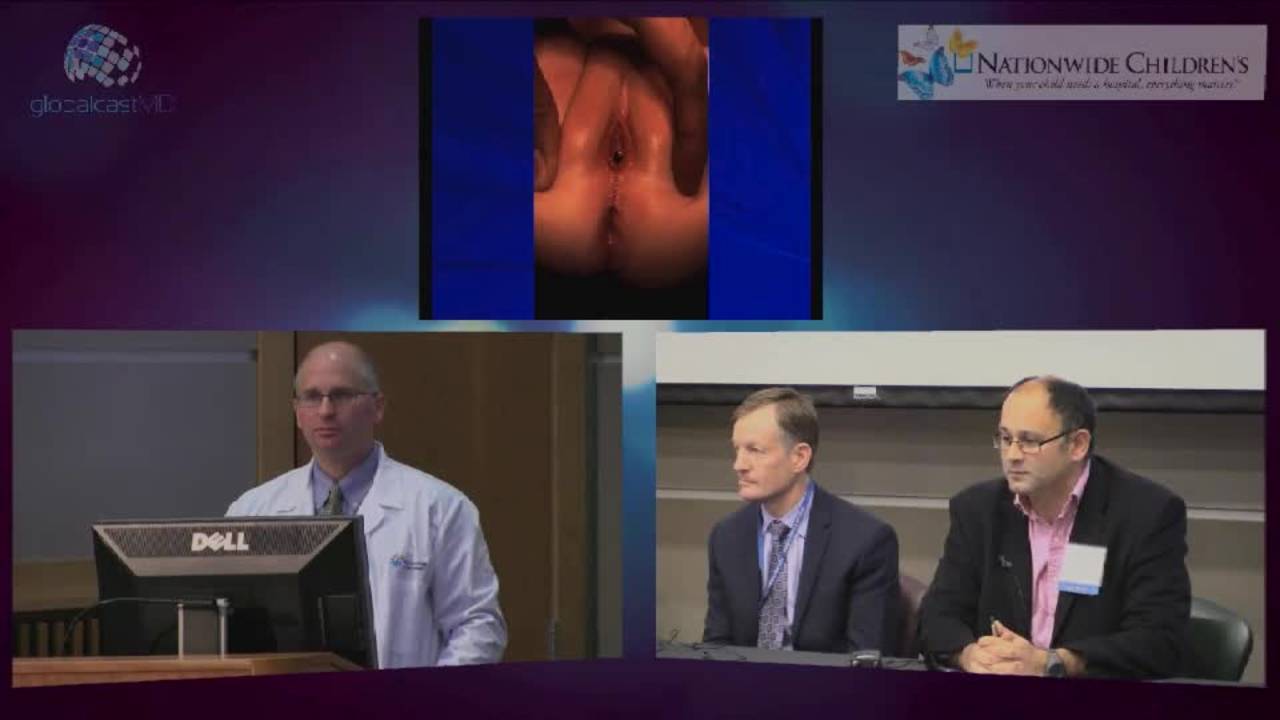
Anorectal Malformation Management of Female Patients Part II: Pediatric...
28 min · Published Apr 2012
Video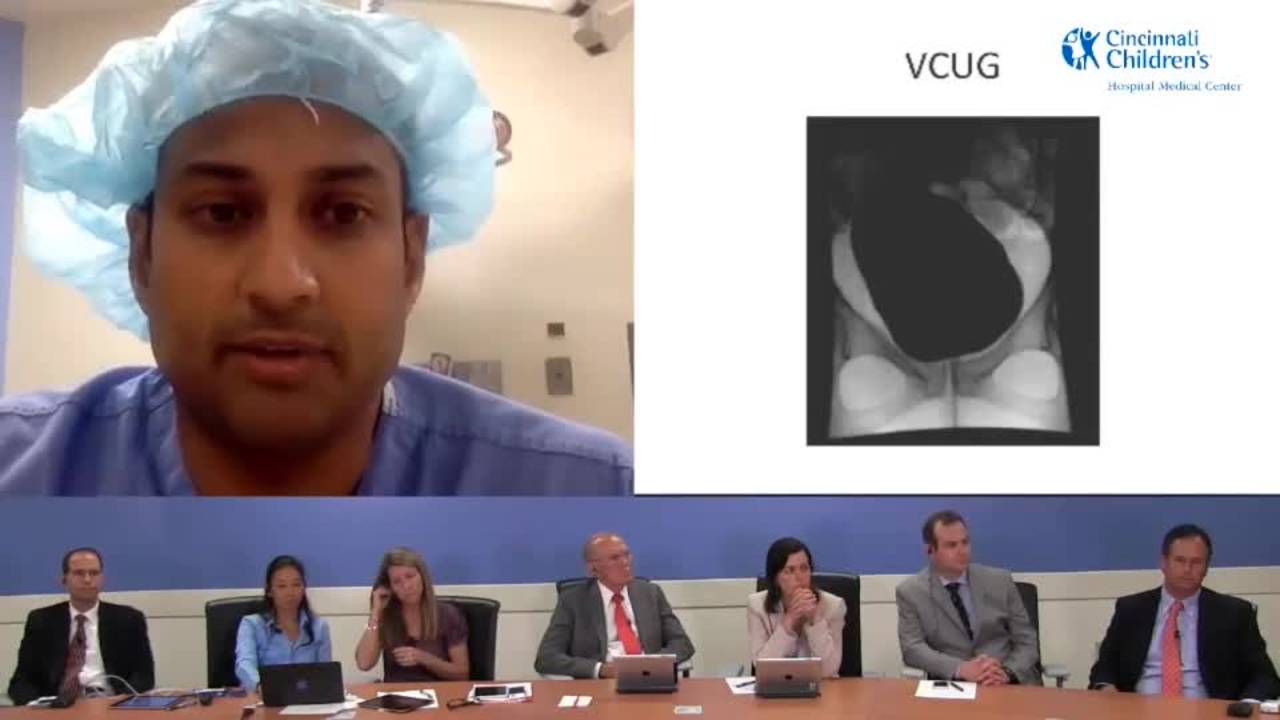
Surgical Management and Follow-Up: Cloaca and Complex ARMs 2015
25 min · Published Oct 2015
Podcast
Colorectal Quiz Episode 14: ARM Newborn Part 3
10 min · Published Jun 2021
Video
Validation of an anorectal malformation trainer - Can a high-fidelity model simulate real life?
1 min · Published Jun 2026
Video
Complications and Long-Term Outcomes of Patients With Cloacal Malformation After Bowel Neovagina...
1 min · Published Jun 2026
Video
Safety and utility of long-acting steroid injection for management of post-operative stricture...
1 min · Published Jun 2026
Video
Association Between Social Determinants of Health and Choice of Urinary Reconstruction in Children
1 min · Published Jun 2026
Video
The Perineal Body Preserving PSARP (PPP)
11 min · Published Jun 2026
Video
Update Course Rewind 2025: Hirschsprung + ARM: Rare but Real
1 min · Published May 2026
Video
Colorectal Quiz Ep. 50 -16th Annual European Pediatric Colorectal & Pelvic Reconstruction Conference
Marc Levitt · Published Mar 2026
Podcast
Colorectal Quiz: Episode 50 - 16th Annual European Pediatric Colorectal and Pelvic Reconstruction Conference, Stockholm, Sweden, October 2025 - What did we learn?
24 min · Published Mar 2026
Video
Colorectal Quiz Episode 33: Cloaca Exstrophy
Marc Levitt · 22 min · Published Sep 2025
Video
The Colorectal Quiz Episode 21: The History of Hirschsprung Disease
Marc Levitt · 15 min · Published Sep 2025
Video
Colorectal Quiz: Episode 49 – Collaborating for Kids: Colorectal & Pelvic Care (with Help from AI)
Marc Levitt · 40 min · Published Jul 2025
Podcast
Colorectal Quiz: Episode 49 - Collaborating for Kids: Colorectal & Pelvic Solutions (with a Little Help from AI)
Marc Levitt · 40 min · Published Jul 2025
What the experts said
About 60% of anorectal malformation patients in Chris Westgarth-Taylor's practice were discharged home without being identified as having an anorectal malformation.
Anorectal malformation occurs more commonly in females and has a prevalence of about one in 5,000 births.
When you look in laparoscopically and see an end of the colon with nothing else visible, you do not have to do a divided colostomy—you can bring out that distal end as your stoma rather than interfering with the blood supply for the distal segment.
The only potential benefit of doing a divided colostomy when encountering blind-ending colon is protecting the ultimate rectal repair, but this risks the blood supply to the distal rectum.
A single perineal orifice with no rectal or vaginal fistula must be called a cloaca.
Meyer-Rokitansky-Küster-Hauser syndrome can present with anorectal malformation, creating Meyer-Rokitansky-like anatomy where ovaries and remnant tubes are present but no midline Müllerian structures.
The more common scenario of anorectal malformation with absent vagina is a recto-vestibular fistula with completely normal urethra but no vagina in between—this is called recto-vestibular fistula with distal vaginal atresia, where the rectum ends as a fistula in the vestibule.
In this case, the rectum ended blind and quite high in the pelvis, making it unreachable through a posterior sagittal incision.
The foreshortened sacrum in this case suggests caudal regression, where everything below that level forgot to develop.
Not diverting after limited posterior sagittal anorectoplasty is safe when you have a colocolonic anastomosis at the colostomy closure site and only an anoplasty with a couple of posterior sutures.
The limited posterior sagittal incision was deliberately kept out of the perineal body to avoid destroying or scarring it for future incorporation of gynecologic structures after puberty.
In the past, vaginal replacement would have been done at the same time as rectal repair in these patients, but time and research have shown that colonic neovaginas are not great for patients 20 years down the road, and surgeons should try very hard to avoid them.
In most cloacas, you should be able to get the native vagina to reach without needing vaginal replacement.
Options for vaginal reconstruction when native vagina cannot reach include: dilating the existing introitus, opening the area and laying in a buccal graft, or waiting for tissue engineering options expected within 20 years or less.
If a neovagina bridge is functioning well without problems, there may be no reason to remove it later.
Vascular anomalies associated with anorectal malformation have not been much written about in the literature.
An aberrant external iliac artery can loop up within the abdominal wall, looking very much like the obliterated umbilical artery, while actually being a blood supply to one of the extremities.
Anorectal malformation is defined as a birth defect that occurs when a baby's anus and rectum don't develop normally during pregnancy, causing abnormalities in the anal opening, rectum, and occasionally surrounding structures.
Performing colostomy laparoscopically has the advantage of potentially identifying incidental findings like malrotation that might remain undiagnosed with a standard left lower quadrant colostomy.
If diversion were needed in this case, an ileostomy would be the preferred choice.
In Hirschsprung's disease, there is concern about distal obstruction from non-relaxing sphincters causing backup pressure into the anastomosis and blowing it out, which is why diversion would be more important in that context than in anorectal malformation repair.
A theoretical approach proposed by gynecologist Alison May for cloaca cases where native vagina doesn't reach is to provide a neovagina as a bridge so the patient can menstruate through it, then potentially remove it 20 years later.
Using the colon in this case for vaginal replacement would be very risky due to blood supply concerns from the original divided stoma procedure that already disrupted the blood supply once.
Fred Reichman used to say 'you are judged by what you are willing to stop for'—surgeons must be willing to stop when uncertain, get more information or help, rather than plowing through.
The visualization of the bladder neck will not predict its competency and ability to hold back urine; urodynamics will be needed in the future.