


From
Dr. Marc Levitt
Colorectal Quiz: Episode 49 - Collaborating for Kids: Colorectal & Pelvic Solutions (with a Little Help from AI)
With Dr. Marc Levitt · hosted by Dr. Marc Levitt & Dr. Todd Ponsky
Chapter 1 of 11 · Emerging & Future Directions
AI podcast intro
Introduction to AI-Generated Medical Podcasts and NotebookLM Technology
Expert statements on this page
No expert statements were drawn from this page.
Host summaries · secondary, not cited in answers
Educational content from recorded physician discussions — not medical advice. Talk to your (or your child's) care team about your situation.
Video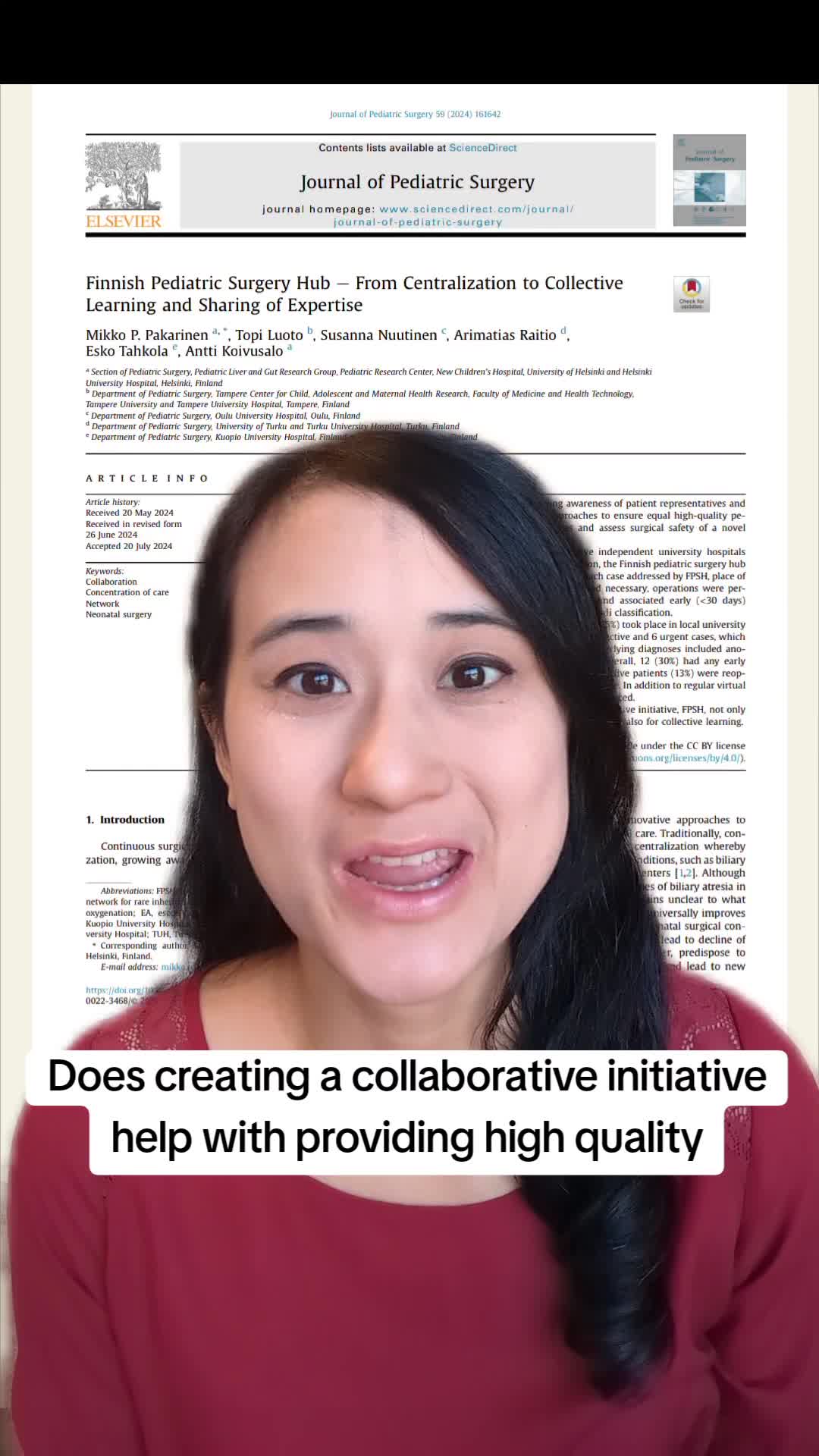
Finnish Pediatric Surgery Hub - From Centralization to Collective Learning and Sharing of Expertise
48 s · Published Feb 2025
Video
Safety and utility of long-acting steroid injection for management of post-operative stricture...
1 min · Published Jun 2026
Video
Quick Literature Updates Episode 18
4 min · Published Mar 2025
Video
Association Between Social Determinants of Health and Choice of Urinary Reconstruction in Children
1 min · Published Jun 2026
Podcast
Gynecologic care in patients with anorectal malformations: A primer and call to action
18 min · Published Sep 2026
Video
Bowel Management for Hirschsprung's Disease Patients: Pediatric Bowel...
Dr. Todd Ponsky · 34 min · Published May 2013
Video
Validation of an anorectal malformation trainer - Can a high-fidelity model simulate real life?
1 min · Published Jun 2026
Video
Complications and Long-Term Outcomes of Patients With Cloacal Malformation After Bowel Neovagina...
1 min · Published Jun 2026
Video
The Perineal Body Preserving PSARP (PPP)
11 min · Published Jun 2026
Video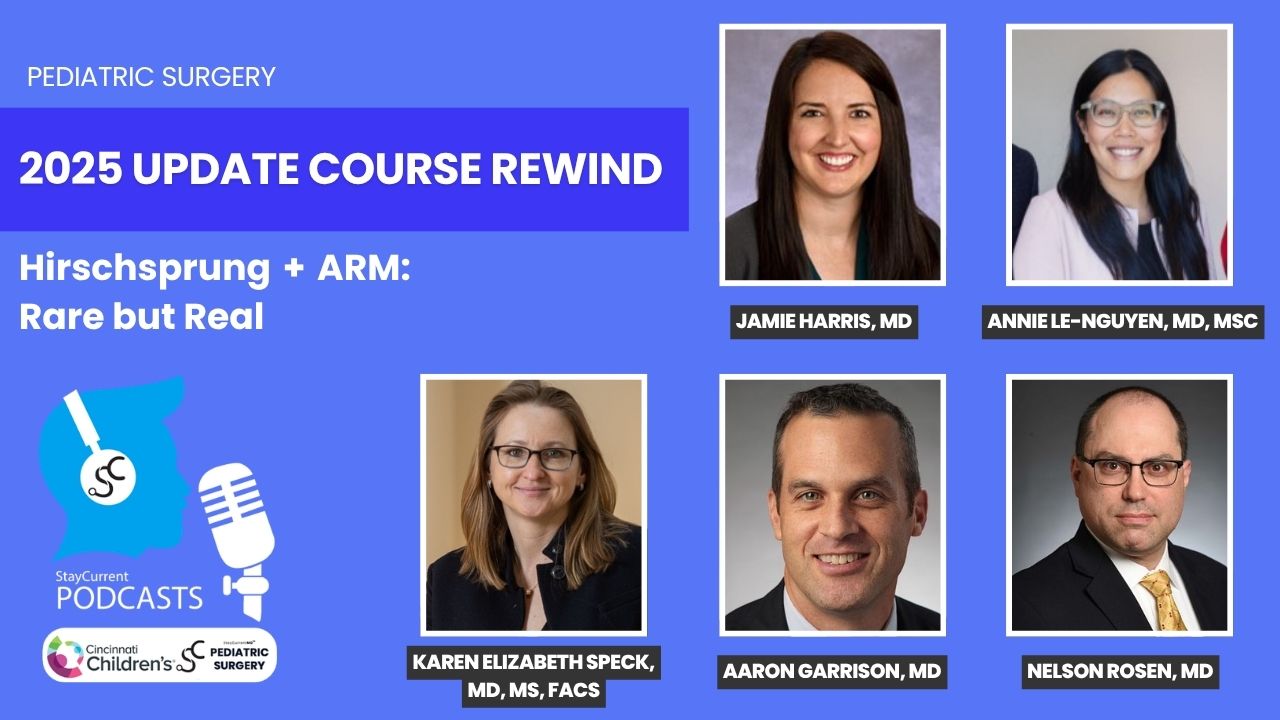
Update Course Rewind 2025: Hirschsprung + ARM: Rare but Real
1 min · Published May 2026
Video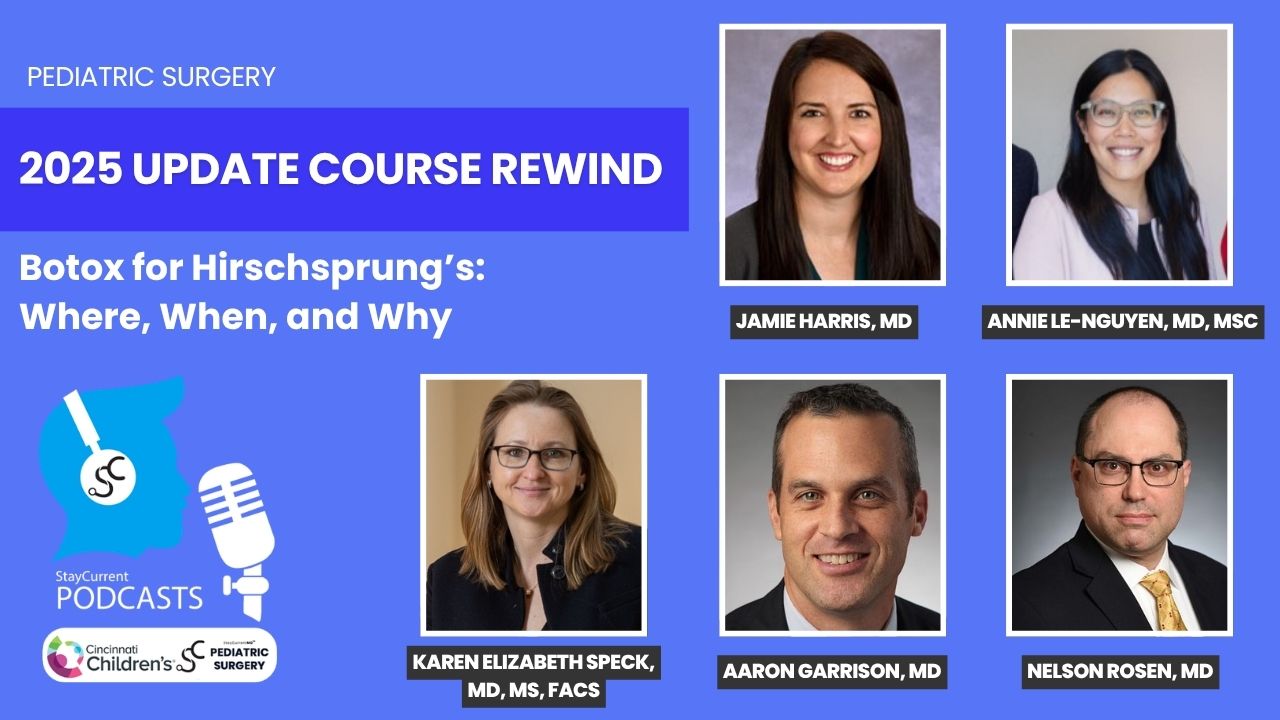
Update Course Rewind 2025: Botox for Hirschsprung’s: Where, When, and Why
1 min · Published May 2026
Video
Update Course Rewind 2025: Hirschsprung’s Pull-Through: Why Family Training May Save Lives
2 min · Published May 2026
Video
Colorectal Quiz Ep. 50 -16th Annual European Pediatric Colorectal & Pelvic Reconstruction Conference
Marc Levitt · Published Mar 2026
Podcast
Colorectal Quiz: Episode 50 - 16th Annual European Pediatric Colorectal and Pelvic Reconstruction Conference, Stockholm, Sweden, October 2025 - What did we learn?
24 min · Published Mar 2026
Video
Colorectal Quiz Episode 33: Cloaca Exstrophy
Marc Levitt · 22 min · Published Sep 2025
Video
The Colorectal Quiz Episode 21: The History of Hirschsprung Disease
Marc Levitt · 15 min · Published Sep 2025
Video
Colorectal Quiz: Episode 49 – Collaborating for Kids: Colorectal & Pelvic Care (with Help from AI)
Marc Levitt · 40 min · Published Jul 2025
Podcast
Colorectal Quiz: Episode 47
Marc Levitt · 22 min · Published May 2025
What the experts said
NotebookLM is a free offering from Google that can upload any content and create a realistic-sounding podcast between two people.
NotebookLM creates an expert from only the provided document, not pulling information from external sources like other chatbots.
A review article that took two weeks to produce five years ago can now be created in minutes using NotebookLM with the same 30 source articles.
NotebookLM can identify gaps in knowledge across multiple research articles and recognize when new articles fill those gaps.
Colorectal and pelvic disorders in children are often intricate and can have effects that last their entire lives, frequently involving a network of connected issues across digestive, urinary, reproductive, and sometimes musculoskeletal systems.
Conditions requiring multidisciplinary approach include anorectal malformations (ARM), Hirschsprung disease, severe constipation caused by colonic motility issues, and neurogenic bladder and bowel dysfunction often seen in children with spina bifida.
The initial driving forces behind colorectal programs are often strong focus, genuine passion, and deep interest from key people combined with solid work ethic, with detailed knowledge growing over time.
A dedicated physician leader, most often a pediatric surgeon, is necessary who has genuine interest, commitment to long-term care, and clear vision for improving colorectal care quality.
The program leader must understand the local healthcare landscape, assess genuine need, evaluate feasibility given existing services, and identify underserved patient populations before building.
Initial essential specialties for a colorectal program include general surgery, urology, gynecology, GI motility specialist, and critically, a dedicated nursing team.
A dedicated and passionate nurse specializing in bowel management is the backbone of the program; without this nurse, the program won't function effectively regardless of surgical expertise.
For programs in non-English speaking countries, having a nurse fluent in English who can attend international meetings provides significant advantage for staying current on best practices.
Complex colorectal cases often require combined expertise of pediatric surgery, urology, and gynecology in the operating room.
Finding a pediatric gynecologist can be challenging; in those situations, a pediatric surgeon might manage gynecological aspects for female patients, or an adult gynecologist with expertise in Müllerian anomalies or disorders of sexual development may be engaged.
A GI colleague with interest in motility and skill in performing manometry studies is needed, along with establishing clear guidelines for managing constipation and criteria for when standard medical treatments have failed.
Access to anal and colonic motility studies and incorporation of pelvic floor physical therapy are key components of comprehensive care.
Educating local pediatricians on when and how to refer patients to the center is crucial for building referral pathways.
Radiologists need education on colorectal diseases and must know how to properly perform and interpret contrast enemas, colostograms, and cloacograms, with active surgeon participation in imaging studies especially initially.
A pathologist with expertise in intestinal disorders like Hirschsprung disease ensures tissue samples are handled and interpreted correctly, requiring good surgeon-pathologist communication.
Regular multidisciplinary meetings, ideally once or twice weekly, are essential for reviewing individual patient needs and developing coordinated care plans.
A dedicated multidisciplinary outpatient clinic is ideal, but if not possible due to infrastructure limitations, coordinating same-day appointments across different locations with regular team meetings is an acceptable alternative.
Continuous learning strategies include visiting established colorectal centers, staying current with research, watching surgical videos, and visiting other multidisciplinary programs within your own hospital.
Programs should proactively ask other centers to share materials like patient intake forms or follow-up protocols, adapt them to local needs, and share their own innovations back with the broader community.
Clinical skill development includes specialized colorectal fellowships, visiting other institutions for mentorship, international travel to learn from experts, and conference attendance for all team members, not just surgeons.
Surgical videos are helpful for building confidence and understanding techniques but are not a substitute for actual hands-on surgical experience.
The colorectal nurse needs solid understanding of different condition types (ARM variants, Hirschsprung disease, neurogenic bladder/bowel) and skills in preoperative/postoperative care including bowel irrigations, enemas, catheter management, and teaching families anal dilations.
Involving and educating inpatient nursing staff through protocols and educational sessions ensures consistent high-level care and increases family comfort during hospitalization.
Essential supplies include Hagar dilators, various catheter types and sizes, gravity bags for enemas, and specialized surgical retractors like the Lone Star retractor.
Building a robust data library is essential for demonstrating clinic efficiency, establishing regional reputation, and showcasing effectiveness of new treatment techniques.
Key metrics to track include total referrals, total visits, new patients, out-of-region patients, surgical cases (inpatient/outpatient), length of stay, revenues, expenses, and safety/quality metrics like complication rates.
Documenting telephone encounters with patients and families is important to justify adequate nursing staff, as these patients require significant ongoing support and care plan adjustments.
Children with colorectal and pelvic conditions often need long-term chronic care and don't follow typical surgical patient recovery paths.
In private hospitals, the business case emphasizes attracting patients and downstream revenue; in public hospitals, it focuses on demonstrating cost savings through reduced complications, shorter stays, fewer ER visits, and improved quality of life.
Building trust with referring physicians requires being polite and patient with colleagues hesitant to refer primary surgical cases, demonstrating value through successful management of complex cases, and offering to collaborate on surgeries.
A significant portion of patients initially referred for management issues will likely need further surgical intervention down the line.
A dedicated care coordinator or scheduler is a top priority for resource allocation to streamline patient visits and serve as central point of contact for families.
Building bench strength by initially sharing resources from existing hospital departments (e.g., allocating portion of general surgery nurse's time) is a cost-effective way to start, applicable to social workers, child life specialists, nutritionists, and psychologists.
Hospital planning and data analysis departments have expertise in developing business cases and should be engaged early.
A multi-year plan with clear milestones for additional resources and expected results is necessary, given that establishing a center of excellence takes sustained time and effort.
All involved providers must be properly credentialed with government payers like Medicaid and private insurance companies in both home state and neighboring states, with adequate lead times for credentialing and preauthorization processes.
Weekly new patient intake meetings involve nursing gathering medical records, developing initial multidisciplinary care plan considering history, referral reasons, and psychosocial/nutritional/anesthesia concerns, then full team review including colorectal surgery, urology, gynecology, GI motility, nursing, and social work.
For families traveling significant distances, programs try to consolidate as many appointments as possible into a single visit.