


From
StayCurrentMD
Journal of Pediatric Surgery Article Review: 1st Quarter (Jan-Mar) 2025
With Dr. George W. Holcomb III & Dr. Eric Skarsgard & Dr. Preet Bir & Dr. Sean Kunisaki · hosted by Dr. Em Gootee
Chapter 1 of 3 · Evidence & Research
Tracheobronchopexy outcomes
Tracheobronchopexy for severe airway collapse after esophageal atresia repair
Expert statements on this page
No expert statements were drawn from this page.
Host summaries · secondary, not cited in answers
Educational content from recorded physician discussions — not medical advice. Talk to your (or your child's) care team about your situation.
Video
Tracheobronchopexy to Avoid Tracheostomy in Esophageal Atresia Patients With Severe Life-Threatening Tracheobronchomalacia
50 s · Published Apr 2025
Video
Prophylactic Acid-suppression Medication to Prevent Anastomotic Strictures After Oesophageal Atresia Surgery
Published Dec 2023
Video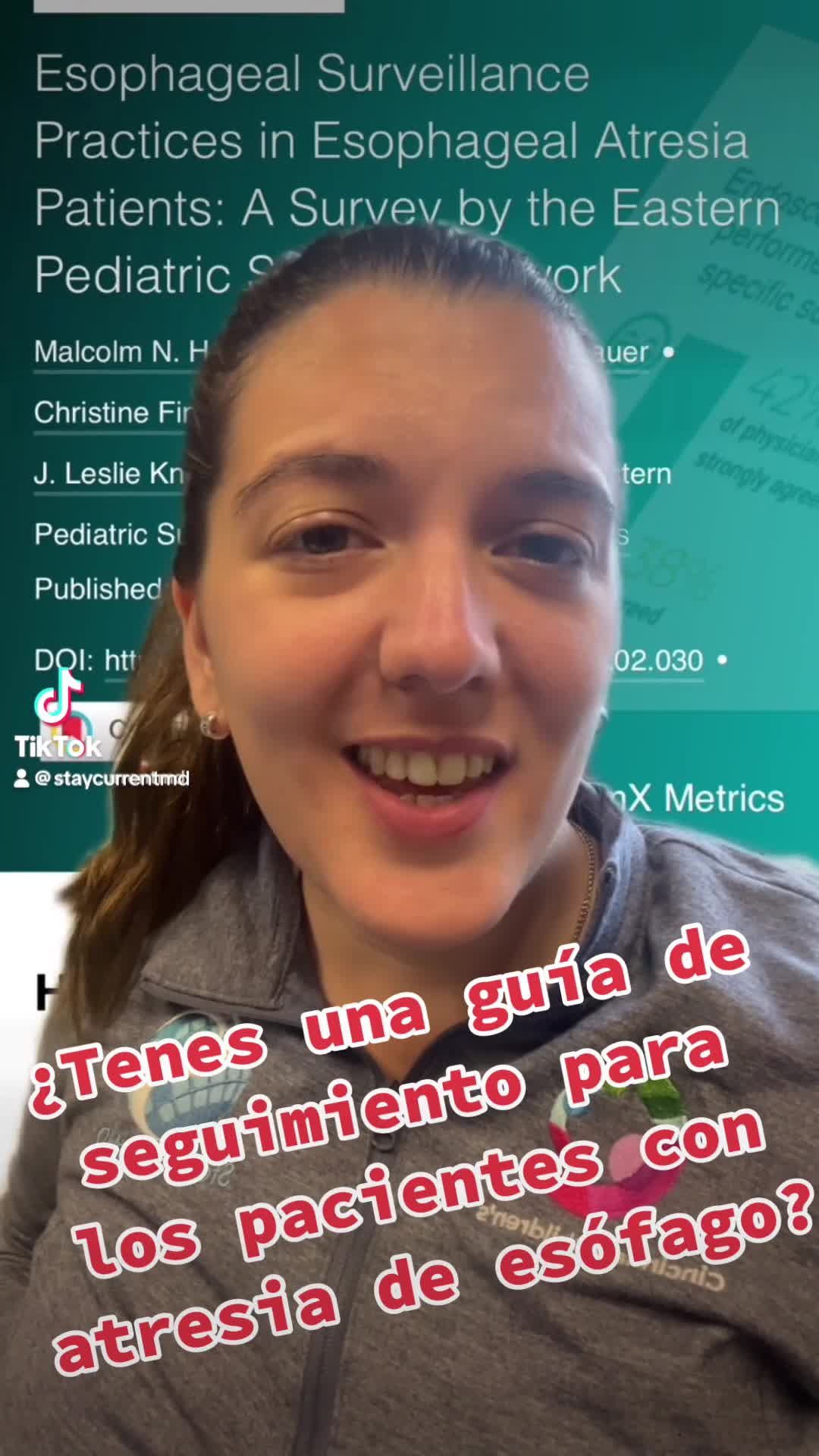
La vigilancia esofágica en pacientes pos reparación de atresia de esófago
Published Jul 2023
Video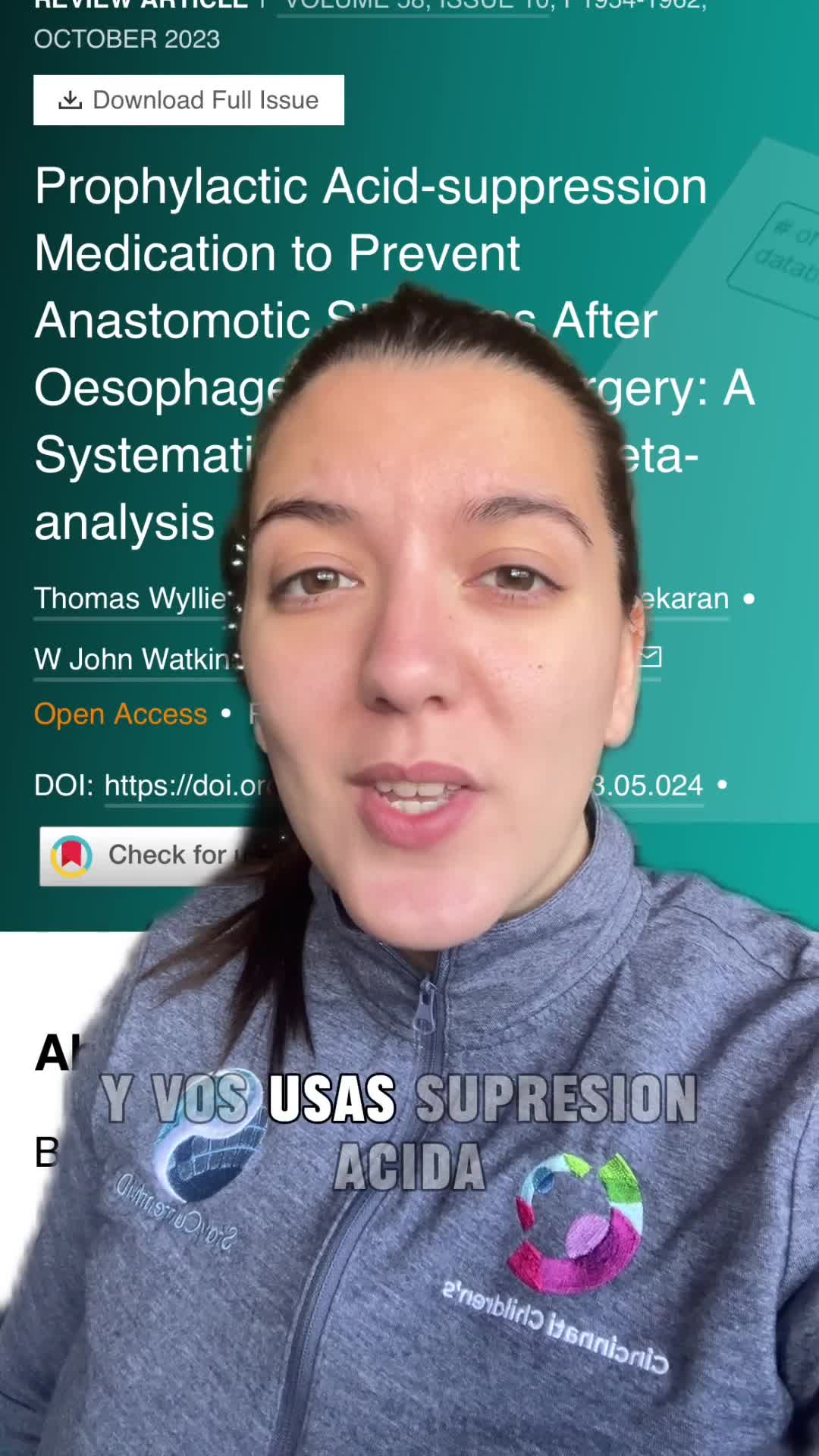
Supresión ácida profiláctica para prevenir estenosis anastomóticas después de la cirugía de atresia esofágica
Published Dec 2023
Video
Comparison of robotic versus thoracoscopic repair for congenital esophageal atresia
56 s · Published Feb 2024
Video
Care and Nutrition in Esophageal Atresia: An ERNICA animation for parents and families
2 min · Published Nov 2023
Video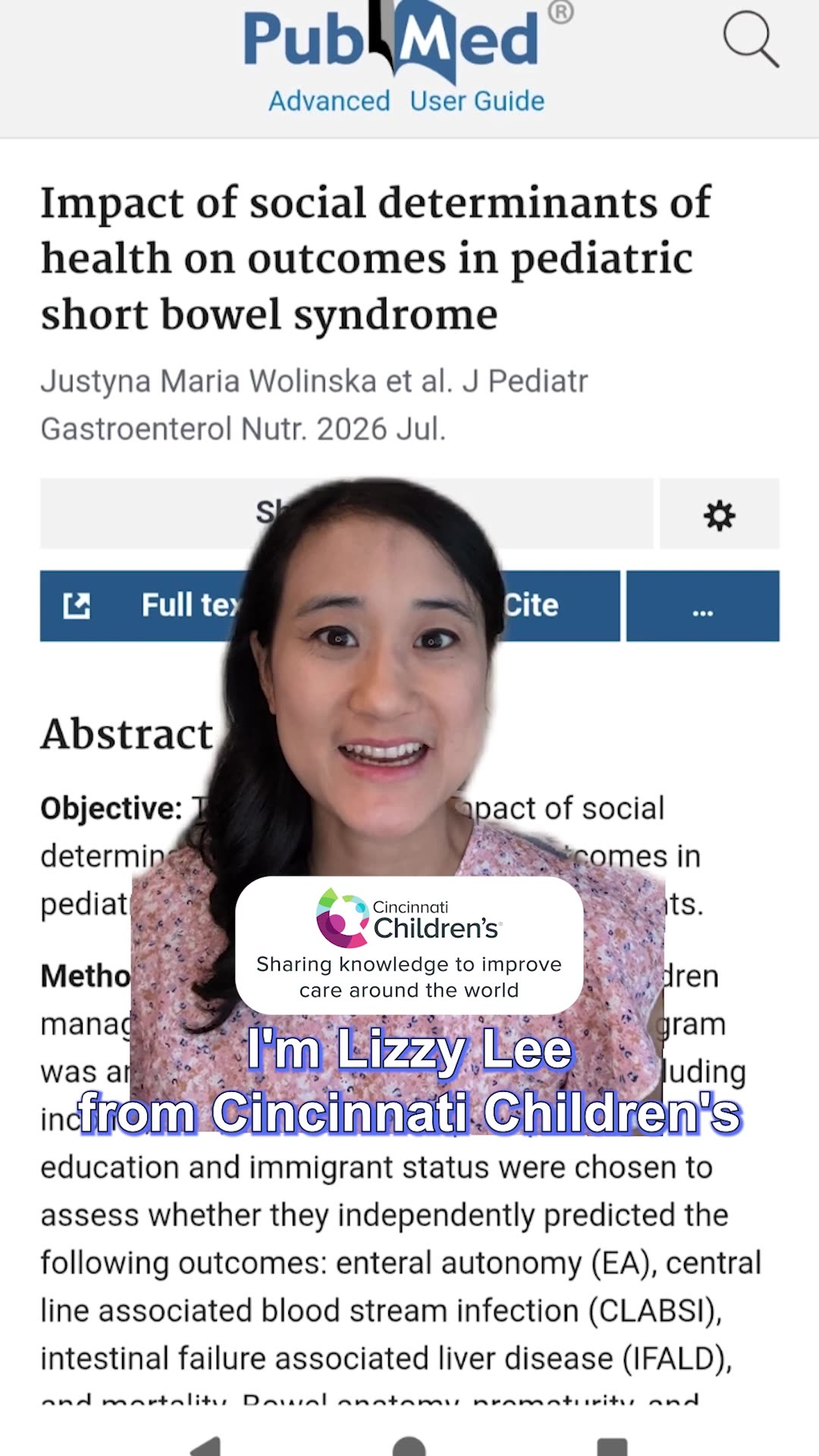
Impact of social determinants of health on outcomes in pediatric short bowel syndrome...
43 s · Published Aug 2026
Video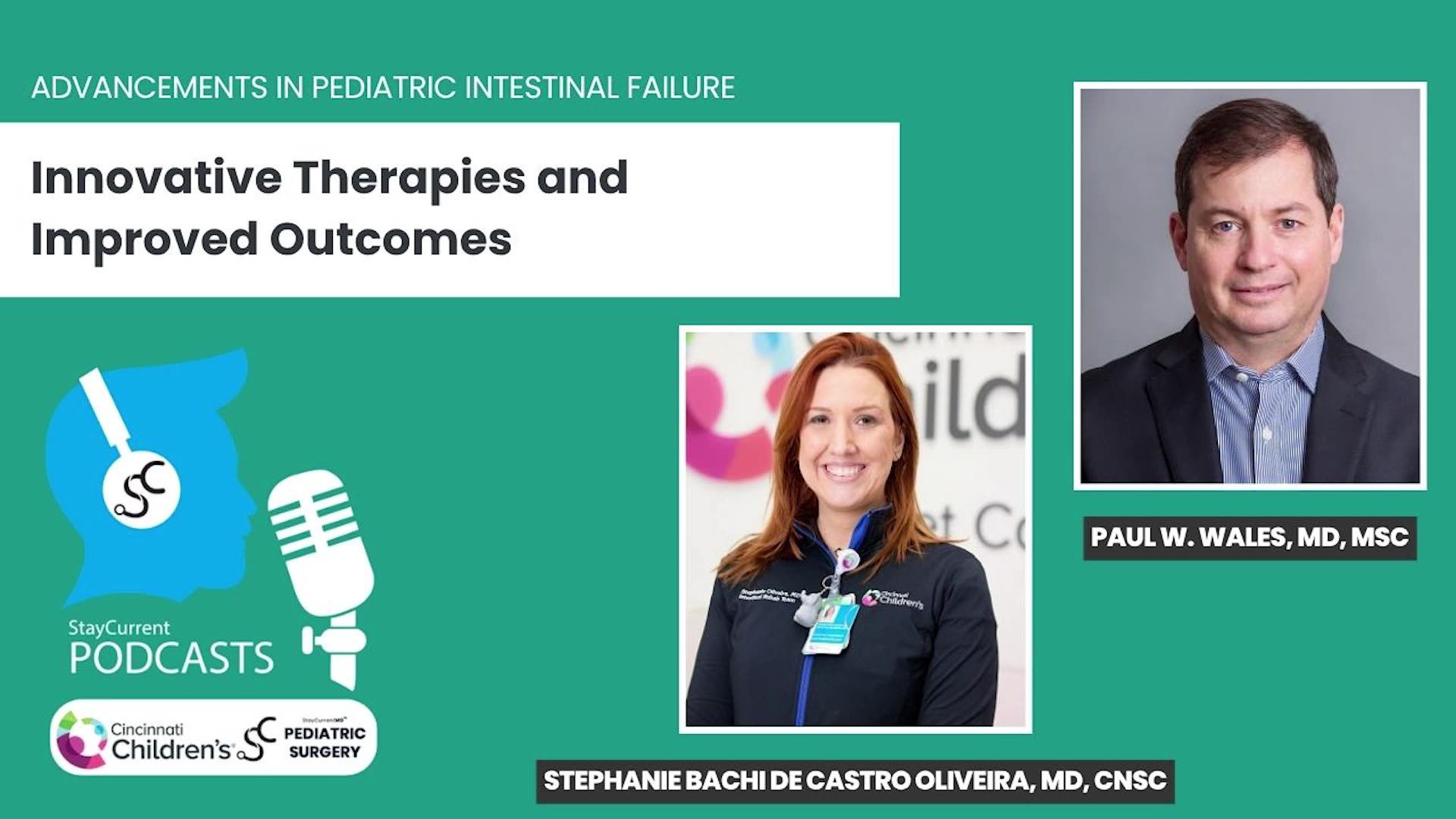
Advancements in Pediatric Intestinal Failure: Innovative Therapies and Improved Outcomes
17 min · Published Aug 2026
Podcast
Update Course Rewind: Omphalocele & Gastroschisis 2020
Miguel Guelfand · 15 min · Published Jul 2026
Video
Update Course Rewind 2025: Updates in NEC Management
11 min · Published Jul 2026
Video
Availability, utilization, and barriers to bowel ultrasound for necrotizing enterocolitis...
55 s · Published Jul 2026
Video
Malrotation and Volvulus with Trinity
Dr. Steve Rothenberg · 8 min · Published May 2026
Video
Intestinal Atresia Types Explained: Grossfeld Classification for Pediatric Surgery
1 min · Published Sep 2026
Video
Derivation and validation of the Pediatric Community-Acquired Pneumonia Severity (PedCAPS) score: A prospective cohort study
50 s · Published Sep 2026
Video
FETO for Late-Diagnosed Severe Congenital Diaphragmatic Hernia (CDH) at Cincinnati Children's with Dr. Beth Rymeski
4 min · Published Sep 2026
Video
Severe Congenital Diaphragmatic Hernia (CDH) Case: FETO Management & Unexpected Findings with Dr. Beth Rymeski
3 min · Published Sep 2026
Video
Fetoscopic Endoluminal Tracheal Occlusion (FETO) Procedure: Step-by-Step Guide with Dr. Beth Rymeski
4 min · Published Sep 2026
Video
Choledochal Cyst Types Explained: Pediatric Surgery Fundamentals
1 min · Published Sep 2026
What the experts said
80 patients with severe airway collapse after esophageal atresia is a huge number; most pediatric surgeons won't see 10 such patients in their career, and many wouldn't see 5
In experienced hands who have done numerous or hundreds of these procedures, tracheobronchopexy can have very good outcomes for patients with severe airway collapse symptoms
Canada is the second largest country in the world geographically, though population-wise smaller than California
The majority of Canada's population lives within 200 kilometers of the US border, but there are definitely lots of children in remote communities where it is not easy to access care
Outreach services were present in only 7 out of 10 provinces, and only 8 out of 18 children's hospitals (44%) provided outreach services
In most places in Canada, no one would transfer a 16 or 17 year old with appendicitis to a children's hospital for surgery; physiologically and every other way they're an adult and do not need the expertise of a pediatric surgeon
It's a misconception that the Canadian healthcare system ensures timely care; it actually doesn't, and children wait for surgery beyond their wait time target
Newfoundland and Labrador has the best outreach setup with only two pediatric surgeons who have established outreach clinics all over the province, serving as a model to others
The population of Newfoundland and Labrador is really rural and spread out, and weather-wise it can be impossible sometimes to access care or financially devastating
There are measurable costs of living remote to accessible high-quality care in terms of time required to be seen and actual clinical outcomes
In the NSQIP database, 5% of all pediatric procedures were G-tube, which is a pretty sizable percent
77% of G-tube cases were first-time G-tubes as opposed to redos
The heterogeneity in use of preoperative upper GIs was extremely broad with no real reason, indicating a potential teaching moment
An additional 5.5% of G-tubes were dislodged in the 31 to 60 day period
Dislodgement rates are higher than rates of readmissions or IR interventions, making dislodgements a great QI target
If you can get dislodgements down, ED visits go down; when dislodgements happen early, patients are told to come back to the ED
A subset of children after esophageal atresia repair experience severe airway collapse, leaving them ventilator dependent or suffering repeated cyanotic spells
90% of patients showed complete airway collapse on dynamic bronchoscopy
Three-quarters of tracheobronchopexy procedures used a posterior approach
Tracheobronchopexy was performed on thoracic trachea alone in over half the patients, but had to be extended onto the bronchi in 40%
94% of patients avoided tracheostomy with a mortality rate of 5%, and the procedure significantly reduced pressure ventilation and ventilator dependence
A significant number of outreach services are located within 50 kilometers of a children's hospital, leaving vast regions without access to pediatric surgical care
The study examined 4,612 G-tube placements from 71 NSQIP-Pediatric hospitals in 2023
Upper GI studies were obtained in 45% of first-time G-tube cases with substantial interhospital variability from 0 to 99%
14% of G-tube cases resulted in an ED visit within 0 to 30 days
5.2% of G-tube cases involved dislodgement within 0 to 30 days