


Surgical fasting guidelines in children: Are we putting them into practice? | Brunet-Wood K, Simons M, Evasiuk A, Mazurak V, Dicken B, Ridley D, Larsen B.J | Pediatr Surg. 2016 Aug;51 (8):1298-302. doi: 10.1016/j.jpedsurg.2016.04.006. Epub 2016 Apr 21. | Journal of Pediatric Surgery | THESE ARE THE CURRENT GUIDELINES FOR PREOPERATIVE FASTING | Clears | 2 hrs | Breast Milk | 4 hrs | Nonhuman Milk or Formula | 6 hrs | Food | 8 hrs | BUT... | 70% of patients exceeded these guidelines!
From
StayCurrentMD
Surgical fasting guidelines in children: Are we putting them into practice?
Infographic · Oct 2018 · 1 min read
In brief
In brief
Prospective study of 53 pediatric surgical patients found 70% exceeded recommended preoperative fasting times, with median NPO periods of 10-11 hours regardless of procedure complexity. Findings suggest significant gap between evidence-based fasting guidelines and actual clinical practice in pediatric surgery.
- 70% of pediatric surgical patients fasted longer than recommended preoperatively, with median NPO times exceeding 10 hours.
- Preoperative fasting duration did not differ significantly between complex and noncomplex procedures (11.5h vs 10.8h).
- Most patients received postoperative NPO time even when not explicitly ordered by physicians, suggesting practice gaps.
- Prolonged unnecessary fasting places pediatric patients at risk for undernutrition despite evidence-based guidelines.
- Current institutional practices do not align with published safe fasting guidelines for children undergoing surgery.
Written by the GCMD Library team from the infographic.
A teal-colored infographic with a dark header section and main content area displaying four rows of fasting guidelines. Each row contains an icon (baby bottle, breastfeeding symbol, formula bottle, hamburger) paired with corresponding time intervals, arranged vertically. A prominent text callout on the right emphasizes a compliance issue.
Background
Patients are traditionally kept fasting (NPO) from midnight prior to surgery, to prevent aspiration during anesthesia. NPO time is continued postoperatively, out of concern for ileus. Prolonged periods of NPO place the pediatric population at risk for under-nutrition. Published guidelines for preoperative NPO times have been shown to be safe. The aim of this study was to investigate current pre- and postoperative feeding practices of children at a pediatric tertiary care hospital.
Methods
Medical charts were used to extract data prospectively from 53 patients undergoing general, neurosurgical, or urological procedures. Date and time of NPO periods were recorded as well as the physician's postoperative diet orders and diet progression. Surgical procedures were classified as complex or noncomplex by the surgeons. Data were summarized and compared to published recommendations.
Results
Preoperative NPO times were greater than recommended in 70% of patients studied (n = 37). Median time spent NPO preoperatively was not significantly different between complex (11.5 h) and noncomplex groups (10.8 h). Postoperative NPO time was significantly greater for complex procedures than for noncomplex. Most patients received some postoperative NPO time, even when it was not included in the physician diet order.
Conclusion
Observed preoperative NPO time exceeded current recommendations in this study.
The text in the image
Educational content from recorded physician discussions — not medical advice. Talk to your (or your child's) care team about your situation.
Video
Intestinal Atresia Types Explained: Grossfeld Classification for Pediatric Surgery
1 min · Published Sep 2026
Video
Derivation and validation of the Pediatric Community-Acquired Pneumonia Severity (PedCAPS) score: A prospective cohort study
50 s · Published Sep 2026
Video
FETO for Late-Diagnosed Severe Congenital Diaphragmatic Hernia (CDH) at Cincinnati Children's with Dr. Beth Rymeski
4 min · Published Sep 2026
Video
Severe Congenital Diaphragmatic Hernia (CDH) Case: FETO Management & Unexpected Findings with Dr. Beth Rymeski
3 min · Published Sep 2026
Video
Fetoscopic Endoluminal Tracheal Occlusion (FETO) Procedure: Step-by-Step Guide with Dr. Beth Rymeski
4 min · Published Sep 2026
Video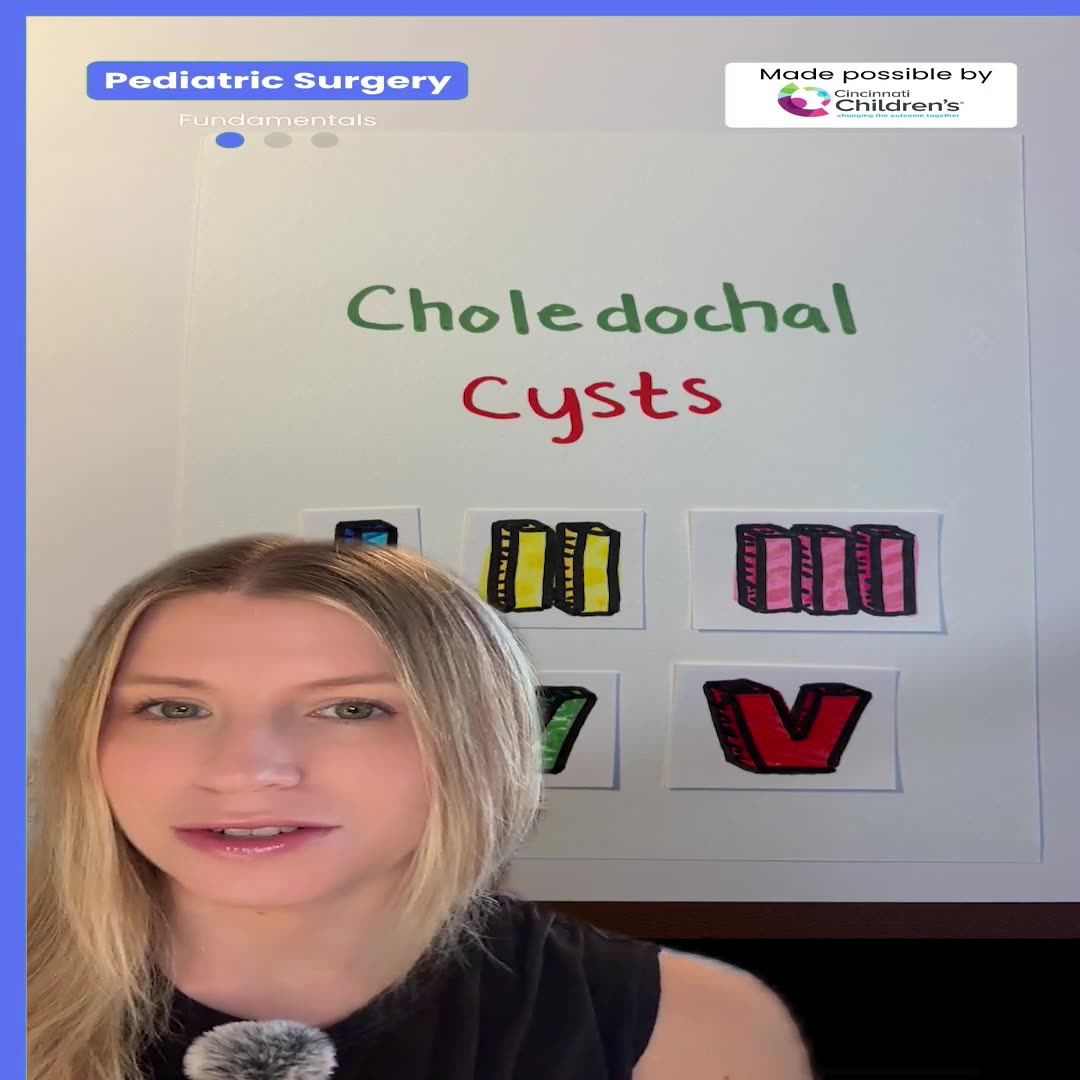
Choledochal Cyst Types Explained: Pediatric Surgery Fundamentals
1 min · Published Sep 2026