


From
StayCurrentMD
Atropine Treatment for Hypertrophic Pyloric Stenosis: A Systematic Review and Meta-analysis
dx.doi.org shows its articles on its own site.
Read the article on dx.doi.org ↗Article · Jul 2017 · 1 min read
In brief
In brief
Systematic review and meta-analysis comparing atropine medical therapy versus surgical pyloromyotomy for infantile hypertrophic pyloric stenosis. Analysis of 12 studies showed atropine achieved 79% success rate with 15% side effect incidence, while pyloromyotomy demonstrated 100% efficacy, informing treatment decision-making for this common pediatric condition.
Written by the GCMD Library team from the article.
Introduction Several authors have reported the use of atropine as an alternative treatment to pyloromyotomy in infants with hypertrophic pyloric stenosis (HPS). Our aims were to review the efficacy of atropine in treating HPS and to compare atropine therapy versus pyloromyotomy.
Materials and Methods Using a defined search strategy (PubMed, MEDLINE, OVID, Embase, Cochrane databases), two investigators independently identified studies reporting the use of atropine for HPS. Case reports and opinion articles were excluded. Outcome measures included success rate, side effects, and length of hospital stay. Maneuvers were compared using Fisher's exact test, and meta-analysis was conducted using RevMan 5.3. Data are expressed as mean ± standard deviation.
Results Systematic review: of 2,524 abstracts screened, 51 full-text articles were analyzed. There were no prospective or randomized studies. Twelve articles (508 infants) reported HPS resolution using atropine in 402 (79.1%) patients. Atropine side effects were documented in 38/251 (15.1%) infants and included tachycardia, increased transaminases, and flushed skin. Meta-analysis: five studies compared atropine treatment (293 infants) with pyloromyotomy (537 infants). Pyloromyotomy had higher success rate (100%) than atropine (80.8%; p
Educational content from recorded physician discussions — not medical advice. Talk to your (or your child's) care team about your situation.
Video
Intestinal Atresia Types Explained: Grossfeld Classification for Pediatric Surgery
1 min · Published Sep 2026
Video
Derivation and validation of the Pediatric Community-Acquired Pneumonia Severity (PedCAPS) score: A prospective cohort study
50 s · Published Sep 2026
Video
FETO for Late-Diagnosed Severe Congenital Diaphragmatic Hernia (CDH) at Cincinnati Children's with Dr. Beth Rymeski
4 min · Published Sep 2026
Video
Severe Congenital Diaphragmatic Hernia (CDH) Case: FETO Management & Unexpected Findings with Dr. Beth Rymeski
3 min · Published Sep 2026
Video
Fetoscopic Endoluminal Tracheal Occlusion (FETO) Procedure: Step-by-Step Guide with Dr. Beth Rymeski
4 min · Published Sep 2026
Video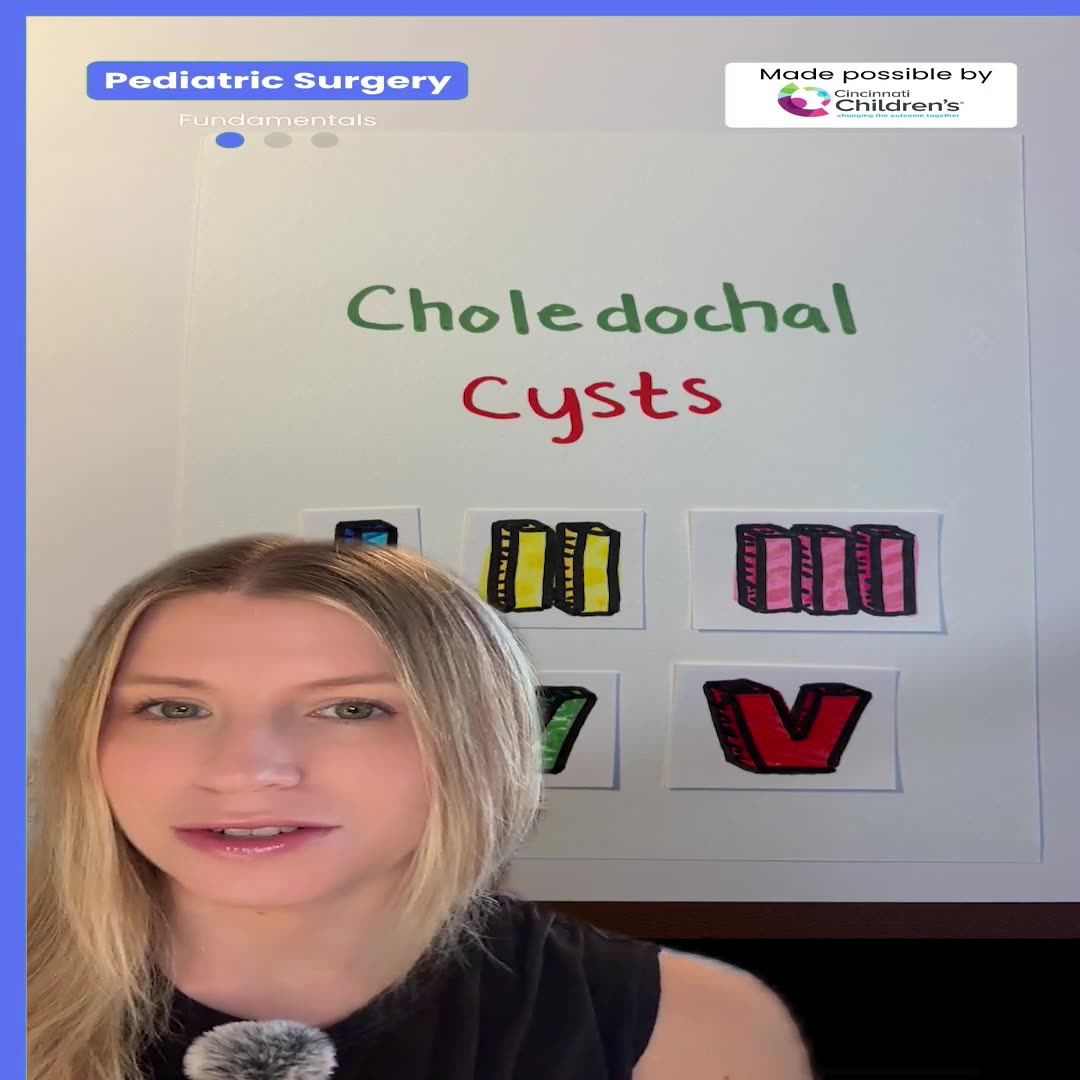
Choledochal Cyst Types Explained: Pediatric Surgery Fundamentals
1 min · Published Sep 2026